Greek Revival Architecture: History, Features, and Why It Still Defines American Homes
 Jun, 6 2026
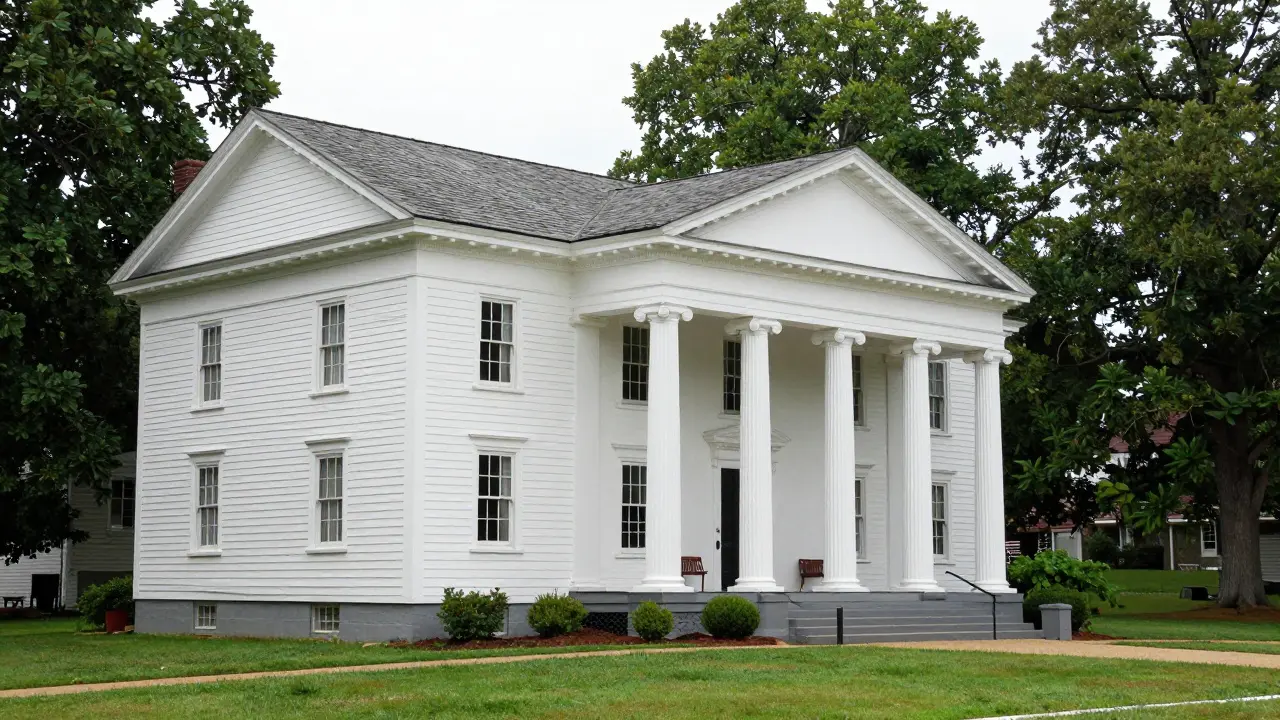
Walk down any street in the American South or New England, and you’ll likely spot it: a white house with a heavy porch, topped by a triangular roof that looks like a temple. This isn’t just old-fashioned; it’s Greek Revival architecture. Between 1820 and 1860, this style didn’t just decorate homes-it made a political statement. People weren’t just building houses; they were building democracies.
If you’ve ever wondered why so many historic homes look like ancient temples, or if you’re trying to identify the features of your own heritage property, you’re not alone. This style is everywhere, yet often misunderstood as simply “colonial” or “Victorian.” Let’s break down what actually makes Greek Revival unique, where it came from, and how to spot it today.
The Birth of a Democratic Style
To understand why we built our homes like temples, you have to look at the world in the early 1800s. The Enlightenment was in full swing. Intellectuals were obsessed with Ancient Greece, viewing it not just as a place of ruins, but as the birthplace of democracy. At the same time, archaeologists were finally mapping out sites like Athens and Olympia with precision. Books filled with detailed engravings of Greek temples flooded into Europe and America.
In the U.S., this timing was perfect. The young republic wanted to distance itself from its British colonial past. If Britain stood for monarchy (and Gothic architecture), then Greece stood for liberty (and Classical architecture). Building a home in the Greek Revival style was a way to say, “I am a citizen of a free society.” It wasn’t just aesthetic; it was ideological. You can see this clearly in public buildings like the White House’s West Wing additions or state capitols across the country, which adopted the style to project stability and democratic ideals.
Key Features: How to Spot a Greek Revival Home
You don’t need an architect’s degree to recognize this style, but knowing the specific details helps separate true Greek Revival from later imitations. Here are the non-negotiable elements:
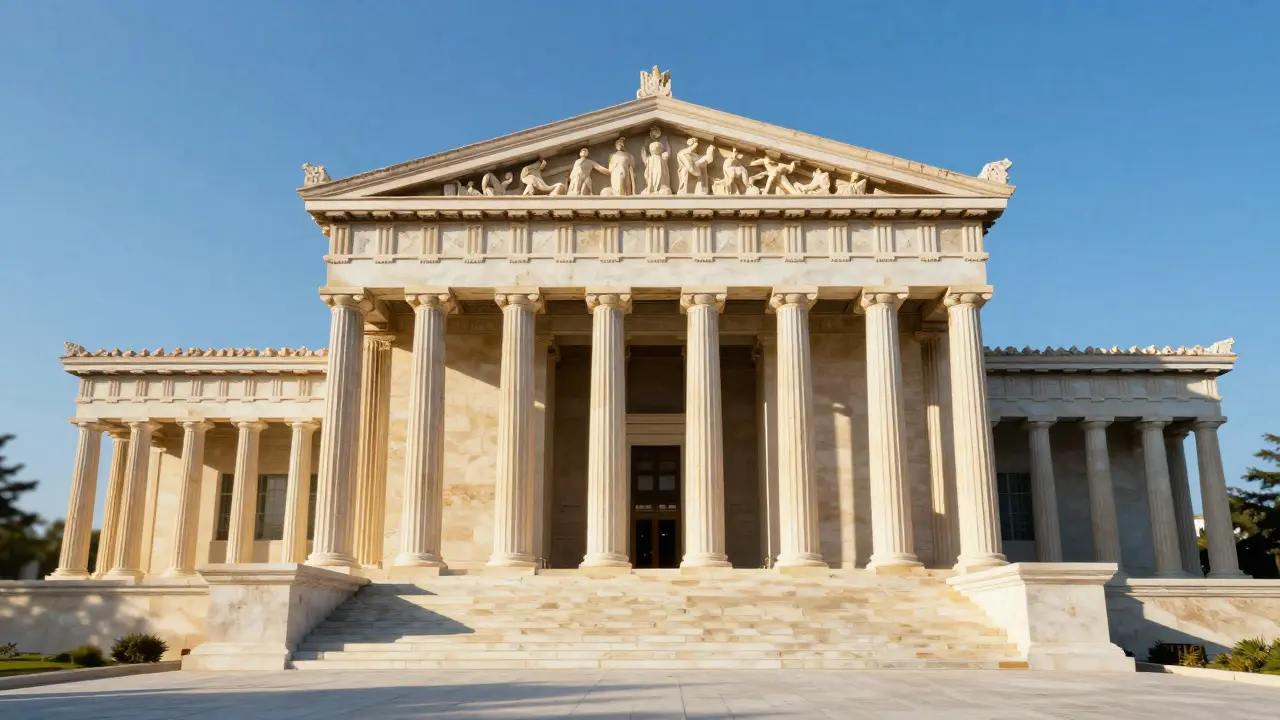
- Temple Fronts: Many homes feature a portico (porch) with columns that support a pediment (the triangular gable end). This mimics the front of a Parthenon-style temple.
- Columns: These are usually square rather than round, especially in domestic homes. They might be Doric (simple, no base) or Ionic (with scroll-like capitals). In rural areas, wood was often used instead of stone, painted white to mimic marble.
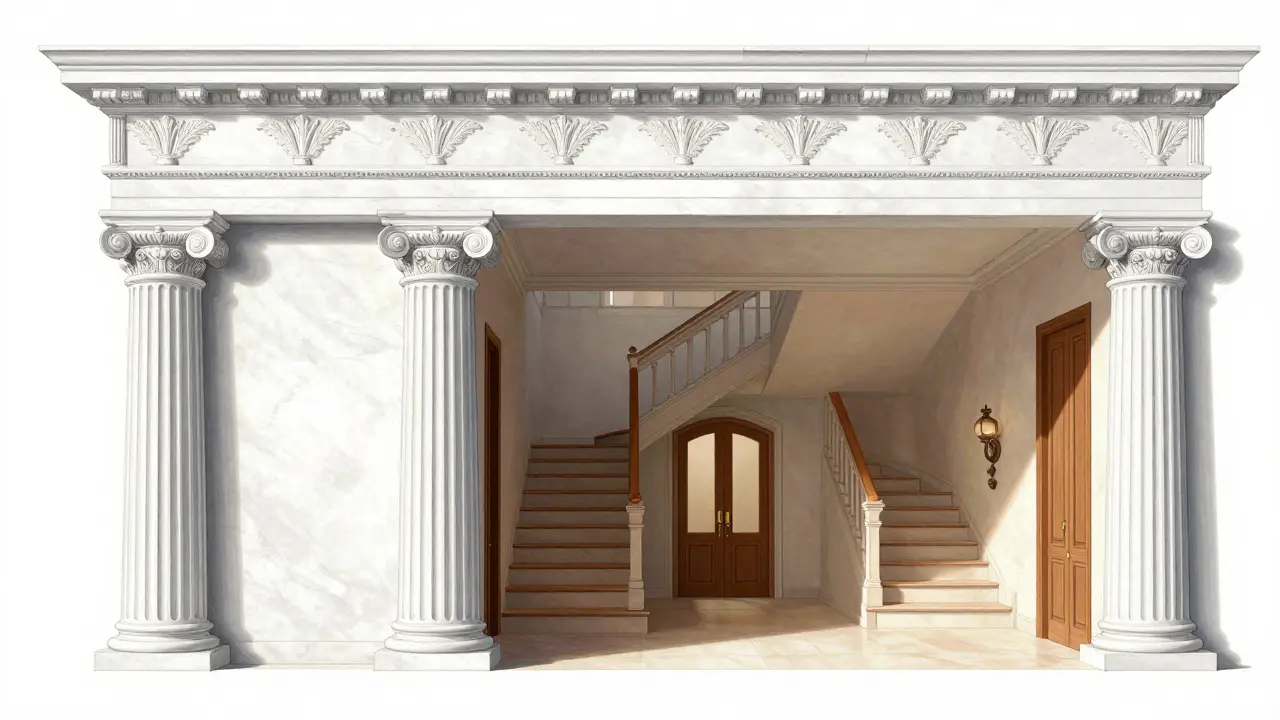
- Friezes: Look above the columns or windows. You’ll often see decorative bands featuring geometric patterns, palmettes (fan-shaped motifs), or dentils (small rectangular blocks).
- Low-Pitched Roofs: The roofs are shallow, sometimes hidden behind a flat parapet wall to maintain the temple silhouette. If the roof is visible, it’s rarely steep like a Gothic cottage.
- Symmetry: The facade is strictly balanced. Windows align perfectly on either side of the central door. There is no randomness here; order is key.
- Transom Windows: Above the main entrance, you’ll find a semi-circular or rectangular window. This allowed light into the hallway while keeping the door closed for privacy and warmth.
One common mistake people make is assuming all columns mean Greek Revival. Later Victorian styles also used columns, but they were often more ornate, twisted, or part of a larger, asymmetrical design. Greek Revival is about restraint and proportion. It feels solid, grounded, and calm.
Materials and Construction: Stone vs. Wood
In Greece, these structures were built from limestone and marble. In America, those materials were scarce and expensive outside of major cities. So, builders got creative. Wood became the primary material for residential Greek Revival homes.
Carpenters developed sophisticated techniques to mimic stone. They carved wood pilasters (flat, rectangular columns attached to the wall) to look like fluted marble shafts. Then, they painted everything white. This choice of color wasn’t arbitrary. White symbolized purity and cleanliness, but practically, it helped the wood blend into the landscape and reflected heat in warmer climates.
In urban centers like Washington D.C. or Boston, brick and stone were more common. These homes often featured heavier cornices and more elaborate entablatures (the horizontal structure supported by columns). But even in cities, the goal remained the same: create the illusion of classical permanence using local resources.
Interior Design: Grandeur Meets Function
Step inside a Greek Revival home, and the drama continues. The interior layout was designed to impress visitors while maintaining family privacy. The entryway, or foyer, was the star of the show. It was often tall, two stories high, with a grand staircase sweeping up to a landing. This space acted as a formal reception area, separating the public front rooms from the private back rooms.
Doors and windows were tall and narrow, emphasizing verticality. Moldings were simple but precise-think crown moldings that echoed the friezes outside. Fireplaces were centered in the main rooms, framed by mantels that featured classical motifs like urns or laurel wreaths.
Flooring was typically wide-plank pine, left natural or painted. Walls were often plastered and painted in soft, neutral tones to complement the white trim. Furniture was minimal but elegant, favoring straight lines and classical shapes over the curvy, ornate pieces of the earlier Federal period.
Greek Revival vs. Other Classical Styles
It’s easy to confuse Greek Revival with other classical-inspired styles. Here’s a quick breakdown to help you tell them apart:
| Feature | Greek Revival | Federal Style | Neoclassical |
|---|---|---|---|
| Time Period | 1820-1860 | 1780-1830 | 1760-1840 |
| Columns | Heavy, often square, Doric/Ionic | Slender, often paired, Roman-inspired | Elegant, varied orders, Roman influence |
| Roof Pitch | Low, hidden by parapet | Moderate, hipped roofs common | Varied, often with dormers |
| Ornamentation | Geometric, restrained, Greek motifs | Delicate, fanlights, elliptical shapes | Balanced, Roman motifs, more decorative |
| Overall Feel | Monumental, temple-like | Refined, elegant, lighter | Grand, symmetrical, intellectual |
The key difference? Greek Revival is heavier and more austere. Federal style is lighter and more delicate, with lots of curved lines and fanlights. Neoclassical is broader and includes Roman influences, whereas Greek Revival sticks strictly to Greek precedents. If it looks like a sturdy temple, it’s Greek Revival. If it looks like a refined townhouse, it’s likely Federal or Neoclassical.
Why It Matters Today
You might wonder why we still care about a style that peaked before the Civil War. For one, it shaped the American skyline. Many of the most iconic buildings in the U.S.-from courthouses to universities-are Greek Revival. It established a visual language of authority and trust that we still use today.
For homeowners, identifying Greek Revival features is crucial for preservation. Restoring original transom windows or repainting woodwork in historically accurate colors adds value and maintains cultural heritage. Moreover, the principles of Greek Revival-symmetry, proportion, and simplicity-are timeless. They resonate with modern tastes for clean lines and functional beauty.
As we move forward, understanding these historical styles helps us appreciate the craftsmanship of the past. It reminds us that architecture is never just about shelter; it’s about identity, values, and the stories we tell through our walls.
What is the most distinctive feature of Greek Revival architecture?
The most distinctive feature is the temple-front facade, characterized by columns supporting a triangular pediment. This mimics ancient Greek temples and gives the building a monumental, symmetrical appearance.
When was Greek Revival architecture most popular?
Greek Revival architecture was most popular in the United States between 1820 and 1860. It declined after the Civil War as tastes shifted toward more ornate Victorian styles.
Is Greek Revival the same as Colonial architecture?
No. While both styles emphasize symmetry, Colonial architecture is simpler and lacks the classical elements like columns, pediments, and friezes that define Greek Revival. Greek Revival is more ornate and explicitly references Ancient Greece.
Why did Americans choose Greek Revival for their homes?
Americans associated Ancient Greece with democracy and freedom. Choosing this style was a way to express patriotic pride and distance themselves from British colonial influences, which were linked to Gothic and Georgian styles.
What materials were commonly used in Greek Revival homes?
Wood was the most common material for residential homes, often painted white to resemble marble. Brick and stone were used in urban areas and for public buildings. The goal was to mimic the permanence of stone using locally available resources.