Constructivist Architecture: How Radical Design Shaped Society
 Jul, 27 2026
Imagine a building that doesn't just shelter you but actively tries to change how you live, work, and think. That was the bold promise of Constructivist architecture, a radical early 20th-century movement that used industrial materials and functional forms to promote social equality and collective living. Born in Russia after the 1917 Revolution, this style wasn't about pretty facades or historical references. It was about engineering a new society through concrete, steel, and glass.
Today, we often look at these stark, geometric structures and see only cold minimalism. But for the architects who designed them, every beam and balcony had a political purpose. They believed that if you could redesign the physical environment, you could redesign human behavior. This article explores how Constructivism moved beyond mere aesthetics to become a tool for social transformation, why it matters today, and what its legacy looks like in modern urban planning.
The Birth of a Radical Vision
To understand Constructivist architecture, you have to understand the chaos it emerged from. The Russian Empire collapsed in 1917, leaving behind a shattered economy and a population desperate for change. The new Bolshevik government wanted to create a "New Soviet Man"-someone who was rational, collective, and free from bourgeois traditions. Architects were tasked with building the physical infrastructure for this utopia.
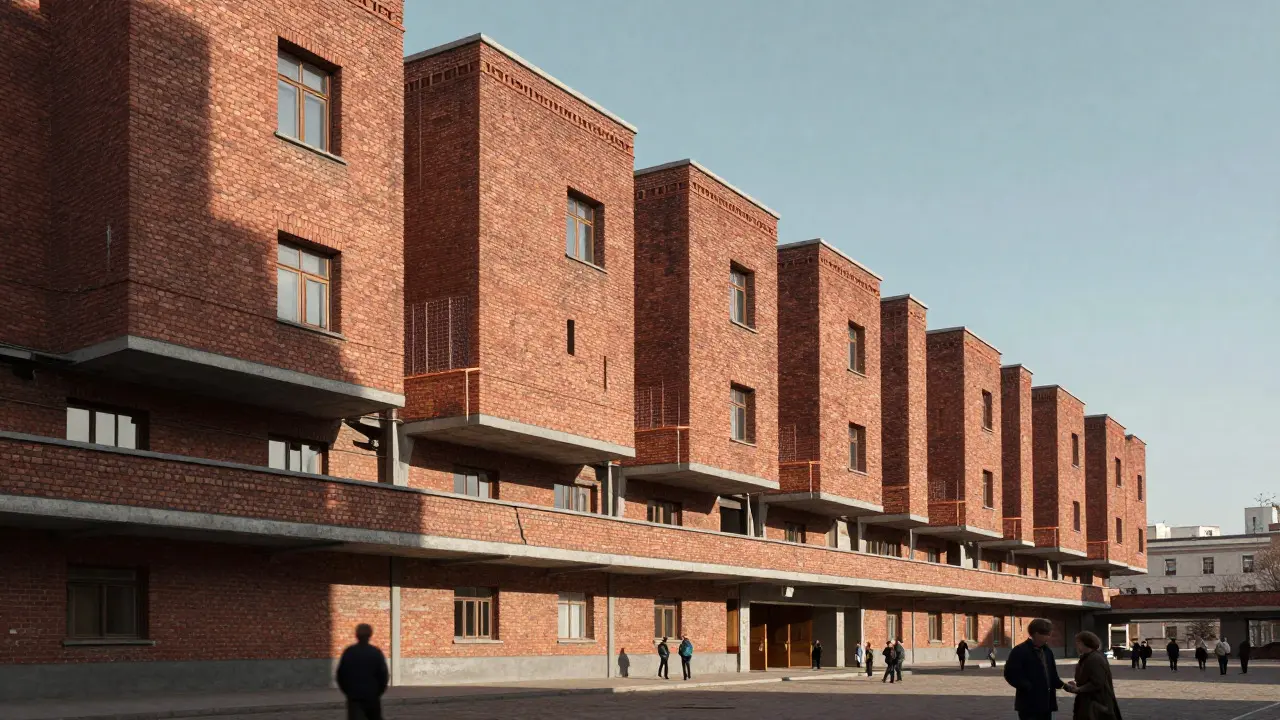
Unlike previous styles that looked backward to classical Greece or Gothic cathedrals, Constructivists looked forward to industry. They embraced the machine age. Key figures like Alexander Rodchenko, Vladimir Tatlin, and El Lissitzky rejected decoration entirely. For them, beauty came from function. A building should be honest about its materials and structure. If a wall held up a roof, show the wall. If a beam supported a floor, expose the beam.
This philosophy led to designs that looked more like factories than homes. But that was the point. By making residential buildings resemble industrial spaces, they aimed to erase the distinction between labor and leisure, between the worker and the intellectual. The goal was total integration of life into a productive, collective whole.
Designing for Collective Living
One of the most ambitious goals of Constructivist architecture was to replace the private family home with communal living spaces. The traditional nuclear family was seen as a relic of capitalism, fostering selfishness and isolation. Instead, architects proposed communal houses (or dom-kommuna) where residents shared kitchens, dining halls, laundries, and even childcare facilities.
Moscow's Narkomfin Building, designed by Moisei Ginzburg and Ignaty Milinis in 1928, is the prime example. It featured separate sleeping cells for individuals but large shared spaces for social interaction. Residents cooked together, ate together, and raised children together. The idea was to liberate women from domestic drudgery and create a strong community bond. While many of these experiments failed due to lack of resources or cultural resistance, the concept influenced later housing projects worldwide.
Another key feature was the emphasis on light, air, and hygiene. Constructivist buildings often had open balconies, flat roofs for sunbathing, and large windows. These weren't just aesthetic choices; they were public health measures. After years of overcrowded, dark tenements, these bright, airy spaces were meant to improve both physical and mental well-being.
Key Principles of Constructivist Design
Constructivist architecture followed several core principles that distinguished it from other modernist movements:
- Functionalism: Every element must serve a practical purpose. No ornamentation for its own sake.
- Material Honesty: Use materials like concrete, steel, and glass in their natural state. Don't hide structural elements.
- Asymmetry and Dynamic Forms: Reject classical symmetry. Use diagonal lines and geometric shapes to create a sense of movement and energy.
- Social Utility: Buildings should serve the collective good, not individual prestige.
- Integration with Technology: Embrace new construction techniques and industrial production methods.
These principles resulted in buildings that looked radically different from anything before. Think sharp angles, cantilevered sections, and exposed frameworks. The visual language was aggressive and forward-looking, mirroring the revolutionary spirit of the time.
Famous Examples and Their Social Impact
While many Constructivist projects remained on paper, several iconic buildings were built and left a lasting mark on urban landscapes.
| Building Name | Location | Architects | Social Purpose |
|---|---|---|---|
| Narkomfin Building | Moscow | Moisei Ginzburg, Ignaty Milinis | Promote communal living and gender equality by sharing domestic chores |
| Tatlin's Tower (Model) | Moscow | Vladimir Tatlin | Symbolize the Third International and global communist solidarity |
| Rusakov Club | Moscow | Vesnin Brothers | Create a space for worker education and political engagement |
| Zuev Workers' Club | Moscow | Konstantin Melnikov | Foster community interaction through flexible, multi-use spaces |
The Rusakov Club, for instance, was designed to be a center for worker education. Its interior featured movable walls and stages, allowing the space to adapt to different events-from lectures to performances. This flexibility reflected the belief that culture and politics should be accessible and dynamic, not static and elitist.
Similarly, the Zuev Workers' Club by Konstantin Melnikov used innovative geometry to create a vibrant social hub. The exterior's zigzagging form was not just striking; it maximized natural light and ventilation, improving conditions for workers who spent long hours inside.

Why Constructivism Faded
If Constructivism was so visionary, why didn't it dominate the 20th century? Several factors contributed to its decline. First, the rise of Stalinism in the 1930s brought a shift toward Socialist Realism, which favored grandiose, neoclassical designs that projected power and stability rather than experimental collectivism. Constructivist architects were criticized as "formalists" and marginalized.
Second, the practical challenges of implementing such radical social experiments were immense. Communal living required a level of trust and cooperation that was hard to sustain. Many residents missed the privacy and autonomy of traditional homes. Without adequate funding and maintenance, many communal facilities fell into disrepair.
Finally, the movement was inherently tied to a specific political context. As the Soviet Union evolved, so did its architectural priorities. By the mid-20th century, mass housing needs took precedence over ideological experimentation, leading to the standardized panel buildings that dominated Soviet cities.
Legacy in Modern Architecture
Despite its short-lived dominance, Constructivist architecture has had a profound influence on contemporary design. Its emphasis on functionality, material honesty, and social responsibility resonates with today's sustainable and inclusive design practices.
Modern architects often cite Constructivism when discussing affordable housing solutions. The idea of maximizing space efficiency and creating shared amenities is relevant in dense urban environments where land is scarce. Concepts like co-living spaces, which gained popularity in the 2010s, echo the communal ideals of the Narkomfin Building.
Moreover, the movement's rejection of ornamentation paved the way for International Style modernism, which spread globally. Today's sleek, minimalist skyscrapers owe much to the Constructivist insistence on structural clarity and industrial aesthetics.
In recent years, there has been a renewed interest in preserving Constructivist landmarks. Organizations like DOMO have worked to restore and repurpose these buildings, recognizing their historical and cultural value. This preservation effort highlights how architecture can serve as a tangible link to past social aspirations, reminding us of the potential for design to shape society.
Constructivism vs. Other Modern Movements
It's easy to confuse Constructivism with other modernist styles, but key differences exist. Unlike Bauhaus, which focused on craft and education, Constructivism was deeply political and revolutionary. While Le Corbusier's Purism emphasized order and standardization, Constructivism embraced dynamism and asymmetry. And unlike Brutalism, which emerged later and often felt imposing, Constructivism aimed to be liberating and optimistic.
Understanding these distinctions helps clarify why Constructivism remains unique. It wasn't just about building efficiently; it was about building a better world. That idealistic drive continues to inspire architects who believe their work can contribute to social justice and community well-being.
How to Identify Constructivist Architecture
If you're walking through a city and want to spot Constructivist influences, look for these features:
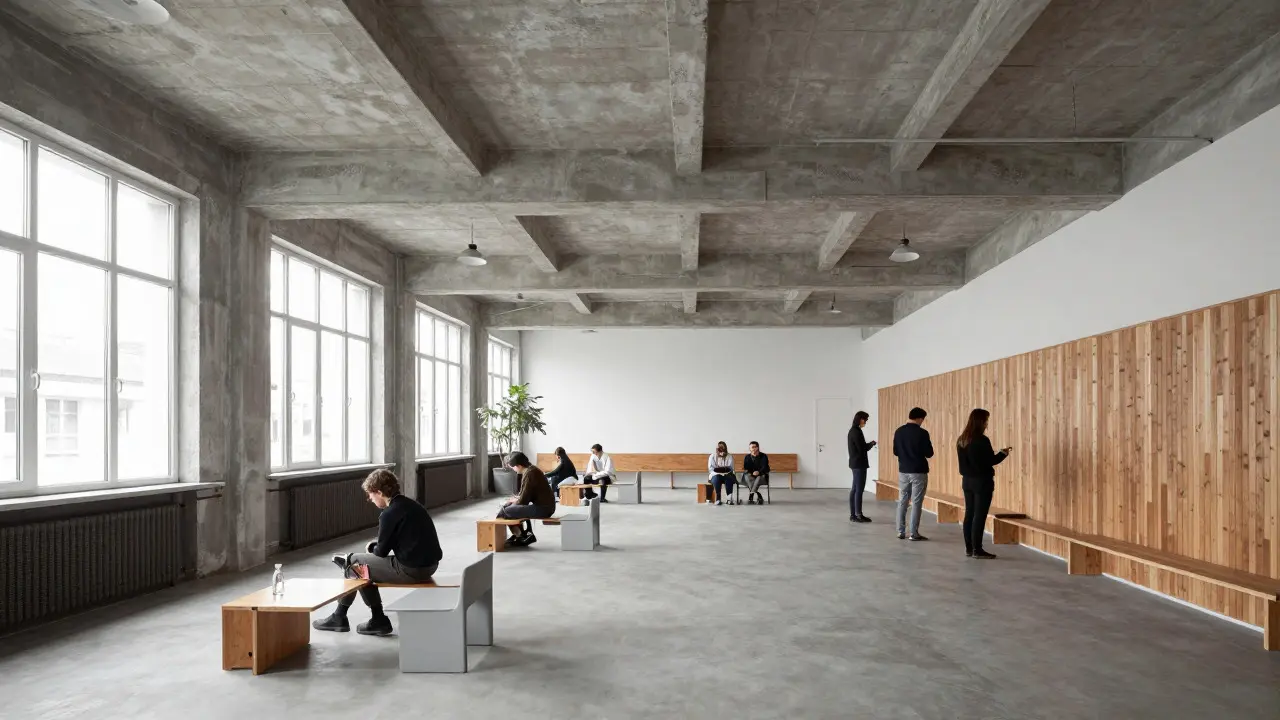
- Exposed structural elements like beams and columns
- Flat roofs and lack of decorative moldings
- Geometric shapes, especially triangles and diagonals
- Use of red brick, concrete, and glass
- Asymmetrical facades that suggest movement
- Large windows to maximize natural light
These characteristics make Constructivist buildings stand out, even amidst modern developments. They carry a distinct visual language that speaks to their origins in revolution and industry.
The Role of Technology in Constructivist Design
Technology was central to Constructivist architecture. Architects saw new materials and construction methods as tools for social progress. Reinforced concrete allowed for larger spans and more flexible floor plans. Steel frames enabled taller, lighter structures. Glass provided transparency and connection to the outdoors.
This technological optimism mirrored the broader societal belief that science and industry could solve human problems. By integrating cutting-edge technology into everyday buildings, Constructivists hoped to elevate the quality of life for all citizens, not just the elite.
Challenges and Criticisms
No movement is without flaws. Critics argue that Constructivist architecture sometimes prioritized ideology over livability. The rigid communal arrangements ignored individual preferences and cultural nuances. Some buildings were poorly insulated or lacked basic comforts, making them difficult to inhabit in harsh climates.
Additionally, the top-down approach to design often excluded input from actual residents. Architects imposed their visions without considering local needs or feedback. This disconnect led to projects that looked impressive on paper but struggled in practice.
Yet, these criticisms don't diminish the movement's significance. They highlight the complexities of using architecture as a tool for social change. Success requires balancing idealism with pragmatism, innovation with empathy.
Preserving the Past for the Future
Today, many Constructivist buildings are at risk of demolition or neglect. Urban development pressures and changing tastes threaten these historic structures. Preservation efforts face financial constraints and bureaucratic hurdles.
However, adaptive reuse offers a promising path forward. Converting old communal houses into creative hubs, student residences, or mixed-use complexes can breathe new life into these spaces while honoring their history. This approach ensures that Constructivist architecture remains part of the urban fabric, continuing to inspire future generations.
Supporting preservation initiatives involves raising awareness, advocating for policy changes, and investing in restoration projects. When we protect these buildings, we preserve more than bricks and mortar-we safeguard a vision of what society could be.
What is the main goal of Constructivist architecture?
The main goal was to use design to promote social equality, collective living, and the creation of a new socialist society. It aimed to eliminate class distinctions and improve daily life through functional, efficient buildings.
Who were the key architects of the Constructivist movement?
Key figures include Vladimir Tatlin, Alexander Rodchenko, El Lissitzky, Moisei Ginzburg, and Konstantin Melnikov. Each contributed unique ideas that shaped the movement's aesthetic and philosophical direction.
Why did Constructivist architecture decline in the 1930s?
It declined due to the rise of Stalinism, which favored Socialist Realism, and the practical difficulties of implementing communal living. Political shifts and resource limitations also played significant roles.
How does Constructivism influence modern architecture?
Its emphasis on functionality, material honesty, and social utility influences contemporary sustainable design, co-living spaces, and minimalist aesthetics. It reminds architects of the social responsibility inherent in their work.
Can you give an example of a famous Constructivist building?
The Narkomfin Building in Moscow is a prime example. Designed by Moisei Ginzburg, it featured communal kitchens and childcare facilities to promote collective living and gender equality.
Is Constructivist architecture still relevant today?
Yes, its principles of sustainability, efficiency, and social equity resonate with current challenges in urban planning and housing. Preserving these buildings also maintains a connection to important historical ideas.