Why Deconstructivism Is Redefining Modern Design
 Dec, 15 2025
Deconstructivism isn’t just another style on the design calendar-it’s shaking up everything we thought we knew about form, function, and order. Walk through any major city today, and you’ll see buildings that look like they were dropped from a helicopter mid-chaos. Angles twist. Walls lean like they’re about to fall. Surfaces crack open like broken porcelain. This isn’t accidental. It’s intentional. And it’s everywhere-in museums, galleries, offices, even luxury homes. Deconstructivism is the talk of the town because it refuses to play by the rules. It doesn’t ask for permission. It doesn’t apologize for being unsettling. And that’s exactly why it’s so powerful right now.
What Deconstructivism Actually Is (And What It Isn’t)
Deconstructivism didn’t start as a movement. It started as a question. In the late 1980s, architects like Frank Gehry, Zaha Hadid, and Daniel Libeskind began asking: What if structure didn’t have to be stable? What if beauty didn’t have to be symmetrical? What if a building could feel like it’s falling apart-without actually collapsing?
It’s not chaos for chaos’s sake. It’s not punk architecture. It’s not rebellion for the sake of shock. Deconstructivism takes the foundations of modernism-clean lines, rational planning, functional clarity-and then deliberately fractures them. It uses geometry not to organize space, but to destabilize it. Think of it like reading a sentence where every word is in the wrong order, but somehow, you still understand the meaning. That’s deconstructivism.
It’s not about breaking rules randomly. It’s about revealing how those rules were never as solid as we thought. A deconstructivist building doesn’t hide its structure-it flaunts its tension. Beams jut out like bones. Glass panels don’t line up. Floors slope where they shouldn’t. The result? A space that feels alive, unpredictable, and deeply human.
Why Now? The Cultural Shift Behind the Trend
Why is deconstructivism exploding now, in 2025? Because we’re tired of perfection.
For decades, design pushed minimalism, neutrality, and harmony. White walls. Flat surfaces. Everything in its place. It felt clean. Safe. But also sterile. Soulless. After years of pandemic isolation, digital overload, and political instability, people don’t crave calm anymore-they crave authenticity. They want spaces that reflect complexity, not erase it.
Deconstructivism speaks to that. It doesn’t pretend everything is under control. It shows cracks. It leans into asymmetry. It lets light hit at odd angles. It makes you pause. It makes you feel something. That’s why it’s showing up in interiors, furniture, even fashion. A deconstructivist chair doesn’t just hold you-it challenges how you sit. A deconstructivist lamp doesn’t just light a room-it casts shadows that tell stories.
Look at the new Melbourne Arts Centre extension. The steel cladding doesn’t follow the roofline-it cuts across it like a jagged scar. The windows aren’t aligned with the floors. The stairs don’t go straight up. People walk through it and say, ‘I didn’t know a building could feel this emotional.’ That’s the point.
Real Buildings, Real Impact
Deconstructivism isn’t just theory. It’s built in concrete, steel, and glass-and it’s changing how we experience space.
The Walt Disney Concert Hall in Los Angeles, designed by Frank Gehry, looks like a crumpled sheet of metal frozen mid-motion. Its curves don’t follow symmetry-they follow sound. The building was engineered to reflect acoustics, not aesthetics. And yet, it became an icon.
Zaha Hadid’s MAXXI Museum in Rome isn’t a series of rooms. It’s a single, flowing ribbon of concrete that twists through the building like a river. There are no right angles. No corners. Just movement. Visitors don’t walk through it-they drift through it.
And then there’s the CCTV Headquarters in Beijing, a looping, gravity-defying tower that looks like a giant Möbius strip. It doesn’t just house a TV network-it redefines what a corporate building can be. No facade. No front. No back. Just structure turned inside out.
These aren’t just buildings. They’re experiences. And that’s what designers are chasing now: not just function, but feeling.
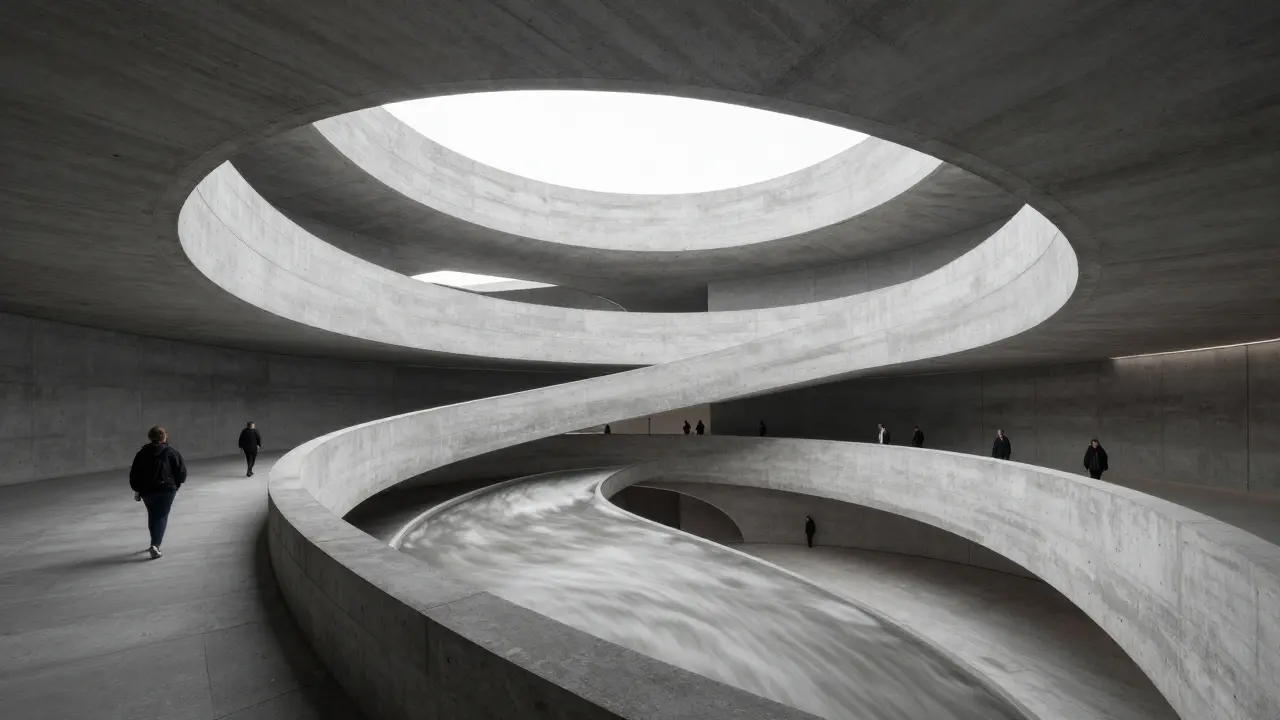
Deconstructivism in Everyday Design
You don’t need to build a museum to use deconstructivism. It’s leaking into the small stuff too.
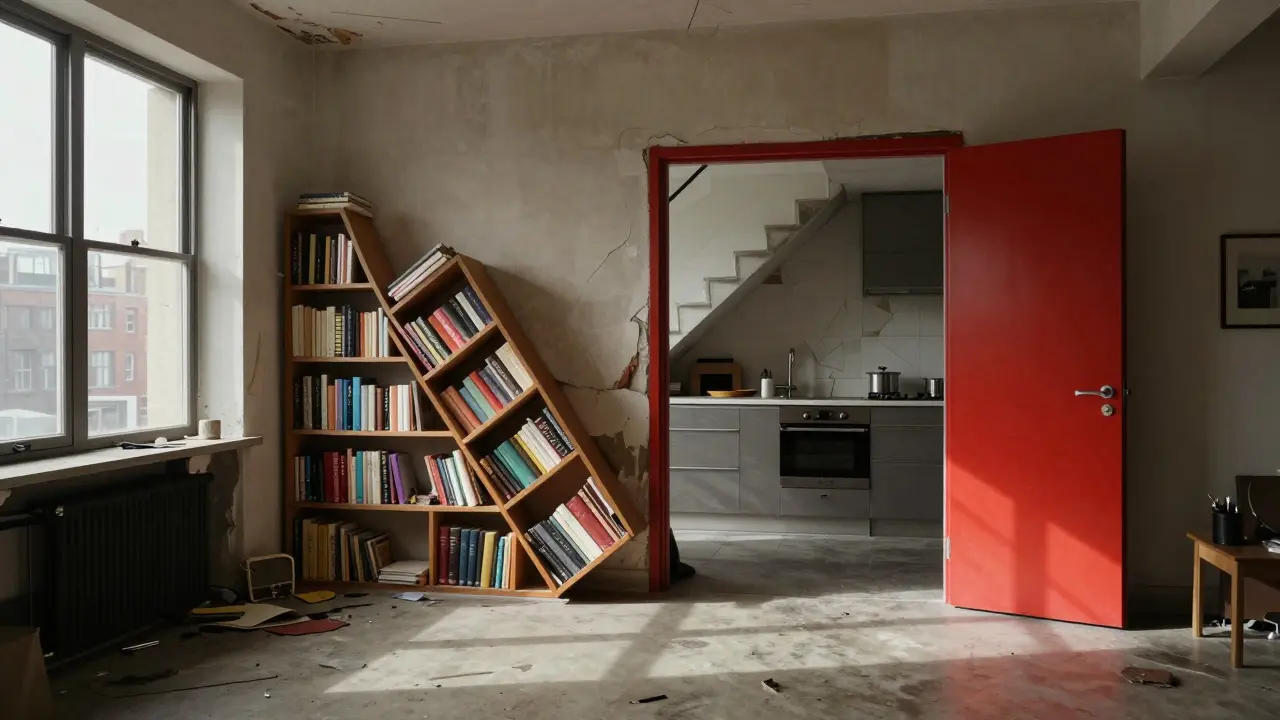
Look at kitchen islands that slope downward instead of sitting flat. Bookshelves that lean into each other like they’re having a conversation. Doors that open at 15-degree angles because the frame was deliberately skewed. Even smartphone cases now come in fractured, asymmetrical shapes-because we’re drawn to things that feel handmade, raw, and real.
Interior designers are using deconstructivist principles to break up open-plan spaces. Instead of a single living area, they’re creating ‘zones’ that overlap like puzzle pieces. A dining nook might jut into the living room. A staircase might disappear into a wall. Furniture isn’t placed to fill space-it’s placed to interrupt it.
And it works. People aren’t confused. They’re engaged. They notice the detail. They linger. They take photos. They talk about it. That’s the magic of deconstructivism-it doesn’t just occupy space. It commands attention.
Why It’s Controversial (And Why That Matters)
Not everyone loves deconstructivism. Critics call it pretentious. They say it’s expensive. They say it’s impractical. And they’re not entirely wrong.
These buildings cost more. They’re harder to build. Maintenance is a nightmare. A tilted wall means uneven flooring. A jagged window means tricky insulation. Some spaces feel disorienting. Not everyone wants to walk into a home where the ceiling dips suddenly above their head.
But that’s the point. Deconstructivism isn’t for everyone. It’s not meant to be comfortable. It’s meant to provoke. And in a world where everything is optimized for convenience, that’s radical.
Think of it like music. You don’t need to love heavy metal to appreciate that it exists. You don’t need to live in a deconstructivist house to understand why it matters. It’s a reminder that design doesn’t have to serve only utility. It can serve emotion. It can serve memory. It can serve wonder.
The Future Is Not Straight
Deconstructivism isn’t going away. It’s evolving. And it’s not just about architecture anymore. It’s influencing digital interfaces, product design, even urban planning.
Apps are starting to break the grid. Navigation menus don’t always sit at the top. Buttons appear where you least expect them. It’s not buggy-it’s intentional. Designers are learning that predictability can be boring. Surprise keeps people engaged.
In cities, planners are experimenting with deconstructivist layouts: roads that curve unpredictably to slow traffic, parks that don’t follow perimeter fences, public art that interrupts sightlines on purpose. The goal? To make people slow down. To make them look. To make them feel alive.
Deconstructivism is the design language of our time because it matches our inner state: fragmented, complex, searching for meaning in a world that tries to make everything neat. It doesn’t fix that. It reflects it. And that’s why it’s the talk of the town.
What Comes Next?
Will deconstructivism become mainstream? Probably not in the way minimalism did. It’s too wild for that. But will it become a permanent part of the design toolbox? Absolutely.
Designers aren’t abandoning clean lines-they’re learning to break them with purpose. The future isn’t about choosing between order and chaos. It’s about knowing when to use each. Deconstructivism gives us permission to embrace the mess. To let design be bold. To let space be alive.
And maybe, just maybe, that’s what we all needed all along.