Transforming Your Dining Room with Mid-Century Modern Style
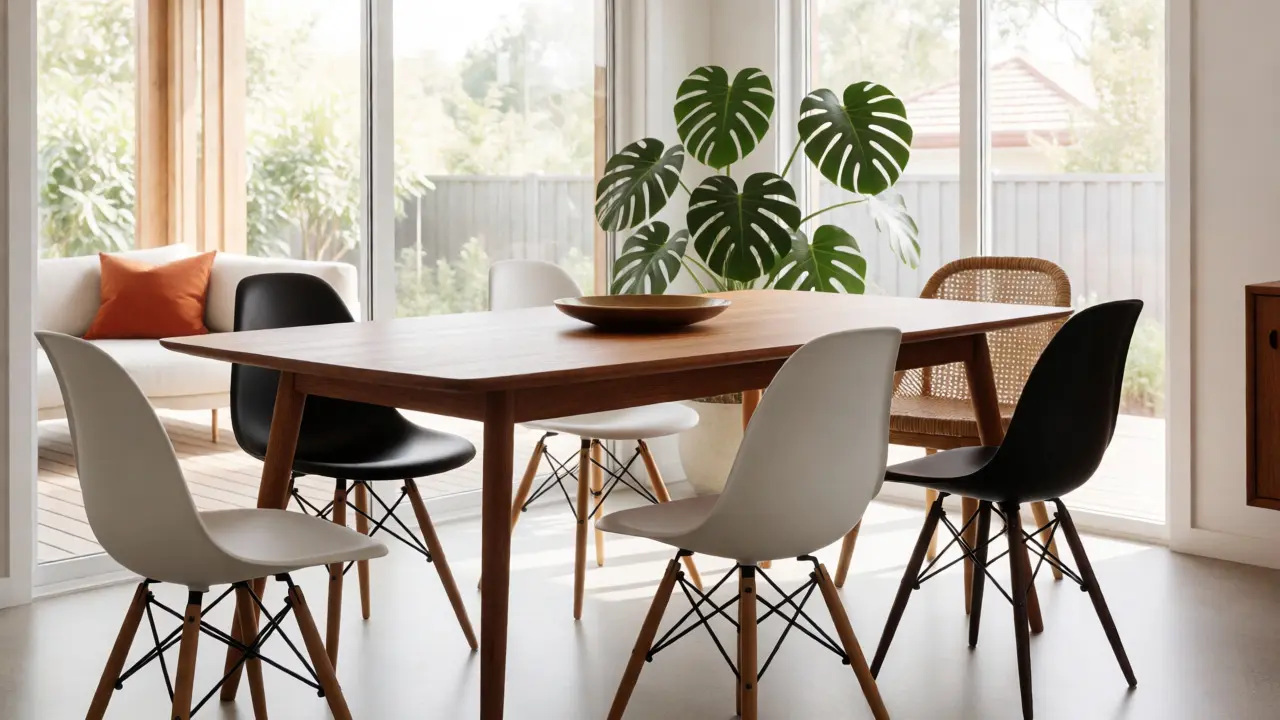 Aug, 29 2026
You walk into a room and feel it instantly. The air is lighter. The lines are cleaner. There’s a sense of order that doesn’t feel cold, but rather welcoming. That is the power of Mid-Century Modern (MCM) design, an architectural and interior design movement that flourished from roughly 1945 to 1969. It’s not just about buying old chairs; it’s about embracing a philosophy where form follows function, yet comfort remains king.
If you’re looking at your current dining space and feeling like it’s cluttered, dated, or just “off,” transforming it with MCM elements is one of the most effective ways to inject timeless style. But here’s the catch: you don’t need to live in a heritage-listed brick veneer in Melbourne or Sydney to pull this off. You can do it in a modern apartment in Adelaide, a suburban home in Brisbane, or even a renovated cottage. The key is understanding what makes the style work and applying those principles without turning your home into a museum exhibit.
The Core Principles of Mid-Century Modern Design
Before you start hunting for teak tables or velvet armchairs, you need to grasp the DNA of the movement. Mid-Century Modern isn’t a single look; it’s a set of rules. If you break them, you end up with something that looks like a bad theme party rather than a curated home.
The first rule is simplicity. MCM rejects unnecessary ornamentation. Think of the difference between a Victorian dining chair, with its carved wood and heavy upholstery, and an Eames Molded Plastic Chair. One shouts for attention; the other whispers. The second rule is functionality. Every piece must earn its place. If a sideboard has decorative legs that serve no structural purpose, it’s likely not true MCM. The third rule is the integration of nature. Large windows, natural light, and organic materials like wood, stone, and leather were central to designers like Charles and Ray Eames, Eero Saarinen, and Arne Jacobsen.
In Australia, we have a unique relationship with this style. Our climate encouraged open-plan living earlier than in many European countries. We adapted the American and Scandinavian versions of MCM to suit our sun-drenched landscapes. This means indoor-outdoor flow isn’t just a trend here; it’s part of our architectural history. When you transform your dining room, think about how it connects to your garden or patio. Does the table face the view? Is there a seamless transition?
Selecting the Right Dining Table
The table is the anchor of any dining room. In the MCM world, the table is often a statement piece, but it must remain grounded. You have two main paths here: authentic vintage pieces or high-quality reproductions.
Teak is the quintessential wood of the era. It was durable, beautiful, and readily available post-WWII. A solid teak dining table with tapered legs is the gold standard. Look for clean lines. Avoid anything with excessive carving or heavy moldings. The legs should be slim and angled outward slightly, creating a sense of lightness. If teak feels too expensive or hard to find, walnut is another excellent choice. It offers a richer, darker tone that contrasts beautifully with lighter walls.
Then there’s the shape. Round tables became popular because they facilitated conversation and didn’t block sightlines. An oval table, like the famous Saarinen Tulip table, eliminates visual clutter by having a single pedestal base instead of four legs. This creates more legroom and makes small rooms feel larger. If you have a large family, a rectangular extension table is practical, but ensure the mechanism is hidden and the aesthetic remains sleek.
| Table Type | Material | Best For | Key Feature |
|---|---|---|---|
| Tulip Table | Fiberglass top, aluminum base | Small spaces, modern aesthetics | No visible legs (pedestal base) |
| Noguchi Coffee/Dining | Glass top, wooden sculptural base | Art lovers, open plans | Sculptural, organic base |
| Extension Teak | Solid teak | Large families, entertaining | Practicality meets classic style |
| Round Walnut | Solid walnut | Intimate gatherings | Encourages conversation |
Chairs: Mixing and Matching Like a Pro
Here is where most people go wrong. They buy a matching set of six identical chairs. While this can work, true MCM style often embraces variety. The goal is cohesion, not uniformity. You want chairs that share a common language-perhaps all have wooden frames, or all use molded plastic-but vary in silhouette.
Consider the Eames Lounge Chair as the ultimate icon of comfort and design, though it’s usually for the lounge. For dining, look at the Eames Molded Plastic Chairs designed for Herman Miller. Available in various colors and shell shapes (DSR, DSW), they are lightweight, stackable, and incredibly comfortable. Pair these with a few Wayne Chair designs featuring cane backs for texture contrast. The cane adds warmth and breathability, which is perfect for the Australian summer.
Don’t be afraid to mix eras within the genre. A Danish teak chair with upholstered seats sits well next to a plastic-molded seat. The unifying factor is the lack of fussiness. Ensure the seat heights are consistent so everyone can eat comfortably. Nothing ruins a meal faster than someone slouching while another person perches awkwardly.
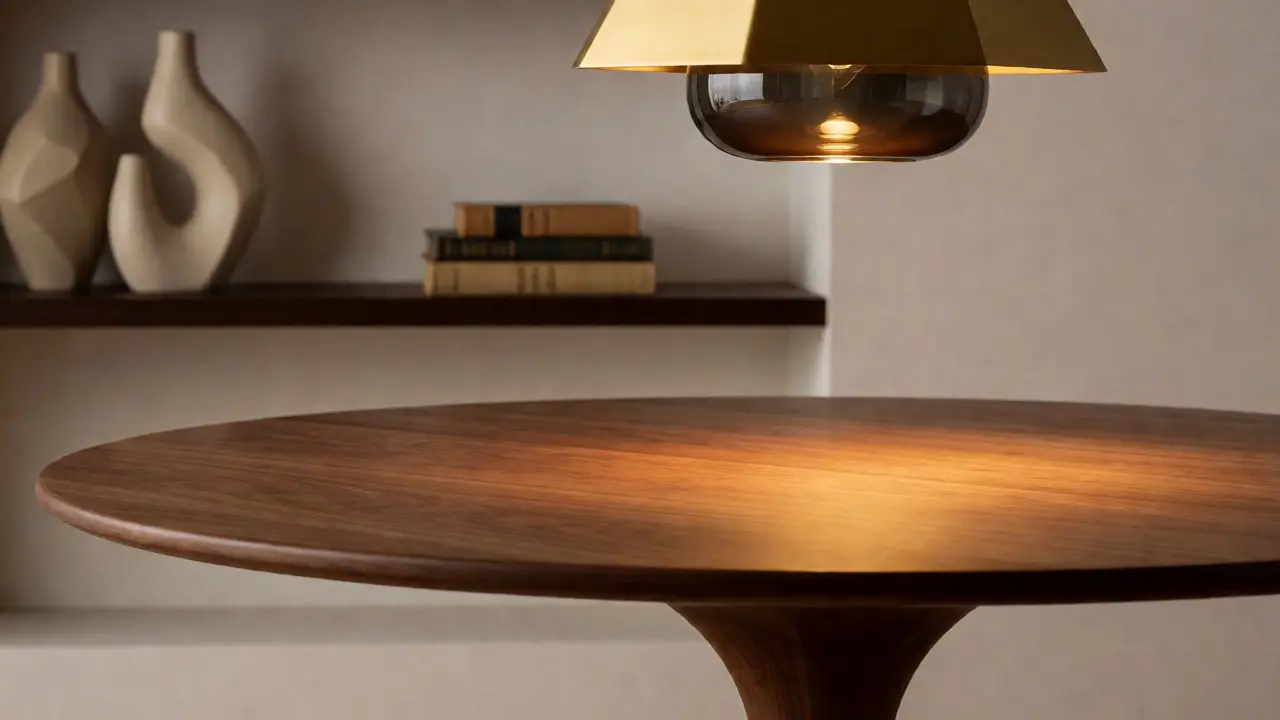
Lighting: Setting the Mood
Lighting is the jewelry of the room. In MCM design, fixtures are sculptural objects. They shouldn’t just illuminate; they should decorate. Forget crystal chandeliers. Think geometric, atomic, or minimalist.
A pendant light over the table is essential. Look for designs like the PH Artichoke by Poul Henningsen if you want luxury, or simpler globe pendants for a budget-friendly option. Glass globes on brass stems are very on-trend right now and fit the MCM vibe perfectly. The material matters. Brass, copper, and smoked glass add warmth. Avoid chrome if possible, as it can feel too industrial unless balanced with plenty of wood.
Layer your lighting. Don’t rely solely on the overhead fixture. Add floor lamps in corners or wall sconces if your layout allows. Dimmers are non-negotiable. You want bright light for cleaning and dinner prep, but soft, warm light for lingering over coffee after the meal. Warm white bulbs (2700K-3000K) mimic the glow of incandescent bulbs used in the 1950s, avoiding the harsh blue tint of cheap LEDs.
Textiles and Decor: Adding Personality
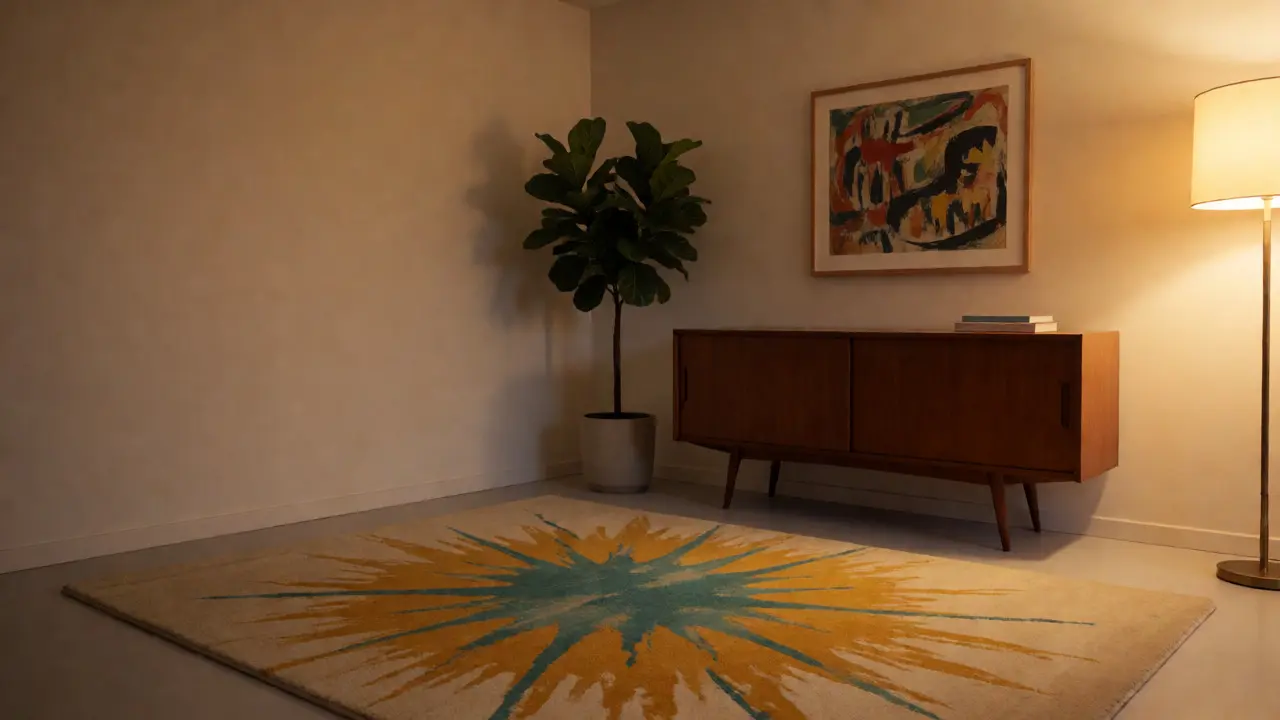
MCM interiors are known for bold color accents against neutral backdrops. Your walls might be white or pale grey, your sofa beige, but your cushions, rugs, and artwork bring the energy. Classic palettes include mustard yellow, avocado green, burnt orange, and teal. These colors evoke the optimism of the post-war era.
For your dining room, consider a rug with a geometric pattern. Abstract shapes, starbursts, or boomerang motifs are iconic. Keep the pile low so chairs roll easily. Textures play a huge role too. Combine smooth surfaces like glass or polished wood with rougher textures like jute, wool, or rattan. This tactile variety keeps the eye engaged.
Plants are mandatory. No MCM room is complete without a large houseplant. A fiddle-leaf fig, monstera deliciosa, or snake plant in a ceramic pot adds life and cleans the air. Place them near windows to highlight their leaves against the natural light. Artwork should reflect the abstract expressionist or pop art movements of the time. A framed poster of a cityscape or a vibrant abstract print can serve as a focal point.
Common Mistakes to Avoid
It’s easy to slip into cliché territory. Here are three traps to avoid.
- Over-cluttering: MCM is about negative space. If every surface is covered, the style dies. Leave breathing room around furniture.
- Ignoring Scale: Some vintage pieces are smaller than modern standards. Measure carefully. A tiny 1950s sideboard might look lost in a large contemporary dining room.
- Faux Vintage: Be wary of mass-produced “retro” items that miss the mark. Cheap particleboard veneers often peel, and poorly made plastic yellows over time. Invest in quality where you can, especially for seating.
Also, resist the urge to make everything match perfectly. If your table is dark walnut, don’t feel pressured to get dark walnut chairs. Contrast works better. Light chairs against a dark table create visual interest. Or vice versa.
Bringing It All Together
Transforming your dining room into a Mid-Century Modern haven is a journey, not a sprint. Start with the big pieces: the table and chairs. Then layer in lighting and textiles. Finally, add personal touches through art and plants. Remember, the goal is a space that feels effortless. It should invite conversation, support good food, and look good doing it.
Living in Australia, we have access to great local makers who respect these traditions. Support local artisans who craft in timber and metal. Visit op-shops in cities like Adelaide or Melbourne for genuine finds. You might uncover a gem that no one else has. That uniqueness is the soul of Mid-Century Modern style.
What defines Mid-Century Modern style?
Mid-Century Modern is characterized by clean lines, gentle organic curves, a love for different materials, and a focus on functionality. It emerged from the mid-20th century (roughly 1945-1969) and emphasizes simplicity, integration with nature, and minimal ornamentation.
Can I mix Mid-Century Modern with other styles?
Yes, MCM pairs exceptionally well with Scandinavian, Bohemian, and Industrial styles. Its neutral foundation and functional design allow it to blend seamlessly. Just ensure you maintain a cohesive color palette and avoid overcrowding.
How do I identify authentic vintage MCM furniture?
Look for maker’s marks, joinery techniques (like dovetail joints), and material quality. Authentic pieces often have slight imperfections and patina. Check for labels from reputable manufacturers like Herman Miller, Knoll, or Danish brands like Fritz Hansen. Reproductions may have uniform finishes and cheaper hardware.
What colors work best for a Mid-Century Modern dining room?
Classic MCM colors include mustard yellow, olive green, burnt orange, teal, and pink. These are typically used as accents against neutral backgrounds like white, grey, or beige. Natural wood tones also serve as key color elements in the scheme.
Is Mid-Century Modern suitable for small apartments?
Absolutely. The emphasis on functionality, raised furniture (which shows more floor area), and light materials makes it ideal for small spaces. Pedestal tables and slim-legged chairs help maximize visual openness.