The Women of the Renaissance: Shaping History Behind the Scenes
 Mar, 14 2026
When you think of the Renaissance, you probably picture Leonardo da Vinci, Michelangelo, or Machiavelli. Men who changed the world with brushstrokes, sculptures, and political theories. But what about the women who were there too - the ones who didn’t get their names on the monuments, whose work was signed by brothers or husbands, or whose voices were silenced by centuries of bias? The truth is, the Renaissance didn’t just happen to women - it happened because of them.
They Didn’t Just Pose - They Painted
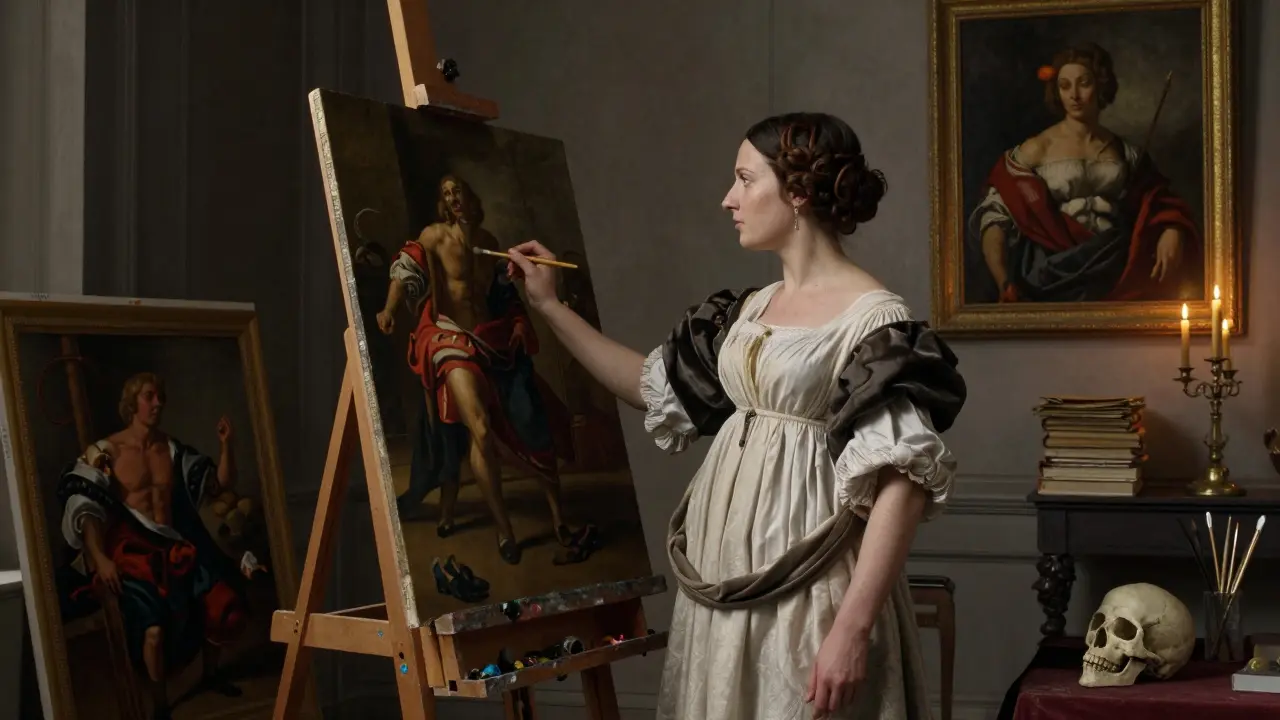
Most people assume women in the 15th and 16th centuries were only subjects in paintings - serene, draped in silk, staring into the distance. But hundreds of women were behind the canvas. Artemisia Gentileschi is the most famous example. She didn’t just paint biblical heroines; she painted them as warriors. Her Judith Slaying Holofernes isn’t a calm religious scene - it’s raw, violent, and personal. Scholars believe she painted Judith’s rage after being raped by her own art teacher. She was the first woman admitted to Florence’s Accademia delle Arti del Disegno, and her work sold across Europe. Yet for centuries, her paintings were attributed to men.
And she wasn’t alone. Lavinia Fontana from Bologna painted portraits of nobility for over 40 years. She supported her family financially through her art - unusual for a woman in 1580. Her studio had apprentices. She painted Pope Clement VIII. She didn’t wait for permission. She just did it.
Patrons, Not Just Pawns
Women didn’t just create art - they paid for it. The Medici family is famous for funding the Renaissance, but it was women like Isabella d’Este who made sure art was more than just decoration. As the Marchioness of Mantua, she was one of the most powerful women in Europe. She collected Roman sculptures, commissioned paintings from Titian and Leonardo, and wrote over 30,000 letters to artists, scholars, and diplomats. Her personal library had 400 books - many in Greek and Latin. She didn’t just support culture; she shaped it.
Even women without titles were patrons. In Florence, widows used their dowries to fund chapels, altarpieces, and convents. One woman, Lucrezia Tornabuoni, mother of Lorenzo de’ Medici, commissioned over a dozen religious artworks. Her influence helped turn Florence into the epicenter of Renaissance art.
Writers Who Refused to Be Silent
While men wrote treatises on politics and philosophy, women wrote about life, love, and injustice. Christine de Pizan was a French writer who, in 1405, published The Book of the City of Ladies - a defense of women’s intellect and moral strength. She wrote it after reading a poem that called women “corrupt and foolish.” Her book wasn’t poetry - it was a manifesto. She argued that women could be scholars, rulers, and creators. Her work was copied by hand across Europe for over a century.
In Italy, Vittoria Colonna was a poet whose sonnets were read by popes and kings. She was friends with Michelangelo. They exchanged letters and poems. He called her “a soul of divine grace.” She never married again after her husband died - a radical choice - and spent her life writing, debating theology, and supporting reformers. Her poetry was published in six editions during her lifetime. That’s rare for any writer, let alone a woman in 1540.
Education Was a Battle
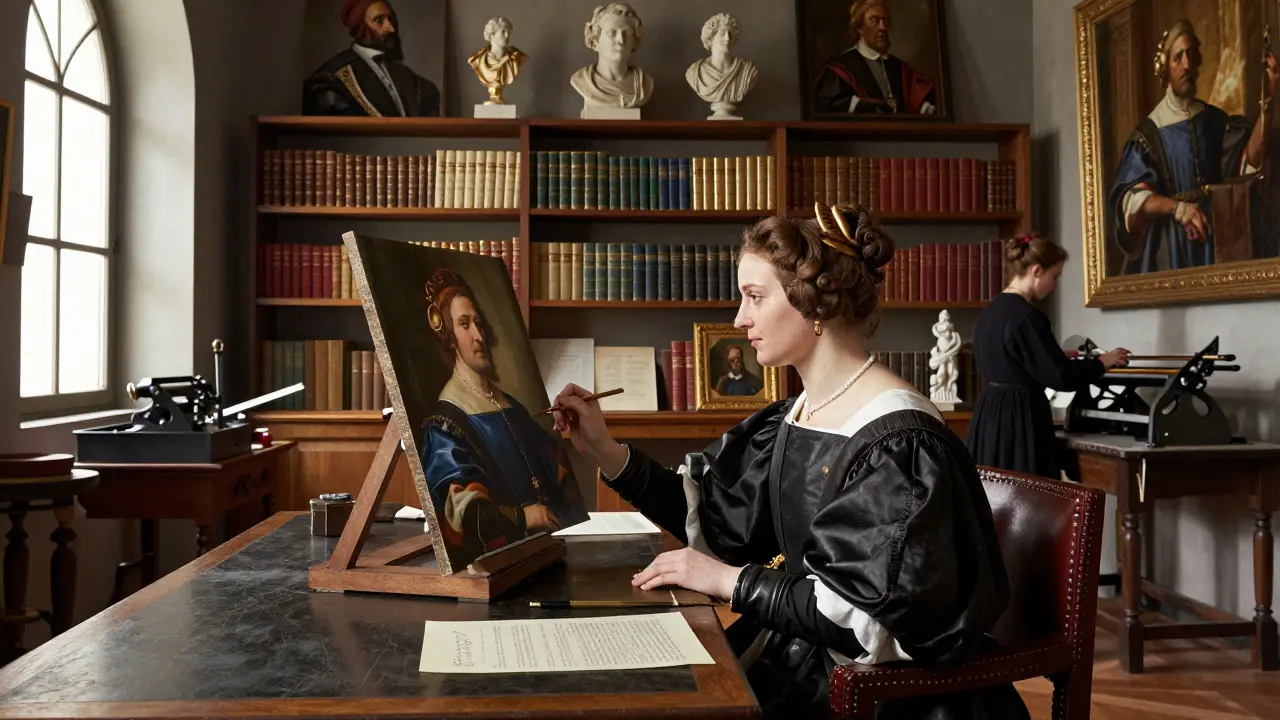
Most girls were taught to sew, manage households, and obey. But some families - especially in northern Italy - broke the rules. Laura Cereta, from Brescia, wrote letters in Latin in the 1480s arguing that women deserved education. She wrote: “I do not wish to be silent, though I am a woman.” Her letters were circulated among scholars. She was mocked by men, but praised by women across Italy. She didn’t just want to learn - she wanted to be heard.
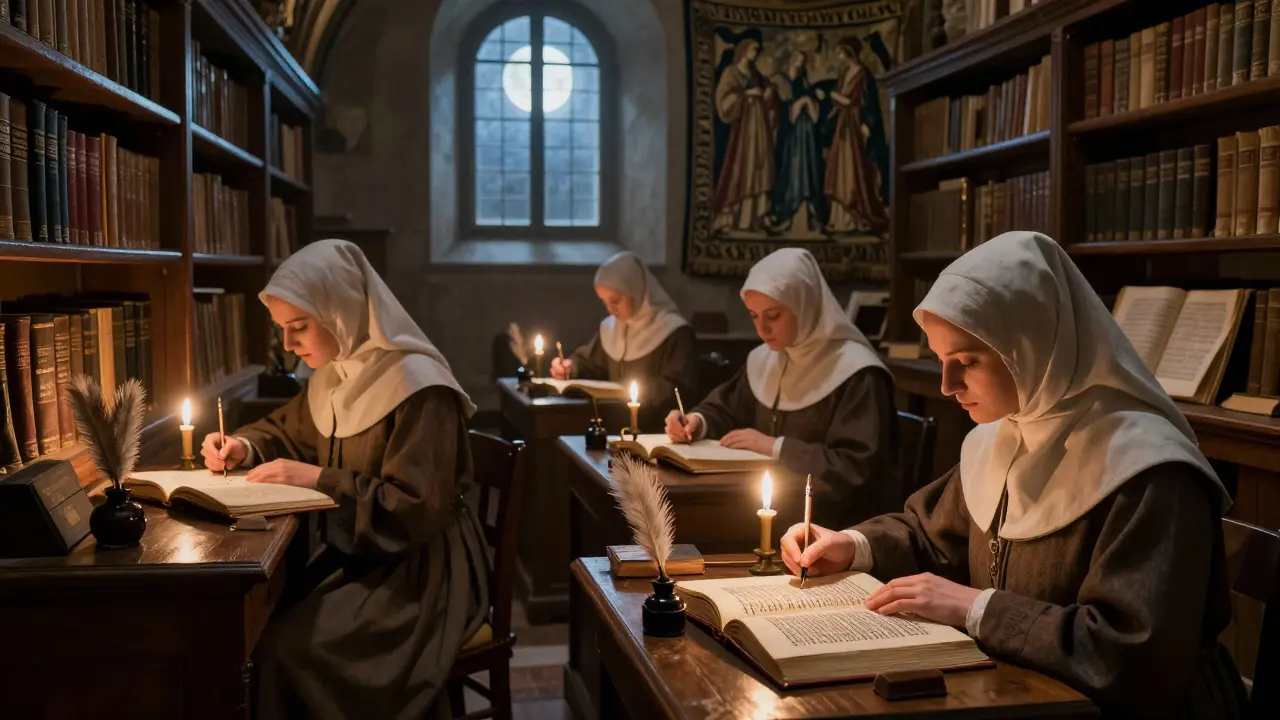
Convents became unexpected academies. Nuns like Sor Juana Inés de la Cruz (though later, in the 17th century) were part of a long tradition. In Renaissance Italy, convents had libraries, taught Latin, and allowed women to write theology. Some became centers of intellectual life. Women who entered convents often had more freedom than those who married.
The Invisible Labor
Not every woman was a painter or poet. Many shaped the Renaissance in quieter ways. Textile workers in Florence and Venice produced the silk and velvet that dressed nobility. Their labor funded entire workshops. Women in printing houses helped typeset and bind books - including feminist texts. In Venice, women ran printing presses after their husbands died. One, Lavinia Fontana’s mother, managed the family business while her daughter painted. Without these women, the Renaissance wouldn’t have spread.
Even in kitchens and nurseries, women preserved knowledge. Recipes, herbal remedies, and household guides were passed down orally - and later written down. These texts became the foundation of early science. Women didn’t need universities to be thinkers. They just needed the space to speak.
Why Were They Erased?
It wasn’t that women didn’t contribute - it’s that history chose to forget them. When Vasari wrote his Lives of the Artists in 1550, he included 137 men and zero women. His book became the standard. Later historians repeated his omissions. Women’s work was called “decorative,” “minor,” or “inspired by men.” Even when their signatures were visible, their names were changed in records.
But modern scholarship is changing that. In the last 30 years, art historians have dug through archives, letters, and church records. They’ve found receipts for payments to female artists. They’ve tracked commissions. They’ve found signatures hidden under layers of varnish. We now know that at least 30 women were professional painters in Renaissance Italy. That number grows every year.
Legacy in Plain Sight
Walk into any major museum today - the Uffizi, the Louvre, the Met - and you’ll see their work. Artemisia’s Judith. Lavinia’s portraits. Isabella’s letters. Vittoria’s poems. These aren’t footnotes. They’re masterpieces. The Renaissance wasn’t just a rebirth of classical ideas - it was a moment when women, against all odds, claimed space in a world that told them to stay quiet.
Their legacy isn’t just in paintings or books. It’s in the fact that today, we can ask: Who else was left out? And why? Their stories remind us that history isn’t written by the loudest voices - it’s shaped by the ones who refused to be silenced.
Were there any female Renaissance artists who were widely recognized during their time?
Yes. Lavinia Fontana and Artemisia Gentileschi were both highly respected in their lifetimes. Fontana painted portraits for popes and nobles and earned more than many male artists. Gentileschi had patrons across Italy and was admitted to the prestigious Accademia in Florence - something no other woman achieved in the 17th century. Their work was collected, copied, and praised by contemporaries.
Why didn’t more women become artists during the Renaissance?
Training was the biggest barrier. Art academies banned women. Apprenticeships were usually passed down through male family lines. Women couldn’t study anatomy by drawing nude models - a core part of training. Many were only allowed to paint still lifes or portraits of other women. Those who broke these rules faced social shame or family pressure. Only women from wealthy or well-connected families had the freedom to pursue art professionally.
How did women like Isabella d’Este influence politics without holding official power?
Through networks. Isabella used letters - thousands of them - to build alliances. She hosted scholars, arranged marriages, and acted as regent while her husband was away. She funded spies, negotiated treaties, and influenced papal decisions. Her influence wasn’t legal - it was personal, cultural, and strategic. She showed that power didn’t always come from a throne.
Did Renaissance women have access to education?
Some did - but only if their families supported it. Girls in noble families in cities like Ferrara, Mantua, and Venice were often taught Latin, music, philosophy, and literature. Convents offered the most consistent education for women. Outside these circles, most girls learned domestic skills. Literacy rates for women were low - around 10% in Italy - but among the elite, it could be over 50%.
What happened to the work of women artists after they died?
Many were misattributed. Paintings by Artemisia Gentileschi were labeled as works by her father or male students. Some were sold under male names. Others were lost because they weren’t valued. Museums didn’t collect them. Auction records ignored them. It wasn’t until the 1970s that feminist historians began re-examining these works. Today, many are being restored and reattributed.