The Revivalism Movement: How Past Styles Are Reshaping Modern Culture
 Jan, 26 2026
For decades, modern design pushed everything toward clean lines, bare surfaces, and minimal clutter. But something’s shifting. People aren’t just tolerating old styles anymore-they’re seeking them out. Antique furniture is selling out. Handmade quilts are trending on Instagram. Churches are being rebuilt with stained glass and stone arches. Even tech startups are hiring architects to design offices that look like 19th-century libraries. This isn’t nostalgia. It’s a full-blown cultural revival.
What Exactly Is Revivalism?
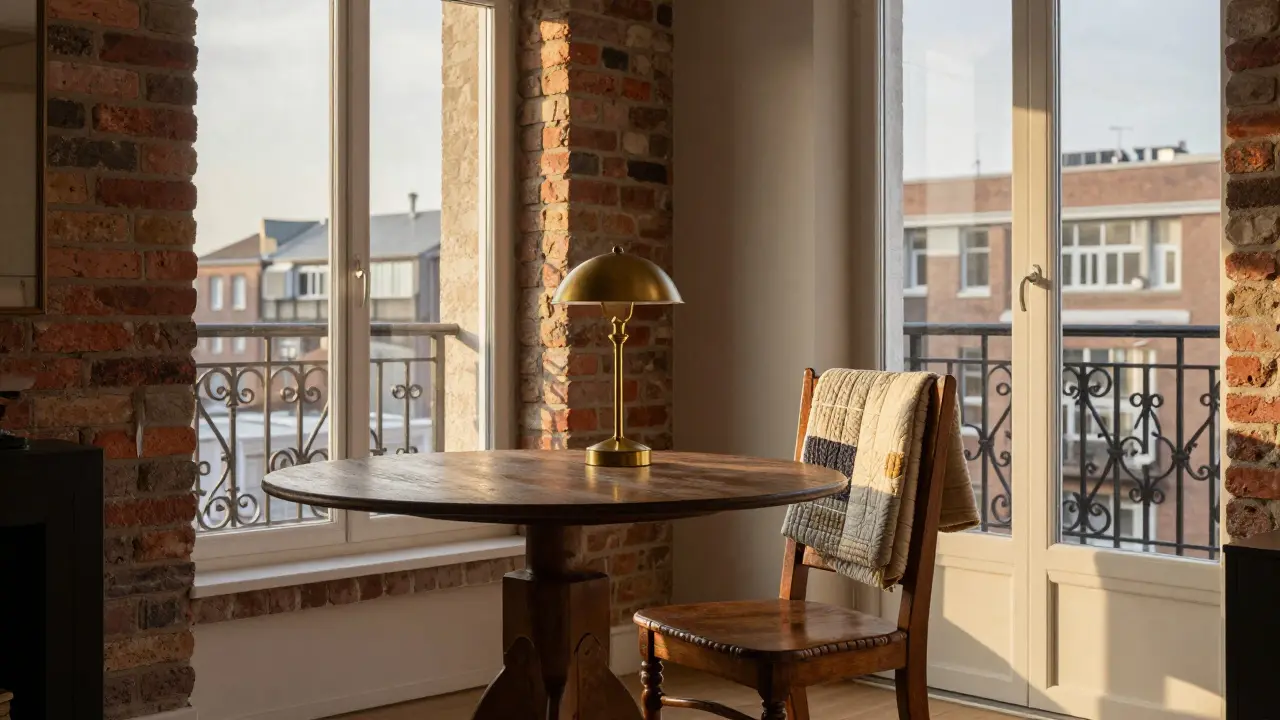
Revivalism isn’t just copying the past. It’s taking elements from earlier eras-styles, materials, craftsmanship-and reworking them for today’s needs. You see it in architecture when a new apartment building uses brick facades and wrought-iron balconies, not because it’s cheaper, but because people feel more connected in spaces that echo history. It shows up in fashion when a designer uses 1920s embroidery on a modern trench coat. It lives in music when indie bands record on analog tape to capture warmth no digital plugin can replicate.
The movement isn’t tied to one time period. Gothic Revival brought pointed arches back in the 1800s. Art Deco made a comeback in the 2010s. Now, we’re seeing a surge in Victorian, Craftsman, and even Byzantine influences-not as costumes, but as living traditions. People want texture. They want weight. They want things that feel made by hand, not mass-produced.
Why Now? The Psychology Behind the Return
After years of digital overload, people are craving physical meaning. A 2024 survey by the Cultural Heritage Institute found that 68% of adults under 40 feel more emotionally grounded when surrounded by objects with historical roots. That’s not a fluke. It’s a reaction to a world where everything is fast, disposable, and anonymous.
Think about it: when you buy a mass-produced chair from a big-box store, it’s just a chair. But when you sit in a restored 1905 oak dining chair, you’re not just sitting-you’re touching something that held conversations, meals, and maybe even tears over a century ago. That connection matters. It’s why restoration workshops are filling up. Why Etsy sellers who specialize in hand-dyed fabrics are seeing 200% growth since 2022. Why cities like Detroit and New Orleans are restoring entire blocks of abandoned Victorian homes, not for tourists, but for residents who want to live in places that tell stories.
Revivalism in Architecture: More Than Just Facades
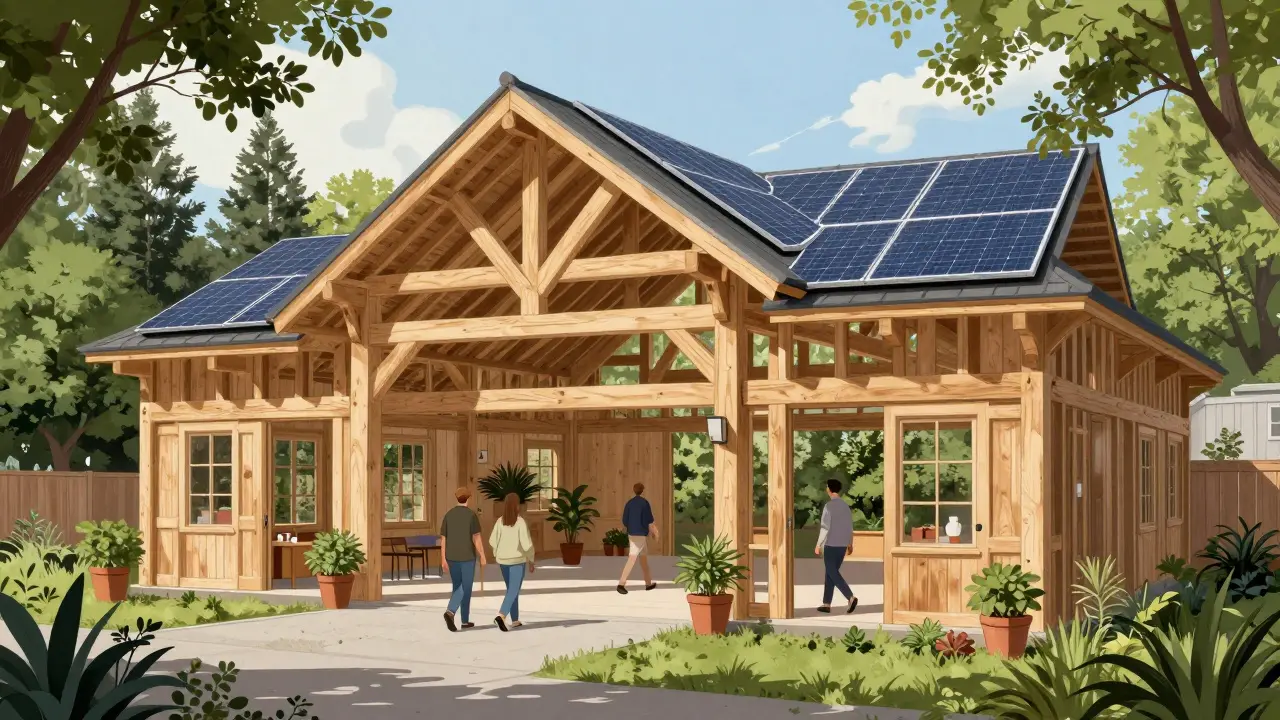
Architects aren’t just slapping on gingerbread trim to new buildings. They’re studying old construction methods to solve modern problems. In Portland, a new community center built in 2023 uses timber framing techniques from 1880s barns-not because it looks cute, but because it reduces carbon emissions by 40% compared to steel frames. In London, a housing project replaced synthetic insulation with sheep’s wool, a material used in 17th-century cottages, because it regulates humidity better than anything modern.
Even the layout of homes is changing. Open-plan living rooms, once the gold standard, are giving way to smaller, defined rooms. Why? Because people are tired of being constantly exposed. The Victorian concept of separate parlors, dining rooms, and studies is making a comeback-not as rigid class markers, but as intentional spaces for different kinds of living. A study from the University of Edinburgh found that households using distinct zones for work, rest, and socializing reported 34% lower stress levels than those in open-plan layouts.
Craftsmanship Over Convenience
Look at any revivalist project, and you’ll find one thing in common: a refusal to cut corners. In the 1950s, mass production meant faster, cheaper, easier. Today, revivalism means slower, more expensive, but deeply meaningful. A hand-carved wooden door takes weeks. A machine-made one takes hours. But the difference isn’t just in time-it’s in soul.
Small businesses are thriving because of this. In upstate New York, a family-run mill that stopped producing lumber in 1998 reopened in 2021 after customers begged them to bring back their old-growth pine. They now supply wood to 120 architects across the Northeast who specify it for restoration projects. In Kyoto, a 200-year-old paper-making workshop now trains 15 apprentices a year, up from just two in 2015. These aren’t tourist traps. They’re cultural lifelines.
Even tech companies are jumping in. Apple’s new London store features hand-laid stone tiles from a 19th-century quarry in Wales. Google’s Berlin office has walls covered in hand-glazed ceramic tiles made using Ottoman-era techniques. They’re not doing it for aesthetics alone. They’re signaling that value isn’t just in speed-it’s in depth.

Where Revivalism Falls Short
This isn’t a perfect movement. Some revivalist projects are just facades-glorified theme parks with no real understanding of the original context. A new luxury condo in Miami added colonial columns and shutters, but used plastic imitation wood and air-conditioned interiors that would have been impossible in the 1800s. That’s not revival. That’s costume.
There’s also the risk of cultural appropriation. When elements from marginalized traditions-like Indigenous patterns or African textiles-are taken without credit, context, or compensation, it becomes theft, not tribute. True revivalism respects origin. It partners with communities. It pays artisans fairly. It doesn’t just borrow-it listens.
And let’s not forget cost. Restoring a 1920s Craftsman home can cost twice as much as building new. Not everyone can afford it. That’s why the movement’s next challenge is making revival accessible-not just to the wealthy, but to working families, renters, and communities rebuilding after economic collapse.
The Future Isn’t Just Old-It’s Renewed
Revivalism isn’t about going backward. It’s about learning from what worked, and why. The best revivalist projects don’t copy-they reinterpret. They take the warmth of hand-hewn wood, the durability of lime plaster, the rhythm of symmetrical windows, and blend them with solar panels, smart insulation, and accessible design.
Look at the new public library in Birmingham, Alabama. It’s built in the style of a 1910 Carnegie library, with high ceilings and marble floors. But inside, it has free Wi-Fi, 3D printers, and a community kitchen. It’s not pretending to be 1910. It’s using 1910 as a foundation for 2026.
This movement is growing because it answers a quiet, widespread need: to belong to something lasting. In a world that feels fleeting, revivalism offers roots. Not as a cage, but as a compass.
Is revivalism just a trend, or is it here to stay?
It’s not a trend-it’s a response to deep cultural fatigue. Trends come and go. But the desire for meaning, craftsmanship, and connection to history isn’t temporary. As climate concerns push us toward durable, local materials, and digital burnout makes us crave tactile experiences, revivalism is becoming a practical philosophy, not just an aesthetic.
Can revivalism be sustainable?
Yes, and often more so than modern construction. Old buildings were built to last-using thick walls, natural insulation, and locally sourced materials. Restoring them uses far less energy than tearing down and rebuilding. A 2025 study by the National Trust for Historic Preservation found that reusing existing buildings reduces carbon emissions by 50-75% compared to new construction. Revivalism, when done right, is one of the most sustainable practices we have.
Does revivalism ignore progress?
Not at all. The best revivalist projects combine old techniques with new technology. Think of a home with hand-laid brick walls and geothermal heating. Or a church with stained glass windows and LED lighting designed to mimic natural daylight. Revivalism doesn’t reject progress-it selects what’s valuable from the past and integrates it with what works today.
Why are young people drawn to revivalist styles?
They’re rejecting the impersonal. Millennials and Gen Z grew up with mass-produced everything-from furniture to music to social media profiles. They’re seeking authenticity, uniqueness, and emotional weight. A hand-thrown ceramic mug feels more real than a $5 Ikea one. A quilt stitched by hand carries stories. These aren’t just objects-they’re anchors in a chaotic world.
How can someone start incorporating revivalism into their home without breaking the bank?
Start small. Look for vintage pieces at thrift stores or auctions. Swap out modern light fixtures for ones with brass or stained glass. Use natural dyes on curtains or rugs. Paint a wall with lime wash instead of latex. Even one carefully chosen antique chair or a hand-carved wooden shelf can shift the feel of a room. It’s not about perfection-it’s about presence.