The Renaissance: How This Cultural Movement Changed the World Forever
 Jun, 8 2026
Imagine a world where the church dictated every thought, where science was secondary to theology, and where individual creativity was often suppressed. Now imagine that world suddenly waking up. That is exactly what happened in Europe between the 14th and 17th centuries. This period, known as The Renaissance, a cultural, artistic, political, and economic rebirth that began in Italy and spread across Europe, didn't just change how people painted or built buildings. It fundamentally rewired how humans understood themselves, their place in the universe, and their potential for innovation.
You might think of the Renaissance simply as a time when Leonardo da Vinci painted the Mona Lisa or Michelangelo sculpted David. But those masterpieces were symptoms of a much deeper shift. The core driver was a new way of thinking called Humanism, an intellectual movement that focused on human potential and achievements rather than divine or supernatural matters. This philosophy placed people at the center of the narrative, encouraging curiosity, critical thinking, and the study of classical Greek and Roman texts. It was this mindset that allowed society to break free from medieval constraints and launch into an era of unprecedented discovery.
The Spark: Why It Started in Italy
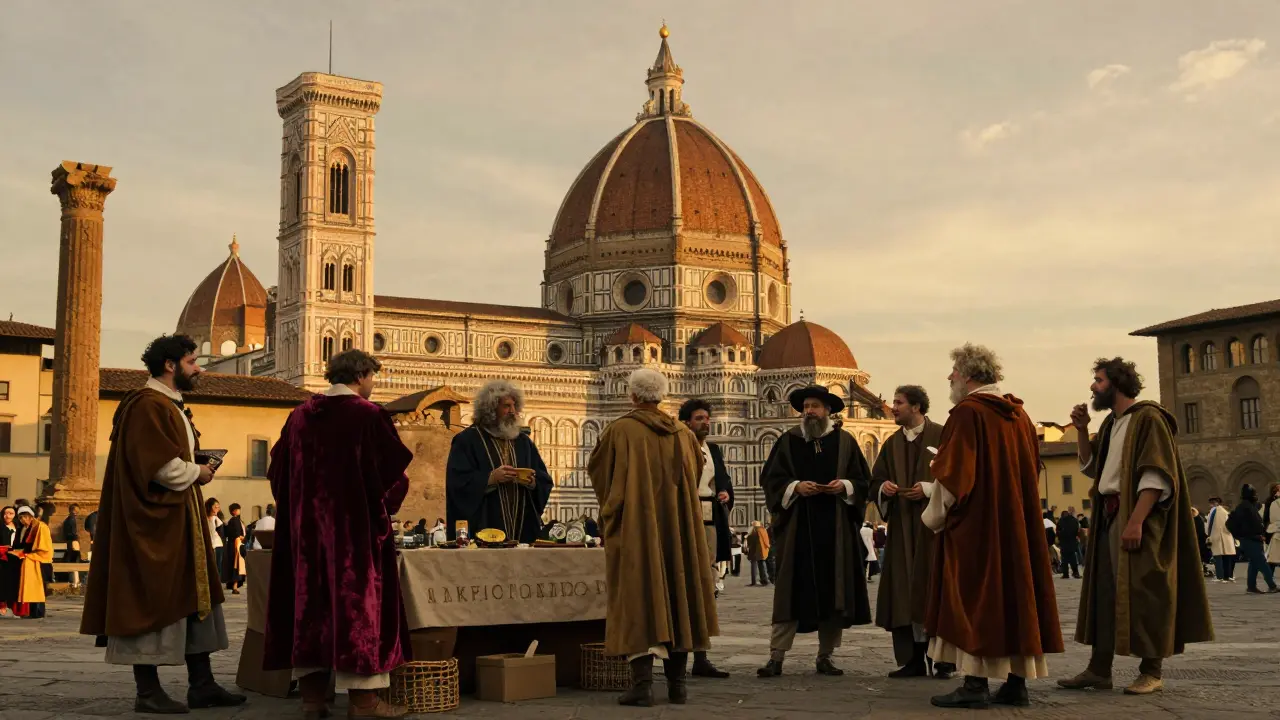
Why did this explosion of culture begin in Italy? Geography and wealth played massive roles. Cities like Florence, Venice, and Rome were wealthy trade hubs. Merchants had money, and they wanted to spend it on something lasting-art, architecture, and public works. In Florence, the Medici family, a powerful banking dynasty that became major patrons of the arts during the Renaissance acted as the primary engine. They didn't just buy paintings; they funded artists, scholars, and architects, creating an environment where talent could thrive without financial worry.
Additionally, Italy sat right on top of the ruins of the Roman Empire. Scholars there had direct access to ancient manuscripts and architectural remnants. When Constantinople fell to the Ottoman Empire in 1453, many Greek scholars fled west, bringing with them precious texts that had been lost to the Latin West. This influx of knowledge ignited a firestorm of intellectual curiosity. You couldn't separate the new ideas from the old ones; instead, thinkers blended classical wisdom with contemporary observation.
The Printing Press: The Internet of the 15th Century
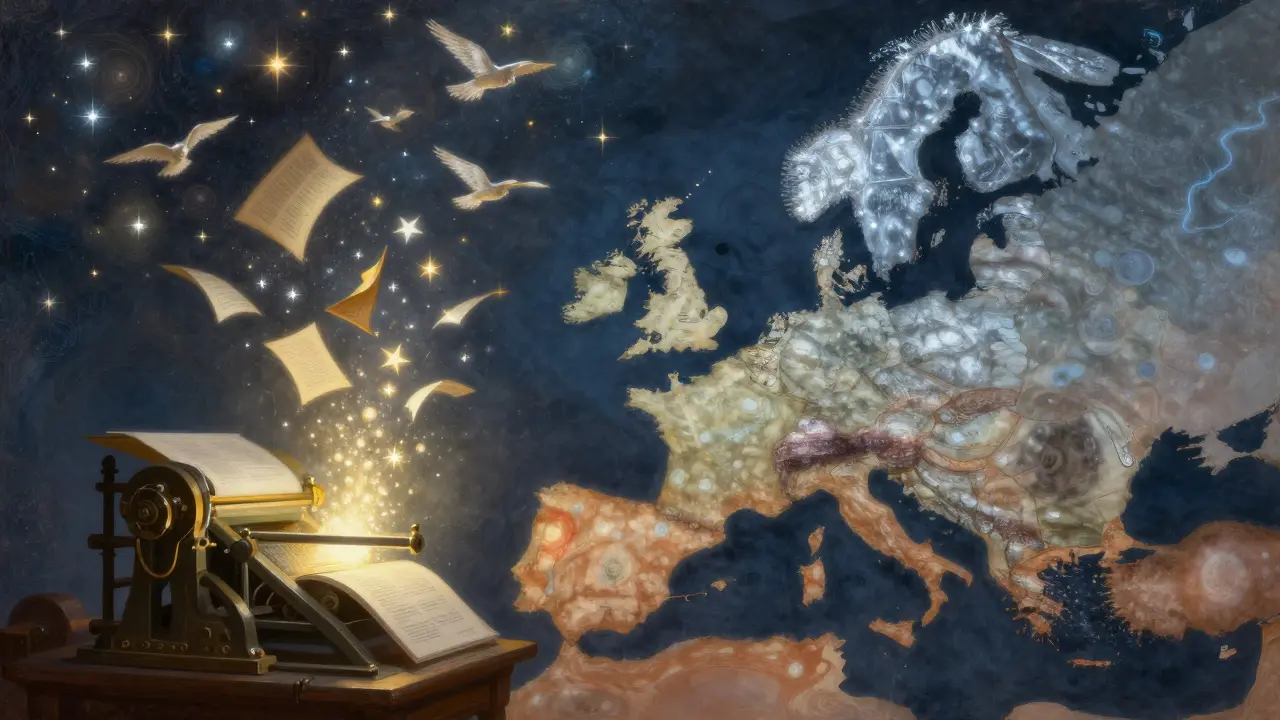
If Humanism was the fuel, then the printing press was the spark that lit the fire. Before Johannes Gutenberg, the German inventor who developed the movable type printing press around 1440 invented his machine, books were handwritten by monks. They were rare, expensive, and prone to copying errors. Knowledge was locked away in monasteries and universities.
Gutenberg’s invention changed everything. Books became cheaper and more accessible. Ideas could spread faster than ever before. A scientist in Germany could read the latest astronomical findings from Italy within weeks, not years. This democratization of information empowered ordinary people to question authority. It also standardized languages, helping to create distinct national identities in France, England, and Spain. Without the printing press, the Reformation led by Martin Luther would have struggled to gain traction, and the scientific revolution would have moved at a crawl.
Art That Breathes Life Into Stone and Canvas
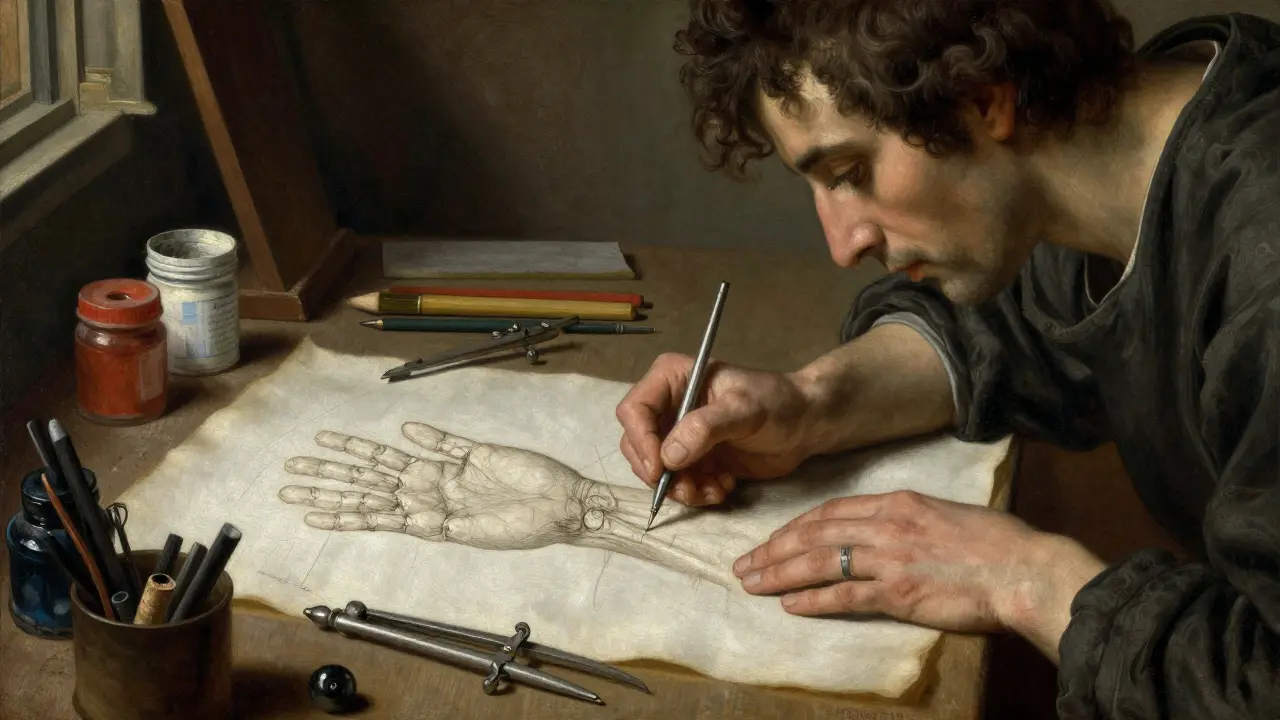
Look closely at Renaissance art, and you’ll notice something different from medieval styles. Medieval art was flat, symbolic, and focused on heaven. Renaissance art was three-dimensional, realistic, and focused on earth. Artists studied anatomy, light, and perspective to make their subjects look alive.
Leonardo da Vinci, an Italian polymath whose work exemplifies the Renaissance ideal of the universal man didn’t just paint; he dissected corpses to understand muscle structure. He sketched flying machines before airplanes existed. His painting, the *Mona Lisa*, uses a technique called sfumato to create soft, blurred edges that mimic how the human eye sees reality. Meanwhile, Michelangelo Buonarroti, an Italian sculptor, painter, architect, and poet known for his monumental works carved the Sistine Chapel ceiling, depicting biblical scenes with muscular, heroic figures that celebrated the human form.
| Feature | Medieval Art | Renaissance Art |
|---|---|---|
| Perspective | Flat, no depth | Linear perspective, realistic depth |
| Subject Matter | Religious symbols, hierarchy | Human emotion, nature, mythology |
| Anatomy | Stylized, inaccurate | Scientifically accurate, muscular |
| Lighting | Uniform, gold backgrounds | Chiaroscuro (contrast of light/shadow) |
This shift wasn't just aesthetic. It reflected a broader belief that the human body was beautiful and worthy of study. It marked a move away from seeing life solely as preparation for death and toward appreciating life itself.
Science and the Questioning Mind
The Renaissance didn't stop at canvas and marble. It extended into the stars and the cells. For centuries, the geocentric model-which placed Earth at the center of the universe-was accepted dogma. Then came Nicolaus Copernicus, a Polish mathematician and astronomer who formulated a heliocentric model of the universe. In 1543, he published *On the Revolutions of the Heavenly Spheres*, arguing that the Earth and other planets revolved around the Sun. This was a radical idea that challenged both scientific understanding and religious doctrine.
Later, Galileo Galilei improved the telescope and observed moons orbiting Jupiter, providing physical evidence that not everything orbited the Earth. These discoveries laid the groundwork for the Scientific Method-a process based on observation, experimentation, and verification rather than blind faith in ancient authorities. This methodical approach to truth is still the foundation of modern science today.
Architecture: Harmony and Proportion
Buildings also underwent a transformation. Gothic cathedrals with their soaring spires and pointed arches gave way to structures inspired by Roman temples. Architects like Filippo Brunelleschi, an Italian architect and engineer famous for designing the dome of Florence Cathedral reintroduced symmetry, proportion, and geometry. Brunelleschi’s dome for the Florence Cathedral was an engineering marvel that hadn't been attempted since antiquity. It showed that human ingenuity could overcome immense technical challenges.
Raphael and Palladio later refined these principles, creating buildings that felt balanced and harmonious. The focus shifted from intimidating verticality to human-scale horizontality. This architectural language influenced government buildings, museums, and banks worldwide for centuries, symbolizing stability, order, and rationality.
The Spread Across Europe
The Renaissance didn't stay confined to Italy. As trade routes expanded, so did cultural exchange. Northern Europe developed its own version, often called the Northern Renaissance. While Italian art focused on idealized beauty and classical forms, Northern artists like Albrecht Dürer, a German painter, printmaker, and theorist who bridged the gap between Italian and Northern Renaissance styles and Jan van Eyck focused on intricate detail, texture, and domestic realism. They mastered oil painting techniques, allowing for richer colors and finer details.
In England, William Shakespeare captured the complexity of human nature through his plays. His works explored themes of power, love, betrayal, and identity, reflecting the same humanistic concerns seen in Italian literature. The English Renaissance was less about visual art and more about language and drama, yet it contributed significantly to the global cultural shift.
Legacy: Why It Still Matters Today
You might wonder why a movement that ended hundreds of years ago should matter to you now. The answer is simple: we live in the world the Renaissance created. The concept of individual rights, the emphasis on education, the separation of church and state in governance, and the reliance on empirical evidence all trace their roots back to this period.
When you visit a museum, use a smartphone designed with ergonomic principles derived from anatomical studies, or trust data over opinion, you are experiencing the legacy of the Renaissance. It taught humanity that progress is possible through curiosity and collaboration. It proved that one person’s idea, supported by community and technology, can reshape civilization.
The Renaissance reminds us that culture isn't static. It evolves when people dare to ask questions, challenge norms, and invest in creativity. Whether you're an artist, a scientist, or just someone curious about the world, the spirit of the Renaissance invites you to explore, create, and contribute to the ongoing story of human achievement.
What caused the Renaissance?
The Renaissance was caused by a combination of factors including the wealth of Italian city-states, the rediscovery of classical Greek and Roman texts, the influence of Byzantine scholars fleeing the fall of Constantinople, and the invention of the printing press which accelerated the spread of new ideas.
Who were the most important figures of the Renaissance?
Key figures include Leonardo da Vinci and Michelangelo in art, Niccolò Machiavelli in politics, Nicolaus Copernicus in astronomy, and Desiderius Erasmus in literature. Patrons like the Medici family were also crucial in funding these innovations.
How did the Renaissance change art?
It introduced linear perspective, realistic anatomy, and chiaroscuro (light and shadow). Artists moved away from flat, symbolic representations to three-dimensional, emotionally expressive works that celebrated the human form and natural world.
What is Humanism in the context of the Renaissance?
Humanism was an intellectual movement that emphasized the value and agency of human beings, individually and collectively. It focused on secular concerns, classical learning, and critical thinking rather than solely religious doctrine.
Did the Renaissance happen outside of Italy?
Yes, it spread throughout Europe. The Northern Renaissance featured artists like Albrecht Dürer and writers like William Shakespeare, adapting Renaissance ideals to local cultures with a focus on detailed realism and linguistic innovation.