The Renaissance: How the Age of Genius Changed Art, Science, and Society
 Jun, 15 2026
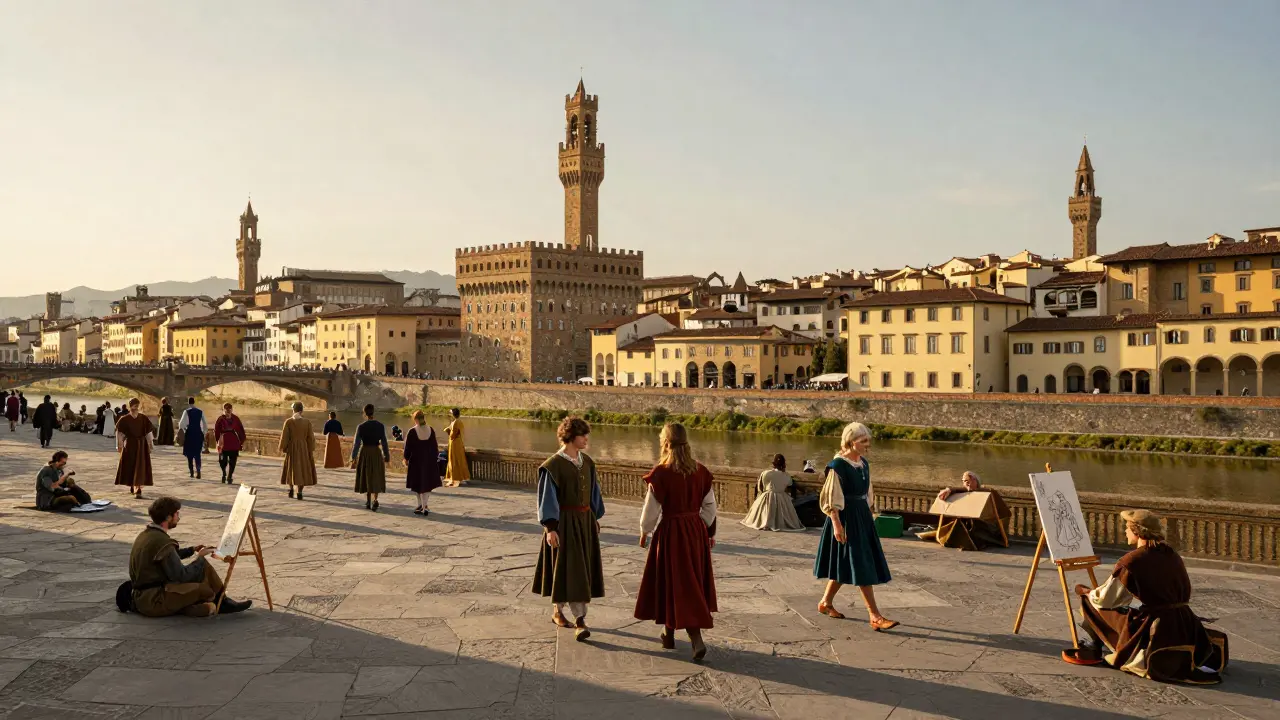
It started with a whisper in Florence. In the early 1300s, while most of Europe was still recovering from the shock of the Black Death, a small group of thinkers began looking backward to move forward. They didn't want to invent something entirely new; they wanted to revive the lost wisdom of ancient Greece and Rome. This cultural rebirth, known as the Renaissance, wasn't just a time period on a calendar. It was a fundamental shift in how humans viewed themselves, their world, and their potential. If you look at the way we create art, conduct science, or even think about individual rights today, you are living in the long shadow of this era.
Key Takeaways
- The Renaissance (14th-17th century) marked a transition from medieval to modern times, fueled by a revival of classical learning.
- Humanism shifted focus from divine authority to human potential, changing education, politics, and art.
- Florence, Italy, served as the epicenter due to the wealth of the Medici family and its strategic trade position.
- Innovations like linear perspective in art and the printing press revolutionized communication and visual representation.
- The era bridged the gap between artistic expression and scientific inquiry, laying the groundwork for the Scientific Revolution.
What Exactly Was the Renaissance?
The word "Renaissance" is French for "rebirth." But what exactly was being reborn? For centuries after the fall of the Roman Empire, European culture had been dominated by the Church and feudal structures. Life was often seen as a preparation for the afterlife, with little emphasis on worldly achievement or individual identity. Then, scholars began rediscovering texts by Plato, Aristotle, and Cicero-works that had been preserved in Islamic libraries or monasteries but largely forgotten in Western Europe.
This wasn't just about reading old books. It was about adopting a new mindset called Humanism. Unlike the theological focus of the Middle Ages, Humanism emphasized the value of human beings. It argued that people were capable of great things through reason, education, and effort. Thinkers like Petrarch, often called the "Father of Humanism," urged society to study history, poetry, and rhetoric not just to serve God, but to understand the human condition. This shift created a fertile ground for creativity because it validated personal ambition and intellectual curiosity.
Why Florence Became the Cradle of Genius
You might wonder why this explosion of creativity happened in Italy, specifically in Florence, rather than Paris or London. The answer lies in money and geography. By the 14th century, Florence was a wealthy banking hub. The Medici family, particularly Cosimo de' Medici and later Lorenzo the Magnificent, used their immense fortune to patronize artists, architects, and philosophers. They didn't just buy paintings; they funded entire projects, built libraries, and hosted salons where ideas were exchanged freely.
Florence also had access to marble from nearby Carrara and wool trade routes that connected it to the rest of Europe. This economic stability allowed for a class of citizens who had the leisure time to pursue arts and sciences. When you walk through Florence today, you can still see the physical evidence of this investment. The dome of Santa Maria del Fiore, designed by Filippo Brunelleschi, stands as a testament to the engineering prowess that emerged when financial resources met creative vision. Brunelleschi’s design solved complex structural problems without using traditional wooden scaffolding, a feat that seemed impossible at the time.
The Artistic Revolution: Seeing the World Differently
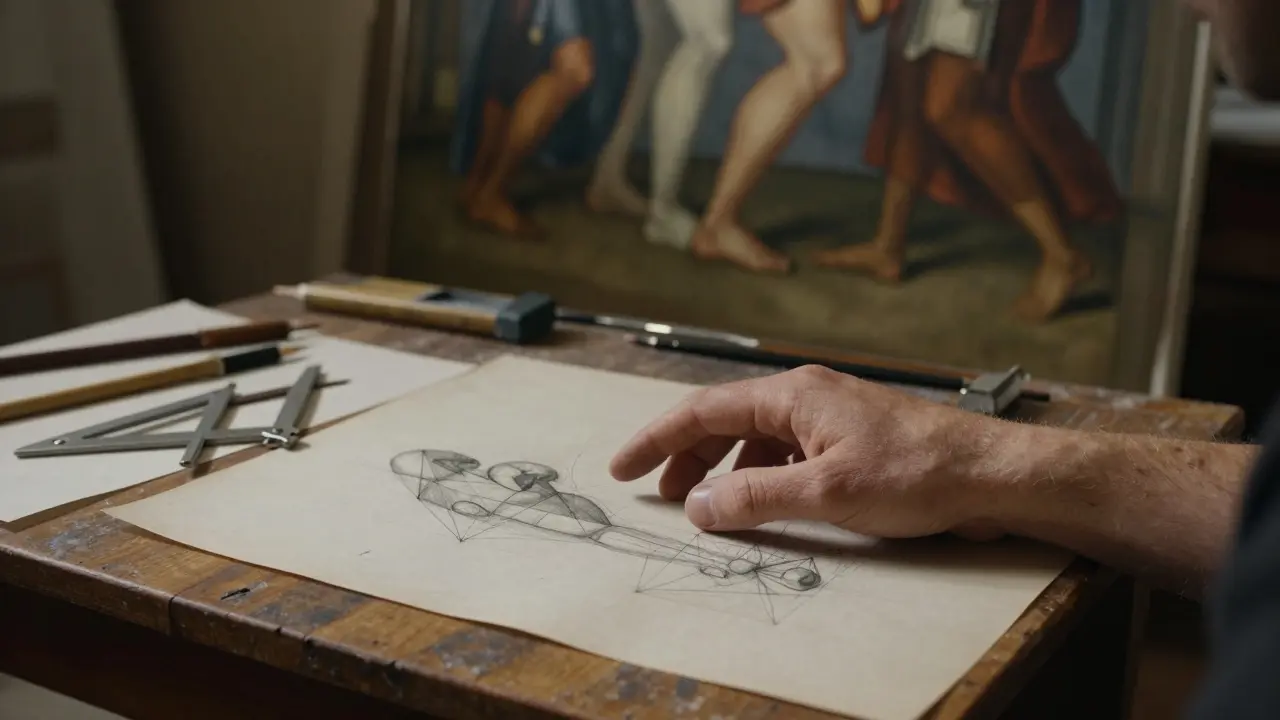
If you look at medieval art, figures often appear flat, disproportionate, and focused on spiritual symbolism rather than realistic representation. The Renaissance changed this dramatically. Artists began to observe the natural world with scientific precision. This led to the development of linear perspective, a mathematical technique that creates the illusion of depth on a flat surface. Brunelleschi formulated the rules of perspective, and Leonardo da Vinci perfected its application in painting.
Consider Michelangelo's work on the Sistine Chapel ceiling. He didn't just paint biblical scenes; he studied anatomy extensively, dissecting corpses to understand muscle structure and movement. The result was figures that looked alive, powerful, and deeply human. Similarly, Raphael's School of Athens uses perspective to draw the viewer's eye toward the central figures of Plato and Aristotle, symbolizing the harmony between philosophy and art. These artists weren't just craftsmen; they were intellectuals who combined technical skill with deep theoretical knowledge.
| Feature | Medieval Art | Renaissance Art |
|---|---|---|
| Perspective | Flat, hierarchical scale | Linear perspective, realistic depth |
| Anatomy | Stylized, symbolic | Anatomically accurate, based on dissection |
| Subject Matter | Primarily religious icons | Religious, mythological, portraits, landscapes |
| Lighting | Uniform, no shadows | Chiaroscuro (contrast of light/shadow) |
The Printing Press: Democratizing Knowledge
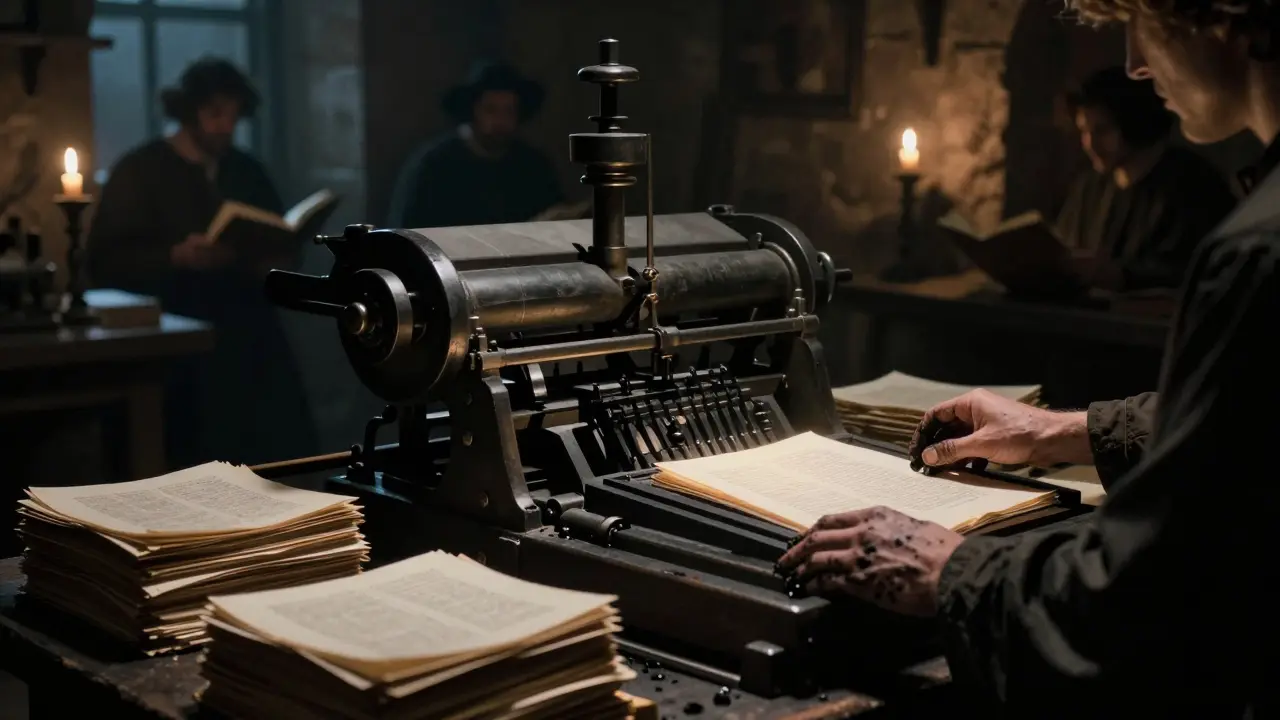
No discussion of the Renaissance is complete without mentioning Johannes Gutenberg. While the artistic boom was centered in Italy, the technological revolution spread across Northern Europe. In the mid-15th century, Gutenberg invented the movable type printing press. Before this, books were hand-copied by monks, making them rare and expensive. The printing press allowed for the mass production of texts, drastically reducing costs and increasing literacy rates.
This technology accelerated the spread of Humanist ideas. Scholars could now share their findings quickly, leading to faster collaboration and debate. It also played a crucial role in the Protestant Reformation, as Martin Luther’s pamphlets were printed and distributed widely, challenging the authority of the Catholic Church. The printing press essentially broke the monopoly on information, empowering individuals to seek knowledge directly rather than relying solely on institutional authorities.
Science and the Birth of Modern Inquiry
The Renaissance wasn't just about beautiful paintings; it was also the dawn of modern science. The same curiosity that drove artists to study anatomy also drove scientists to question established doctrines. Nicolaus Copernicus proposed a heliocentric model of the solar system, suggesting that the Earth revolved around the Sun, not vice versa. This challenged the geocentric view supported by the Church and Aristotelian physics.
Later, Galileo Galilei improved the telescope and observed celestial bodies, providing evidence for Copernicus’s theory. His conflicts with the Church highlighted the tension between emerging scientific methods and traditional religious beliefs. Meanwhile, William Harvey discovered the circulation of blood, overturning centuries of medical misconceptions. These advancements showed that observation and experimentation could lead to truths that differed from ancient authorities, laying the foundation for the Scientific Revolution.
The Spread Beyond Italy: The Northern Renaissance
While Italy was the birthplace, the Renaissance eventually spread north to Germany, France, England, and the Netherlands. This phase, known as the Northern Renaissance, had distinct characteristics. Northern artists, such as Albrecht Dürer and Jan van Eyck, focused more on detailed realism and oil painting techniques. Van Eyck’s use of oil paints allowed for richer colors and finer details, capturing textures like fabric and skin with unprecedented accuracy.
In England, the Renaissance manifested strongly in literature. William Shakespeare explored the complexities of human nature through his plays, reflecting Humanist themes of individual agency and moral ambiguity. Unlike the Italian focus on visual arts, the Northern Renaissance emphasized textual analysis, religious reform, and domestic life in art. This regional variation shows how the core ideas of the Renaissance adapted to local cultures and priorities.
Legacy: Why the Renaissance Still Matters
The impact of the Renaissance extends far beyond history books. It established the concept of the "Renaissance Man"-an individual skilled in multiple disciplines. Today, we see this ideal in interdisciplinary fields that combine art, technology, and science. The era also reinforced the importance of critical thinking and empirical evidence, principles that underpin modern education and research.
Moreover, the Renaissance challenged rigid social hierarchies by elevating the status of artists and intellectuals. It proved that creativity and innovation could drive societal progress. As we face new challenges in the 21st century, the lessons of the Renaissance remind us of the power of curiosity, collaboration, and the belief in human potential. Whether you are an artist, scientist, or student, understanding this period provides valuable context for our current cultural landscape.
When did the Renaissance start and end?
The Renaissance is generally considered to have begun in Italy in the 14th century (around 1300) and lasted until the 17th century (around 1600). However, these dates vary by region. The Northern Renaissance continued into the late 16th and early 17th centuries, blending with the Baroque period.
Who were the key figures of the Renaissance?
Key figures include Leonardo da Vinci, Michelangelo, and Raphael in art; Petrarch and Erasmus in Humanism; Nicolaus Copernicus and Galileo Galilei in science; and William Shakespeare in literature. Patrons like the Medici family also played crucial roles in supporting these geniuses.
What is the difference between the Italian and Northern Renaissance?
The Italian Renaissance focused heavily on classical antiquity, visual arts, architecture, and secular Humanism. The Northern Renaissance emphasized religious reform, detailed realism in painting (especially using oils), and textual scholarship. Northern works often included more domestic scenes and moral allegories compared to the mythological themes prevalent in Italy.
How did the printing press influence the Renaissance?
The printing press democratized knowledge by making books cheaper and more accessible. It accelerated the spread of Humanist ideas, scientific discoveries, and religious reforms. This increased literacy and allowed for broader public engagement with intellectual debates, fundamentally changing European society.
Why is Florence considered the birthplace of the Renaissance?
Florence was a wealthy trading city with powerful patrons like the Medici family who funded arts and sciences. Its political structure as a republic encouraged civic pride and competition among artists. Additionally, its proximity to classical ruins and access to materials like marble facilitated architectural and artistic innovation.