The Renaissance: How It Revolutionized the World of Theatre
 Feb, 14 2026
The Renaissance didn’t just change paintings and sculptures-it tore down the walls of medieval theatre and rebuilt it from the ground up. Before the 14th century, plays were mostly religious, performed in churches or village squares, with little regard for realism or emotional depth. Then, something shifted. Humanism took hold. People started caring about individual experience, emotion, and the beauty of the natural world. And theatre? It exploded.
From Mystery Plays to Professional Stages
Medieval mystery plays, with their wooden carts and biblical scenes, were meant to teach, not entertain. The Renaissance flipped that. Suddenly, plays were about human flaws, ambition, love, betrayal. Think of Shakespeare’s Hamlet wrestling with doubt, or Marlowe’s Faustus selling his soul for knowledge. These weren’t lessons. They were psychological portraits.
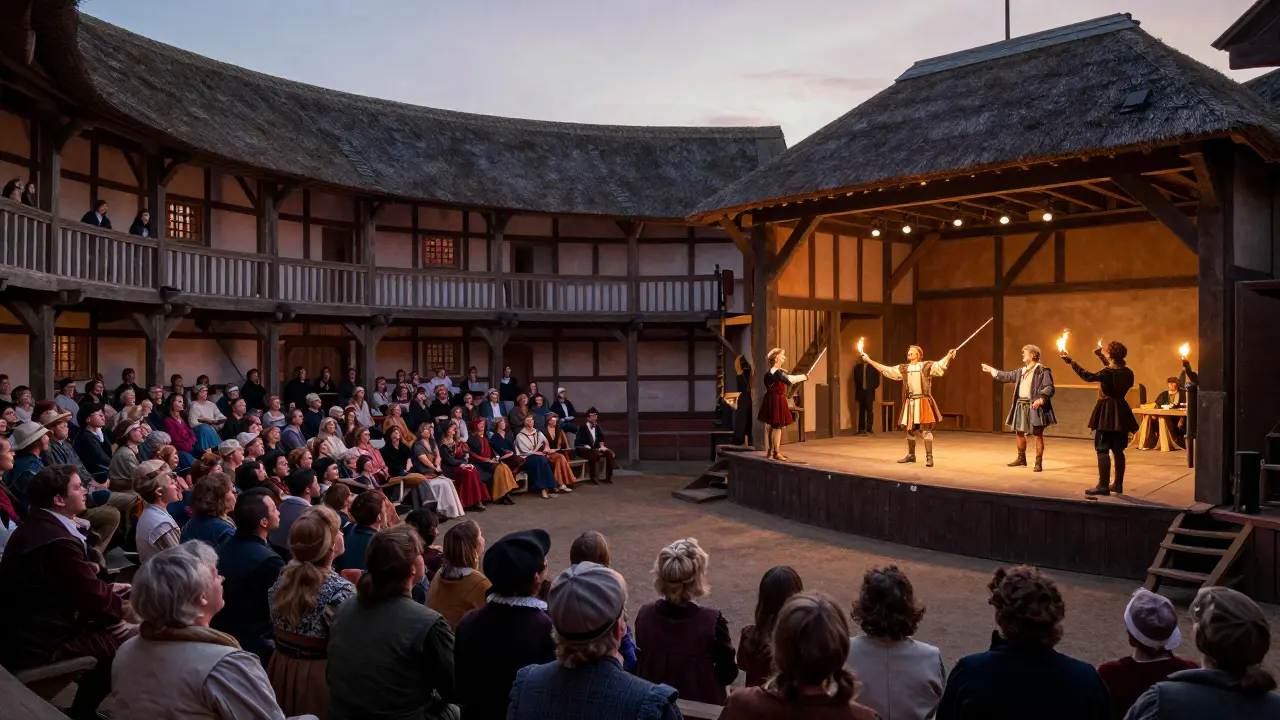
And where were they performed? Not in churches. In purpose-built theatres. The first permanent public theatre in England, The Theatre, opened in 1576. By 1599, the Globe was standing, with its open-air design, three tiers of seating, and a thrust stage that pulled the audience into the action. No more hidden altars. No more distant sermons. You sat right there, shoulder to shoulder with a merchant, a noble, and a street performer-all watching the same tragedy unfold.
The Rise of the Professional Actor
Before the Renaissance, actors were often clergy or traveling amateurs. They didn’t train. They recited. But as demand grew, so did the need for skill. Suddenly, acting became a profession. Companies formed. Contracts were signed. Actors like Richard Burbage and Edward Alleyn became celebrities. Their salaries? Comparable to lawyers. Their fame? Equal to today’s movie stars.
Actors started studying movement, voice, and emotional truth. They learned to use space. To pause. To breathe. The old style of shouting moral lessons gave way to subtle gestures-a glance, a trembling hand, a slow turn away. This wasn’t just performance. It was psychology made visible.
Stage Design: The Birth of Realism
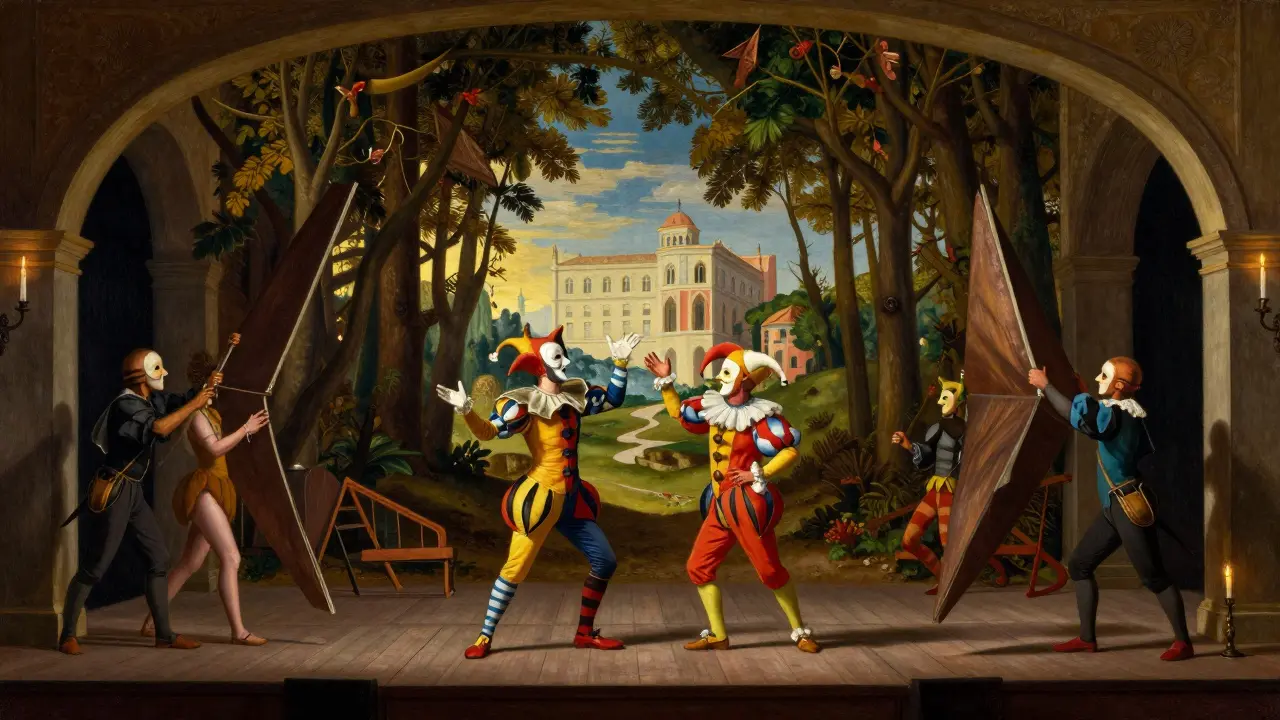
Imagine a play where the entire world is painted on a flat backdrop. That was medieval theatre. Then came perspective. Italian architects, inspired by Roman ruins and classical geometry, began designing stages with depth. The proscenium arch appeared, framing the action like a painting. Backdrops became painted scenes-forests, palaces, city streets. Doors on either side? They weren’t just for entrances. They were used to create surprise, tension, escape.
In Italy, the scena per angolo technique used angled wings to create the illusion of receding space. In England, the Globe didn’t have painted backdrops, but it used props, costumes, and lighting (candles, torches) to suggest place. A throne meant a court. A sword meant a duel. A single chair could be a throne, a bed, or a prison.
Commedia dell’arte and the Power of Improvisation
While Shakespeare was writing sonnets in London, Italy was inventing something wilder: Commedia dell’arte. This was theatre without scripts. Actors wore masks-Harlequin, Pantalone, the Doctor-and improvised based on stock characters and scenarios. It was fast, physical, and hilarious. Slapstick, witty wordplay, and social satire ruled the stage.
Why did it matter? Because it proved theatre didn’t need written texts to be powerful. It showed that rhythm, timing, and character could carry a story. Commedia influenced every form of comedy that followed-from Molière to modern sitcoms. Its legacy? A single truth: performance is as important as the words.
The Role of Women on Stage
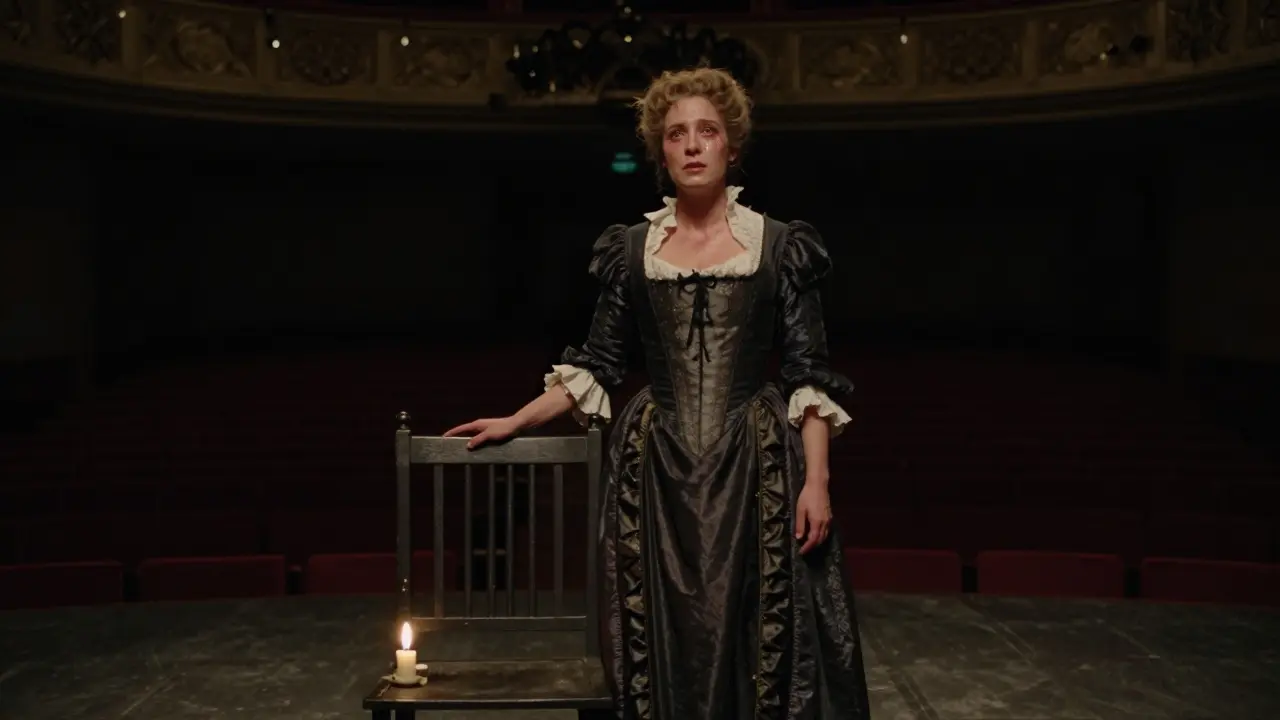
In medieval times, women were banned from performing. Their roles? Played by men or boys. The Renaissance changed that-slowly, then all at once. In Italy and France, women began appearing on stage by the 1560s. By 1660, after the English Restoration, women were legally allowed to act in London. Margaret Hughes became the first professional actress on the English stage, playing Desdemona in Othello.
This wasn’t just about gender. It was about authenticity. A woman playing a woman brought nuance no boy actor could replicate. The trembling fear of Juliet, the quiet rage of Lady Macbeth-these became more real because the person portraying them lived them.
Theatre as a Mirror of Society
Renaissance plays didn’t just reflect society-they challenged it. Playwrights used allegory to criticize rulers, question religion, and explore class. Ben Jonson’s Volpone mocked greed. Thomas Middleton’s The Revenger’s Tragedy exposed corruption in courts. Even Shakespeare’s The Merchant of Venice, though flawed, forced audiences to confront prejudice.
Theatre became a public square. People from all walks of life sat together. A king might watch from the gallery while a cobbler sat in the pit. And they all reacted the same way-laughing, gasping, weeping. For the first time in centuries, theatre wasn’t just for the elite. It was for everyone.
The Legacy That Still Lives
Look at any modern play, film, or TV drama. The structure? Inherited from Renaissance storytelling. The focus on character over plot? That’s Shakespeare. The use of lighting to shape mood? That’s Italian stagecraft. The idea that a performer’s silence can be more powerful than dialogue? That came from the Renaissance actor’s training.
Even today’s immersive theatre, where audiences walk through scenes, owes a debt to the thrust stages of the Globe. Modern acting schools still teach Stanislavski’s method, which traces its roots back to Renaissance ideals of emotional truth.
The Renaissance didn’t just give us better plays. It gave us theatre as we know it: a living, breathing space where human beings face their deepest fears, desires, and contradictions-not as saints or sinners, but as people.
What made Renaissance theatre different from medieval theatre?
Medieval theatre was religious, performed in churches, and focused on teaching moral lessons through biblical stories. Renaissance theatre shifted to human-centered stories-exploring love, ambition, and psychology. It moved to permanent theatres, used professional actors, introduced realistic stage design, and allowed women to perform. The goal was no longer instruction, but emotional truth.
How did stage design change during the Renaissance?
Stage design evolved from flat, symbolic backdrops to three-dimensional scenes using perspective painting. The proscenium arch emerged in Italy, framing the action like a window into another world. Wings and shutters created depth, and painted backdrops showed forests, palaces, or streets. In England, the Globe used minimal scenery but relied on costumes, props, and lighting to suggest location. This shift made settings feel real, not just symbolic.
Why was Commedia dell’arte important?
Commedia dell’arte proved that theatre didn’t need written scripts to be powerful. Actors used masks, physical comedy, and improvisation based on stock characters like Harlequin or the greedy Pantalone. It was fast, satirical, and wildly popular across Europe. Its influence can be seen in modern comedy-from Charlie Chaplin to sitcoms. It also introduced the idea that character and timing matter more than the exact words spoken.
Did women perform in Renaissance theatre?
Yes-but not everywhere at once. In Italy and France, women began acting on stage as early as the 1560s. In England, they were banned until after the Restoration in 1660. When Margaret Hughes appeared as Desdemona, it marked a turning point. Female actors brought authenticity to roles like Juliet and Lady Macbeth, transforming how emotion was portrayed. Their presence also expanded the range of stories that could be told.
How did Renaissance theatre influence modern drama?
Modern theatre still follows the structural and emotional foundations laid in the Renaissance. The three-act structure, complex characters, psychological depth, and emphasis on realism all trace back to Shakespeare, Molière, and others. Acting techniques, stage design principles like the proscenium arch, and even the idea of theatre as public discourse come from this era. Even immersive and site-specific theatre today echoes the thrust stages of the Globe.