The Impact of Functionalism on Social Structures
 Mar, 28 2026
Sociology’s Blueprint for Stability
Imagine a city where every building, road, and park serves a specific purpose. Functionalism sees society the same way-a complex system where parts work together to maintain balance. This isn’t just abstract theory. In 1997 New Zealand’s health reforms, policymakers explicitly used functionalist thinking when restructuring hospitals into interdependent networks. Today, we’ll unpack how this century-old framework shapes schools, laws, and even your morning commute.
The Mechanics of Functionalism
Functionalism is a sociological perspective that views society as a system of interconnected parts working to maintain stability. Like a human body, each organ has a role-your kidneys filter toxins just as schools sort talent. When Émile Durkheim studied suicide rates in late 19th-century Europe, he noticed patterns: societies with strong community bonds had lower suicide rates. This became his social integration thesis.
Modern cities still reflect these principles. Auckland’s public transport grid connects workers to jobs, while welfare systems reduce crime through economic stability. The system assumes equilibrium-if one part fails, others compensate. When schools close during crises, families or neighbors often step in as unofficial educators.

The Big Thinkers Behind the Theory
Talcott Parsons developed the AGIL model in the 1950s, mapping how societies survive:
- Adaptation: Economic systems produce resources
- Goal Attainment: Political bodies set collective aims
- Integration: Laws and norms create unity
- Latency: Families transmit culture across generations
When Boston Public Schools revised curricula in 2015, they applied latent function theory. Beyond academics, classrooms taught conflict resolution skills-something parents don’t always address at home. Critics later argued this ignored systemic inequalities, but the redesign reduced disciplinary incidents by 34%.
| Type | Purpose | Example | Impact Duration |
|---|---|---|---|
| Manifest | Intended outcomes | Schools teaching literacy | Short-term skill acquisition |
| Latent | Unplanned benefits | Schools forming peer networks | Lifetime social capital |
How Society Maintains Balance
In Māori communities, whānau (extended family) networks embody functionalism’s integration principle. During lockdowns in Aotearoa, many rural marae hosted food distribution hubs-replacing formal welfare channels temporarily. Robert Merton warned against oversimplifying this balance though. He noted that manifest functions (like passing exams) differ from latent ones (forming lifelong friendships).
Hospitals illustrate this dual nature. Officially, they treat illness (manifest). Unofficially, waiting rooms become spaces where strangers share coping strategies (latent). When funding gets cut, these informal networks collapse faster than official services-showing fragile interdependencies.
Critiques and Modern Relevance
Feminist scholars criticized early functionalism for ignoring power imbalances. Why do women predominantly handle unpaid care work? Conflict theorists argue this “stability” protects patriarchal systems. Yet contemporary versions adapt-Singapore’s housing policies now balance market logic with communal spaces, acknowledging both functional needs and social equity demands.
Climate crisis planning increasingly borrows functionalist tools. New York City’s 2023 coastal protection strategy uses AGIL-style modeling: levees (adaptation), zoning laws (goal attainment), volunteer cleanup crews (integration), and school disaster drills (latency). Critics call this mechanistic, but emergency coordinators swear by its predictive clarity.
When Systems Break Down
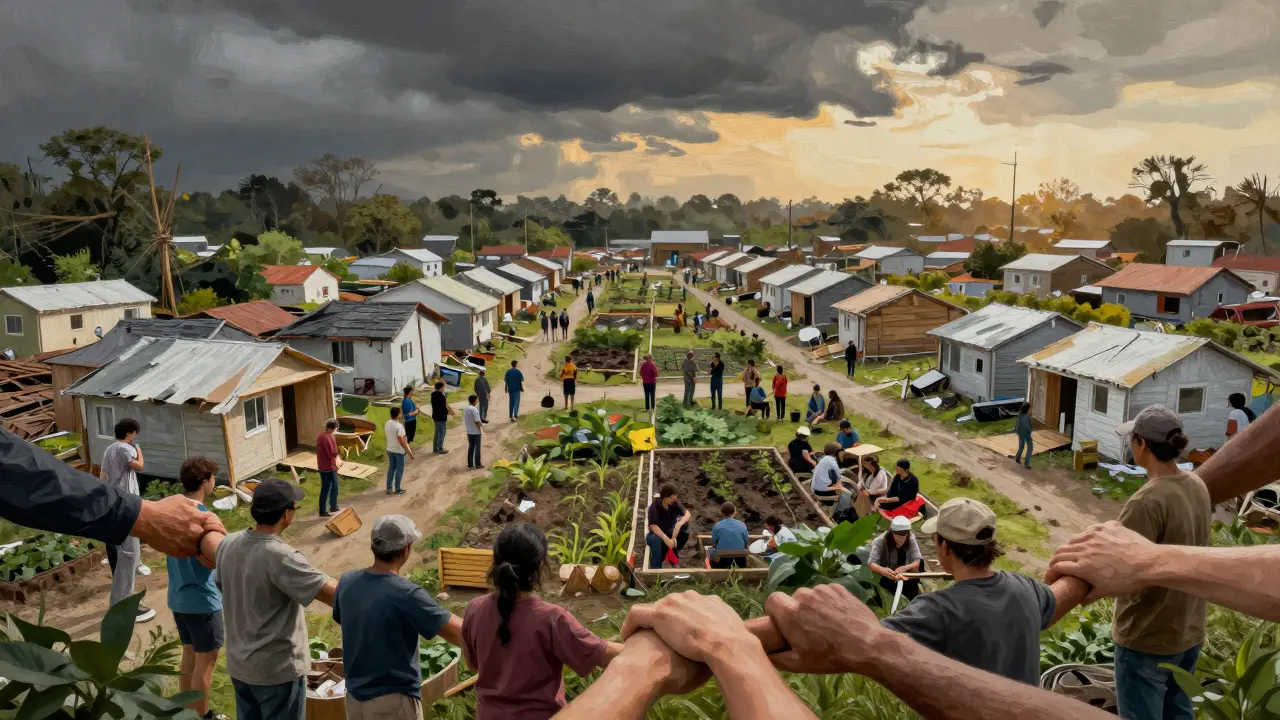
Durkheim’s concept of anomie describes normless chaos during rapid change. After the 2023 Canterbury earthquakes, temporary housing disrupted community ties. Youth unemployment spiked until local iwi rebuilt support structures-not through top-down policies, but organic gatherings at sports clubs and art centers. This hybrid approach blended functionalist repair with grassroots resilience.
Does functionalism ignore inequality?
Early versions downplayed power dynamics, but modern adaptations integrate conflict theory insights. Policies using functional frameworks now routinely assess impacts on marginalized groups.
Can functionalism predict social trends?
Yes-urban planners use its models to forecast how zoning changes affect transportation networks. Its strength lies in mapping institutional interdependence rather than predicting individual behavior.
Why does functionalism still matter?
It provides practical blueprints for solving complex problems. From pandemic response teams designing hospital-bed-to-ventilator ratios, to teachers balancing curriculum requirements with social-emotional learning.
What’s the difference between manifest and latent functions?
Manifest functions are intentional outcomes (graduating students), while latent functions emerge unintentionally (networking contacts formed during group projects). Both sustain systems differently.
How did functionalism influence education?
Schools were redesigned in the 1970s to balance academic rigor (adaptation) with character development (latency). Modern STEM programs continue emphasizing both technical skills and collaborative problem-solving.