The Evolution of Tudor Architecture: From Medieval Timber to Modern Aesthetics
 May, 16 2026
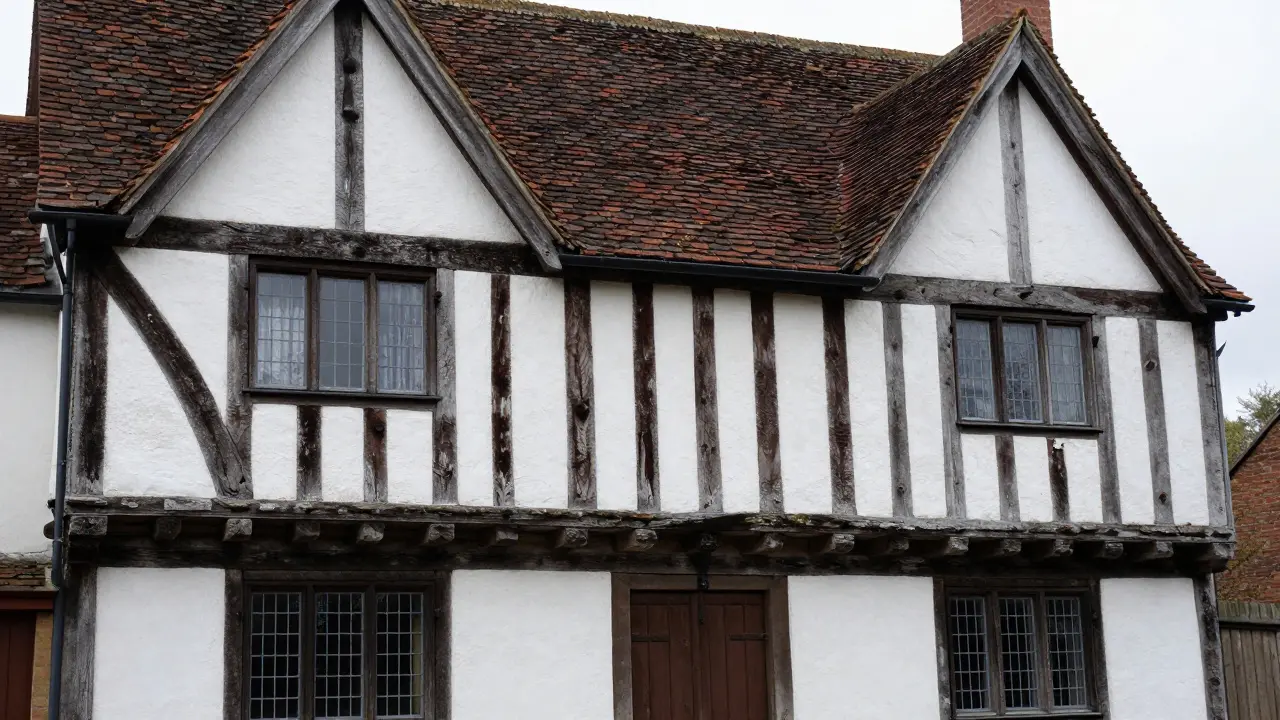
When you picture a classic English cottage, what comes to mind? Likely white walls with dark wooden beams crisscrossing them. This image is so iconic that it has become shorthand for "quaint" and "traditional." But Tudor architecture is more than just a pretty aesthetic. It represents a specific period in history where building techniques shifted from pure medieval survival to early modern comfort. Understanding this style isn't just about admiring old houses; it's about seeing how social changes, available materials, and royal influence shaped the way people lived.
What Defines True Tudor Architecture?
To understand the evolution, we first need to define the baseline. Authentic Tudor architecture emerged during the reign of the Tudor dynasty in England, roughly between 1485 and 1603. The central entity here is the half-timbered construction method, which was not just decorative but structural. Builders used heavy oak frames filled with wattle and daub-a mixture of woven sticks, clay, sand, and straw.
The key attributes of original Tudor buildings include:
- Oak Framing: Large, hand-hewn timbers that form the skeleton of the house.
- Steep Pitched Roofs: Designed to shed rain and snow efficiently before modern roofing materials existed.
- Mullioned Windows: Small panes of glass held together by vertical stone or wood bars (mullions), because large sheets of glass were too expensive and fragile.
- Asymmetry: Houses grew organically as families added rooms, leading to irregular facades.
This style was distinct from the Gothic architecture that preceded it. While Gothic pointed toward heaven with soaring arches and intricate stone carves, Tudor architecture was grounded, domestic, and focused on the hearth. The transition marked a shift from religious grandeur to secular comfort.
The Early Period: Henry VII and the Transition from Medieval
The early Tudor period under Henry VII (1485-1509) was still deeply rooted in medieval traditions. Buildings like the Henry VII Chapel at Westminster Abbey show the lingering influence of Gothic design, particularly in the use of fan vaulting. However, residential architecture began to change. The great halls of the Middle Ages, where everyone ate and slept in one large space, started to be replaced by private chambers.
This shift was driven by privacy and status. The wealthy wanted separate spaces for dining, sleeping, and receiving guests. You can see this in structures like Hampton Court Palace, begun by Cardinal Wolsey and later expanded by Henry VIII. Here, the massive brickwork begins to appear, signaling a move away from timber. Brick was becoming more affordable due to improved kiln technology, allowing for larger, more fire-resistant structures.
The Mid-Tudor Boom: Henry VIII and Elizabeth I
Under Henry VIII and especially Elizabeth I, Tudor architecture reached its peak complexity. This era saw the rise of the "prodigy houses"-large country homes built by courtiers to impress the monarch. These houses combined traditional timber framing with classical elements imported from Italy.
A prime example is Longleat House in Wiltshire. Built in the 1560s, it features symmetrical facades and classical columns, yet retains the steep roofs and mullioned windows of the Tudor tradition. This blend created a unique hybrid style. The use of brick became dominant among the elite, while timber framing remained common for middle-class merchants and rural dwellings.
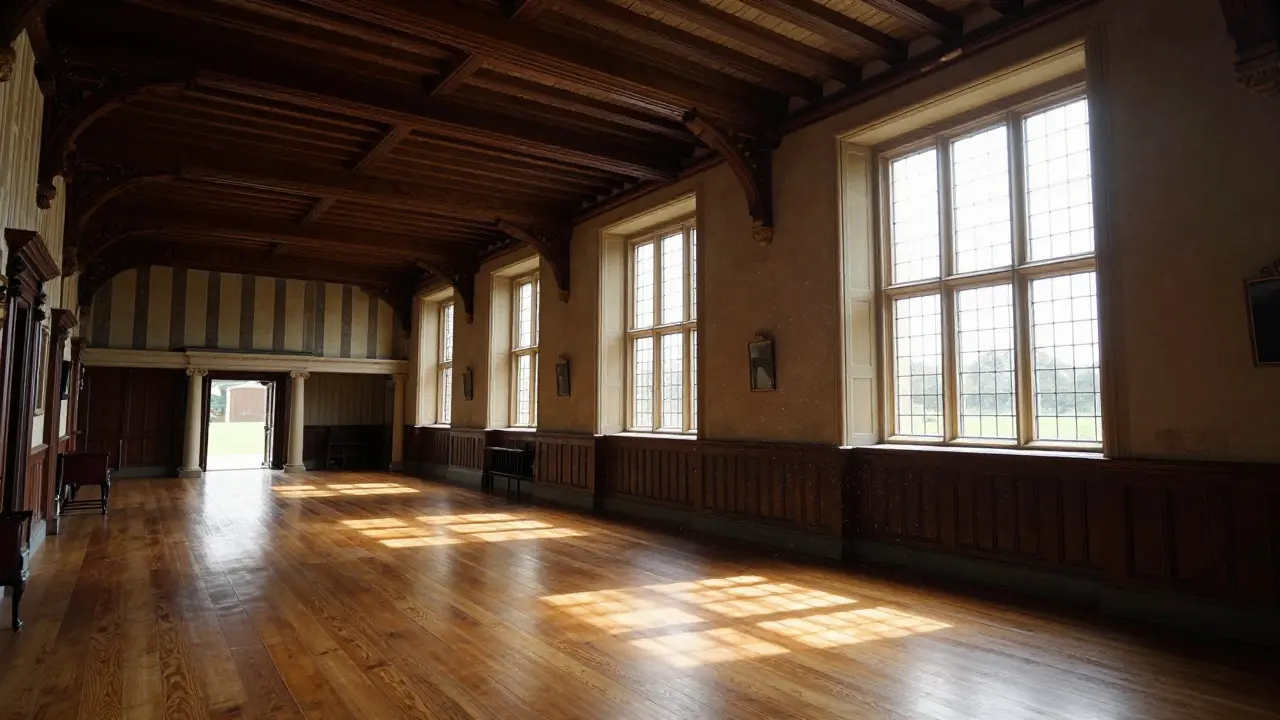
During this time, the Elizabethan long gallery became a standard feature in grand homes. These narrow, elongated rooms allowed nobles to walk indoors when the weather was bad, showcasing their wealth through large windows that let in maximum light. The emphasis on light and space reflected a growing confidence in English society after the defeat of the Spanish Armada.
The Decline and Influence of Jacobean and Stuart Styles
After the death of Elizabeth I in 1603, the Tudor dynasty ended, and the Stuart dynasty began. Architecturally, this didn't mean an immediate stop to Tudor styles. Instead, it evolved into what we call Jacobean architecture. The lines became stiffer, the symmetry more rigid, and the ornamentation more elaborate.
Timber framing began to disappear from new builds in cities due to fire risks and deforestation. The Great Fire of London in 1666 accelerated this decline, leading to regulations that favored brick and stone. By the mid-17th century, authentic Tudor construction was largely obsolete in urban areas, surviving only in rural villages where tradition held strong.
The Victorian Revival: Nostalgia Meets Industry
If you see a "Tudor" house built in the 20th century, it is likely part of the Tudor Revival movement. This style exploded in popularity during the late 19th and early 20th centuries, particularly in Britain and the United States. Why did people suddenly want to build houses that looked 400 years old?
The answer lies in nostalgia and industrialization. As factories polluted cities and standardized life, people romanticized the past. They idealized the pre-industrial world as simpler and more honest. Architects like Richard Norman Shaw championed the "Domestic Revival," incorporating half-timbering and steep roofs into new brick homes. In America, the Colonial Revival movement also embraced Tudor elements, blending them with Dutch and German influences.
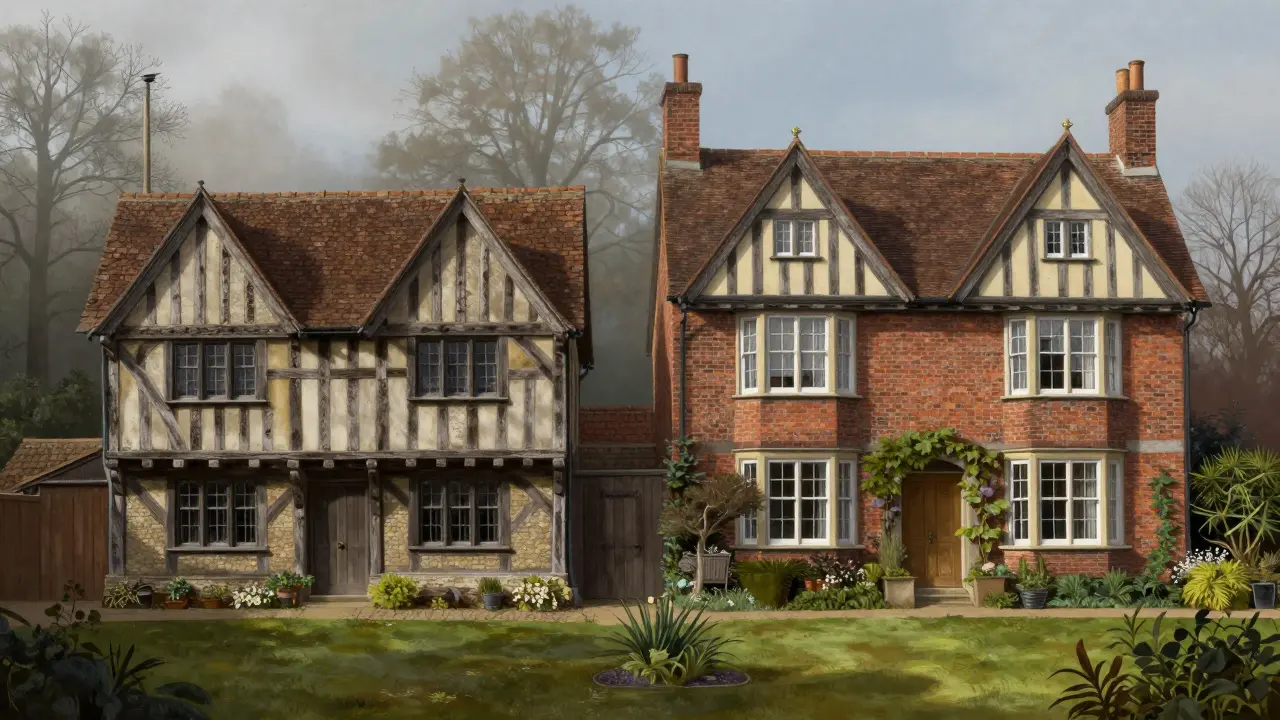
Key differences between original Tudor and Tudor Revival include:
- Materials: Original used structural timber; Revival uses decorative timber applied to brick or stucco.
- Symmetry: Original was asymmetrical; Revival often features balanced facades.
- Windows: Original had small leaded panes; Revival often uses larger sash windows with faux mullions.
Tudor Architecture in North America
In North America, Tudor architecture took on a unique character. Immigrants from England, Germany, and the Netherlands brought half-timbering techniques, but adapted them to local materials. In the American Northeast, you find Dutch Colonial influences merging with Tudor styles, resulting in gambrel roofs and whitewashed wood siding.
The most famous example of high-style Tudor in the US is Biltmore Estate in Asheville, North Carolina. Although primarily French Renaissance, it incorporates Tudor elements in its layout and detailing. More commonly, however, Tudor Revival became a popular suburban style in the 1920s and 1930s. Developers mass-produced these homes using machine-cut timber and standardized plans, making the "cottage look" accessible to the middle class.
Why Tudor Endures: Psychological Appeal
So why do we still build and admire Tudor-style homes today? There is a psychological comfort in the style. The heavy timber frames suggest strength and permanence. The steep roofs evoke protection against the elements. The warm colors of brick and timber create a sense of coziness known as "hygge" in Danish culture, though the concept applies universally.
Modern architects continue to draw on Tudor principles, particularly in sustainable design. The thick walls of wattle and daub provided excellent insulation, a lesson being rediscovered in eco-friendly construction. Today, companies are experimenting with hempcrete and rammed earth, echoing the thermal mass properties of traditional Tudor infill materials.
| Feature | Original Tudor (1485-1603) | Tudor Revival (1850-Present) |
|---|---|---|
| Construction Method | Structural half-timbering | Decorative timber on brick/stucco |
| Window Style | Small leaded glass, mullioned | Larger panes, often double-hung |
| Roof Pitch | Very steep (to shed rain) | Steep, but often with dormers |
| Façade Symmetry | Asymmetrical, organic growth | Often symmetrical and planned |
| Primary Material | Oak, wattle, daub, tile | Brick, vinyl, asphalt shingles |
Preserving the Legacy
Today, preserving original Tudor buildings is a challenge. Many have been altered beyond recognition, with modern extensions clashing with historic cores. Organizations like Historic England work to protect these sites, emphasizing the importance of using traditional repair methods. For homeowners, this means avoiding plastic window replacements and maintaining the integrity of the timber frame.
The evolution of Tudor architecture teaches us that style is never static. It responds to economics, politics, and cultural values. From the humble cottages of Elizabethan farmers to the grand estates of Victorian industrialists, Tudor architecture remains a powerful symbol of home and heritage.
What is the difference between Tudor and Gothic architecture?
Gothic architecture is characterized by pointed arches, ribbed vaults, and flying buttresses, primarily used in churches and cathedrals to reach towards the heavens. Tudor architecture, emerging later, is more domestic and horizontal, featuring half-timbered walls, steep gabled roofs, and mullioned windows. While Gothic focuses on verticality and stone, Tudor emphasizes warmth, timber, and residential comfort.
Are all half-timbered houses Tudor?
Not necessarily. Half-timbering was used throughout medieval Europe, including in Germany (where it is called Fachwerk) and France. However, in the context of English architecture, half-timbering is the defining feature of the Tudor period. If a house has half-timbering but dates from the 1920s, it is classified as Tudor Revival, not authentic Tudor.
Why did Tudor architecture decline in the 17th century?
The decline was driven by several factors: the cost of oak timber rose due to deforestation, brick production became cheaper and more efficient, and fire safety concerns increased after major urban fires. Additionally, the arrival of Classical ideals from Italy and France made the rustic Tudor style seem outdated to the aristocracy, who preferred symmetry and stone facades.
What is wattle and daub?
Wattle and daub is a traditional building method used for infilling the gaps between timber frames. "Wattle" refers to a woven lattice of wooden strips, while "daub" is a paste made from clay, animal dung, straw, and sometimes lime. This mixture hardens to form a durable, insulated wall surface. It was the standard material for non-aristocratic homes in Tudor England.
Can I build a Tudor-style house today?
Yes, many builders offer Tudor Revival designs. These homes typically use modern materials like brick veneer and vinyl siding to mimic the look of half-timbering. While they lack the structural authenticity of original Tudor homes, they provide the aesthetic appeal and cozy atmosphere associated with the style. Always check local zoning laws, as some historic districts have strict guidelines on architectural styles.