The Enduring Legacy of Romanesque Architecture
 Dec, 27 2025
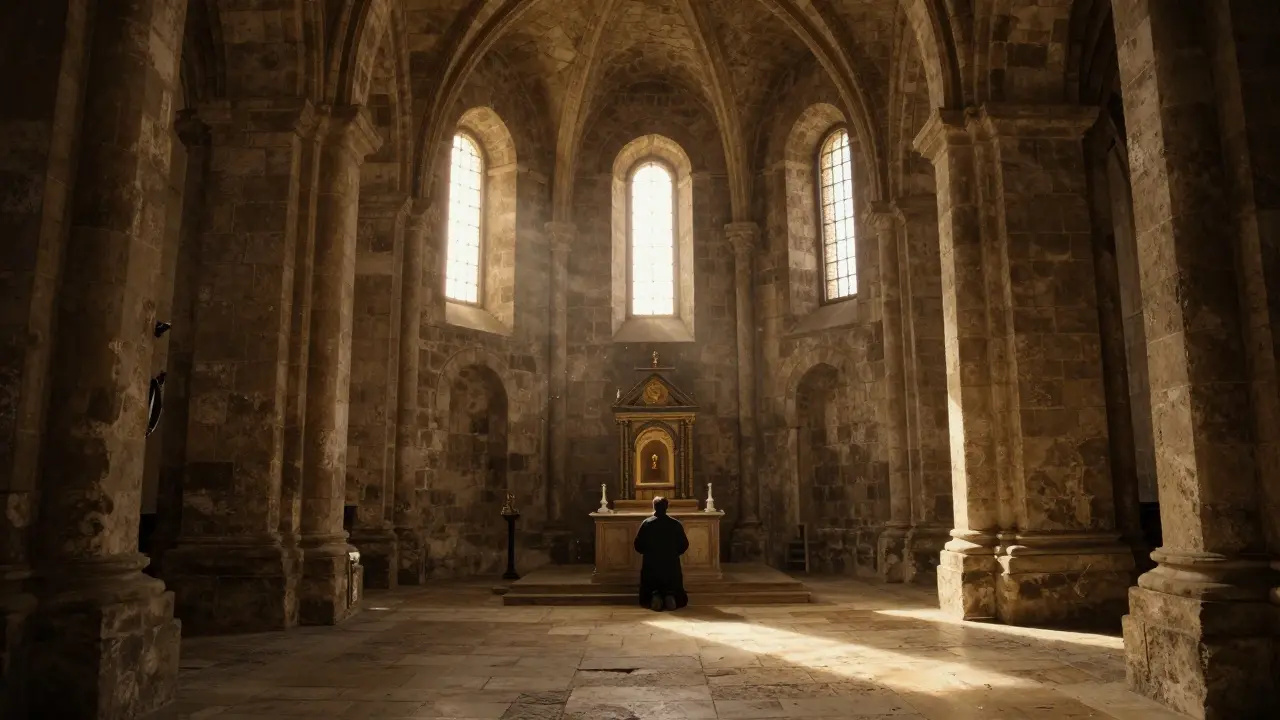
Walk into any old European church built before the year 1200, and you’ll feel it immediately-the weight of stone, the quiet power of thick walls, the calm glow of small windows. This isn’t Gothic grandeur with its soaring spires and stained glass. This is something older, heavier, quieter. This is Romanesque architecture. It didn’t just build churches; it shaped how people experienced space, faith, and community for centuries. And even today, its influence echoes in buildings you might walk past without noticing.
What Makes Romanesque Architecture Unique?
Romanesque architecture isn’t just old. It’s a deliberate return to the solidity of Roman building methods after the collapse of the Western Roman Empire. Between 800 and 1200 AD, as Europe slowly rebuilt, builders turned to rounded arches, massive stone walls, and sturdy pillars-not because they lacked imagination, but because they needed durability. These weren’t decorative choices; they were survival tactics.
The rounded arch, borrowed directly from Roman aqueducts and bridges, became the defining feature. Unlike the pointed arches that came later in Gothic design, rounded arches pushed weight outward, requiring thick walls to hold everything up. That’s why Romanesque buildings have such small windows-they couldn’t afford to cut large openings into walls that already carried tons of stone. The result? Interiors feel dim, sacred, and deeply grounded.
Think of the Abbey Church of Sainte-Foy in Conques, France. Its walls are over two meters thick in places. Its nave is flanked by barrel vaults-continuous arched ceilings made of stone-that channel the building’s weight down into massive piers. There’s no airiness here. There’s permanence. This was architecture meant to last, to outlive kings, wars, and plagues.
The Role of Pilgrimage in Shaping Romanesque Design
One of the biggest drivers of Romanesque architecture wasn’t kings or bishops-it was pilgrims. In the 11th century, millions walked across Europe to visit holy relics: the bones of saints, fragments of the True Cross, even the supposed heel of Christ. These journeys weren’t just spiritual-they were economic engines.
Churches along major pilgrimage routes, like the Camino de Santiago in Spain, had to handle hundreds of visitors a day. So Romanesque builders designed churches with side aisles, ambulatories (walkways behind the altar), and radiating chapels. These features allowed crowds to move around the sacred relics without disrupting the main service. The Church of Saint-Sernin in Toulouse, one of the largest Romanesque buildings in Europe, was built specifically for pilgrims. It has five aisles, a double ambulatory, and 18 chapels-each designed to hold a relic and welcome worshippers without chaos.
This wasn’t just about space. It was about control. The layout directed movement, focused attention, and turned worship into a carefully choreographed experience. The pilgrim didn’t just enter a church-they passed through a spiritual journey, from the outer courtyard to the inner sanctuary, each step marked by stone, shadow, and silence.
Stone, Not Steel: The Engineering of Endurance
Modern buildings use steel frames and glass. Romanesque builders had only stone, mortar, and muscle. Yet they created structures that still stand. How?
They used local stone wherever possible-limestone in France, sandstone in Germany, granite in Spain. This wasn’t just practical; it made each region’s architecture distinct. In southern Italy, you’ll find Romanesque churches with marble inlays and Byzantine-style mosaics. In northern Germany, the buildings are darker, heavier, with fewer decorative elements.
They also mastered the art of the buttress-not the flying kind you see in Gothic cathedrals, but thick, solid piers built into the walls. These piers absorbed lateral forces from the vaults and kept the walls from bulging outward. The result? Buildings that could last 900 years without collapsing.
Take the Speyer Cathedral in Germany. Completed in 1106, it was the largest church in Christendom at the time. Its nave vaults are among the earliest stone barrel vaults in Europe. Over 900 years later, it still stands. Not because it was lucky. Because it was engineered with precision.
Decoration That Meant Something
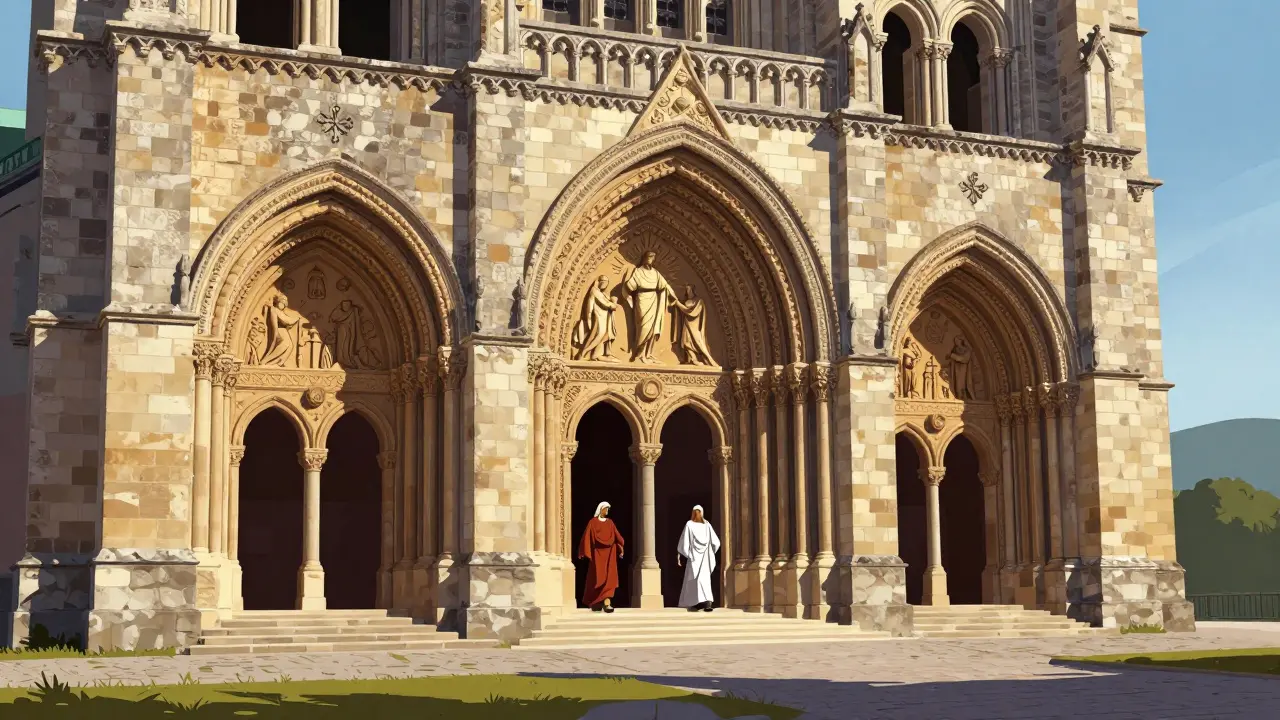
Romanesque buildings weren’t plain. They were covered in carvings-but not for show. Every sculpture had a message. The capitals (tops of columns) often showed biblical scenes, monsters, or animals in symbolic poses. A lion might represent Christ’s resurrection. A serpent, sin. A man fighting a beast? The soul’s struggle against evil.
At the Abbey of Moissac in France, the south portal is one of the finest surviving examples. The tympanum (the semi-circular space above the door) shows Christ in Majesty, surrounded by the Four Evangelists. Around the arch, angels and elders kneel. This wasn’t art for art’s sake. It was a visual Bible for people who couldn’t read. The message was clear: Christ rules. Worship him.
Even the smallest details carried meaning. Zigzag patterns on arches weren’t random-they echoed Roman decorative styles, linking the new Christian world to the old Roman one. Interlaced designs on door frames hinted at eternity, with no beginning or end.
Why Romanesque Architecture Still Matters Today
Modern architecture loves glass, light, and open spaces. Romanesque architecture is the opposite. So why does it still matter?
Because it reminds us that buildings can be more than functional. They can be anchors. In a world where structures are built to be replaced every 30 years, Romanesque buildings still stand. They don’t just survive-they speak. They speak of patience, of community effort, of faith made physical.
Look at the churches still used today in rural France, Italy, or Spain. They’re not museums. They’re alive. People still marry, baptize, and bury their dead in them. The same stones that held candles in 1150 now hold LED lights. The same pews that held peasants now hold tourists and locals alike.
And in modern design, you can see its ghost. The solid, grounded feel of Brutalist buildings? That’s Romanesque thinking-weight, permanence, honesty of materials. The way some contemporary churches use thick walls and small windows to create a sense of quiet reverence? That’s Romanesque influence, stripped of its religious context but still carrying its emotional power.
Where to See the Best Examples Today
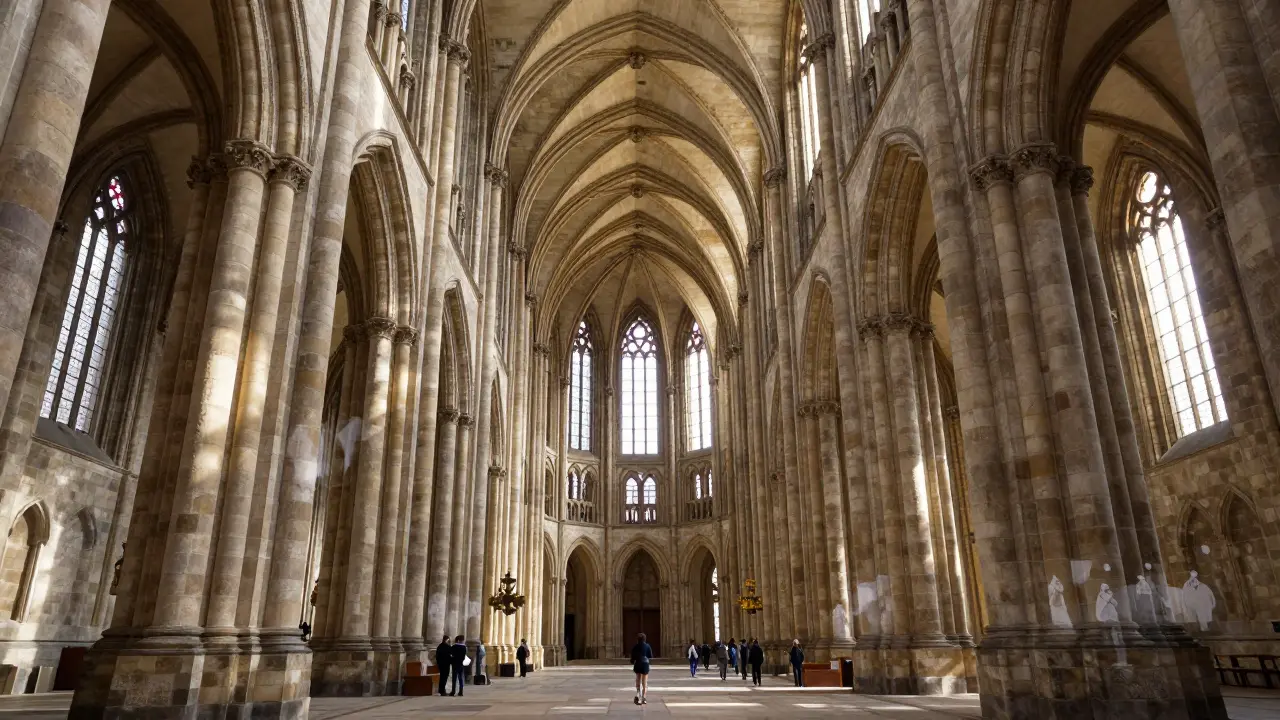
If you want to feel Romanesque architecture in person, you don’t need to fly to Europe. But if you do, here are five places that show its power best:
- Speyer Cathedral (Germany) - The largest surviving Romanesque church, with a stunning nave and imperial tombs.
- Abbey Church of Sainte-Foy (Conques, France) - A pilgrimage masterpiece with a breathtaking tympanum and golden reliquary.
- San Miniato al Monte (Florence, Italy) - A stunning example of Italian Romanesque with marble inlays and a hilltop view.
- Durham Cathedral (England) - One of the first buildings to use pointed arches, showing the transition to Gothic.
- Cluny Abbey (France, ruins) - Once the largest church in Christendom. Even in ruins, its scale overwhelms.
Even in smaller towns, look for churches with rounded arches, thick walls, and small windows. They’re often hidden in plain sight-maybe behind a modern facade, or tucked into a village square.
What Happened After Romanesque?
By the 12th century, builders wanted more light, more height, more drama. They started experimenting with pointed arches, ribbed vaults, and flying buttresses. The result? Gothic architecture. It was faster, taller, brighter. And for a while, Romanesque was seen as crude, outdated.
But history doesn’t erase. Gothic borrowed from Romanesque. The floor plans, the use of stone, the way chapels radiated from the apse-all came from Romanesque experiments. Gothic didn’t replace Romanesque; it evolved from it.
Today, we don’t build like Romanesque builders. But we still admire their patience. We still envy their permanence. And when we need to feel something real-something that won’t vanish with the next trend-we turn back to these stone giants.
What are the main features of Romanesque architecture?
Romanesque architecture is defined by rounded arches, thick stone walls, small windows, barrel or groin vaults, massive piers, and decorative stone carvings. Buildings were designed for durability, not height or light, and often featured symmetrical layouts with a central nave and side aisles.
How is Romanesque different from Gothic architecture?
Romanesque buildings are low, heavy, and dark, with rounded arches and thick walls that limit window size. Gothic architecture, which came later, uses pointed arches, ribbed vaults, and flying buttresses to create taller, lighter buildings with large stained-glass windows. Romanesque feels grounded; Gothic reaches for the sky.
Why were Romanesque churches built so thick-walled?
The rounded arches and stone vaults pushed weight outward, requiring strong walls to prevent collapse. Without modern materials like steel or reinforced concrete, builders had to use thick stone walls to support the structure. Small windows were a necessity, not a design choice.
Are there any Romanesque buildings outside of Europe?
True Romanesque architecture is almost entirely European, tied to the spread of Christianity and monastic orders between 800-1200 AD. However, some colonial churches in Latin America and the Philippines built in the 16th-18th centuries copied Romanesque elements, especially rounded arches and thick walls, as a nod to European traditions.
Can you still visit active Romanesque churches today?
Yes. Many Romanesque churches are still in active use for worship, especially in rural areas of France, Italy, Spain, and Germany. Some, like Sainte-Foy in Conques or San Miniato al Monte in Florence, are also major tourist sites. They’ve been restored but still function as living places of faith and community.
If you ever find yourself in an old stone church with dim light and heavy silence, pause for a moment. That’s not just architecture. That’s history you can touch.