The Enduring Influence of Gothic Revival Architecture
 Feb, 7 2026
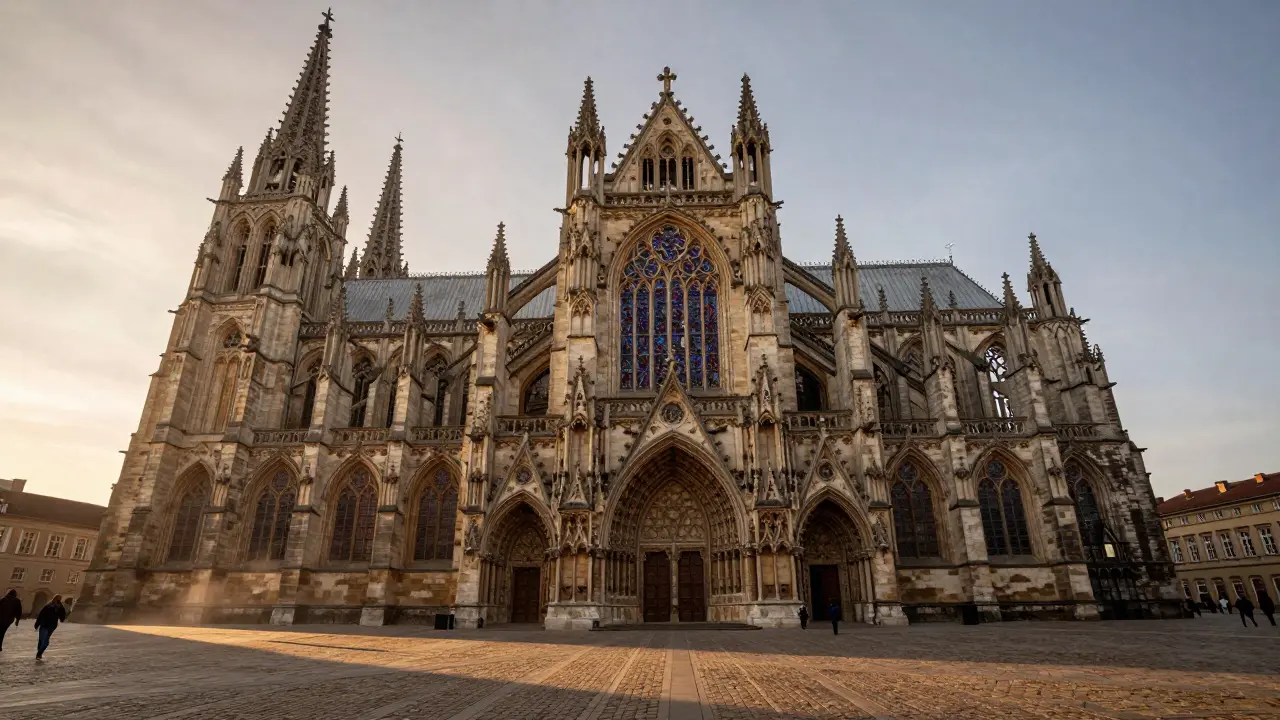
When you walk into a grand cathedral with soaring spires, stained glass that paints the floor in jewel-toned light, and walls carved with intricate stone tracery, you’re not just seeing a building-you’re standing inside a 19th-century revival of a medieval dream. Gothic Revival architecture didn’t just copy old styles; it reimagined them for a world changing faster than ever before. And even today, its influence lingers in courthouses, universities, churches, and even some homes. This isn’t just history on display. It’s a design language that refused to fade.
What Made Gothic Revival Different From Original Gothic?
Original Gothic architecture, born in 12th-century France, was built for function and faith. Engineers figured out how to use flying buttresses to push the weight of stone walls outward, letting them build taller, thinner walls filled with glass. The result? Light flooded into spaces meant to lift the soul toward heaven. But Gothic Revival, which started in England around 1740 and exploded after 1830, wasn’t trying to replicate medieval churches. It was trying to revive their spirit.
Where medieval builders used local stone and simple tools, 19th-century architects had steam-powered saws, mass-produced iron, and new chemical paints. They didn’t just copy; they embellished. Pointed arches became more dramatic. Ribbed vaults were layered with decorative moldings. Gargoyles weren’t just water spouts-they became symbols of moral warning. The style was romanticized, exaggerated, and often mixed with other styles. A Gothic Revival church might have French-style spires, English tracery, and German-inspired stained glass. It was a collage of the past, rebuilt for modern tastes.
The Rise of a Movement
The Gothic Revival didn’t start with architects. It started with writers and poets. Walter Scott’s novels, like Ivanhoe, painted medieval life as noble and mysterious. John Ruskin’s books, especially The Stones of Venice, argued that Gothic craftsmanship reflected moral truth-unlike the cold, mechanical perfection of industrial production. These ideas hit a nerve. In a world of factories and railroads, people longed for something handcrafted, spiritual, and rooted in history.
By the 1850s, the movement had official backing. The British Parliament chose Gothic Revival for the new Houses of Parliament after the 1834 fire. Augustus Welby Pugin, a fierce advocate, designed the interior details, insisting every ornament had symbolic meaning. His work became the blueprint. In the U.S., architects like Richard Upjohn and James Renwick Jr. took the style and ran with it. Upjohn’s Trinity Church in New York (1846) became one of the first major Gothic Revival buildings in America. Renwick’s Smithsonian Institution Building (1855) looked like a castle, but housed science.
Where You Can Still See Its Legacy Today
You don’t need to travel to Europe to find Gothic Revival. It’s in your hometown. Look up.
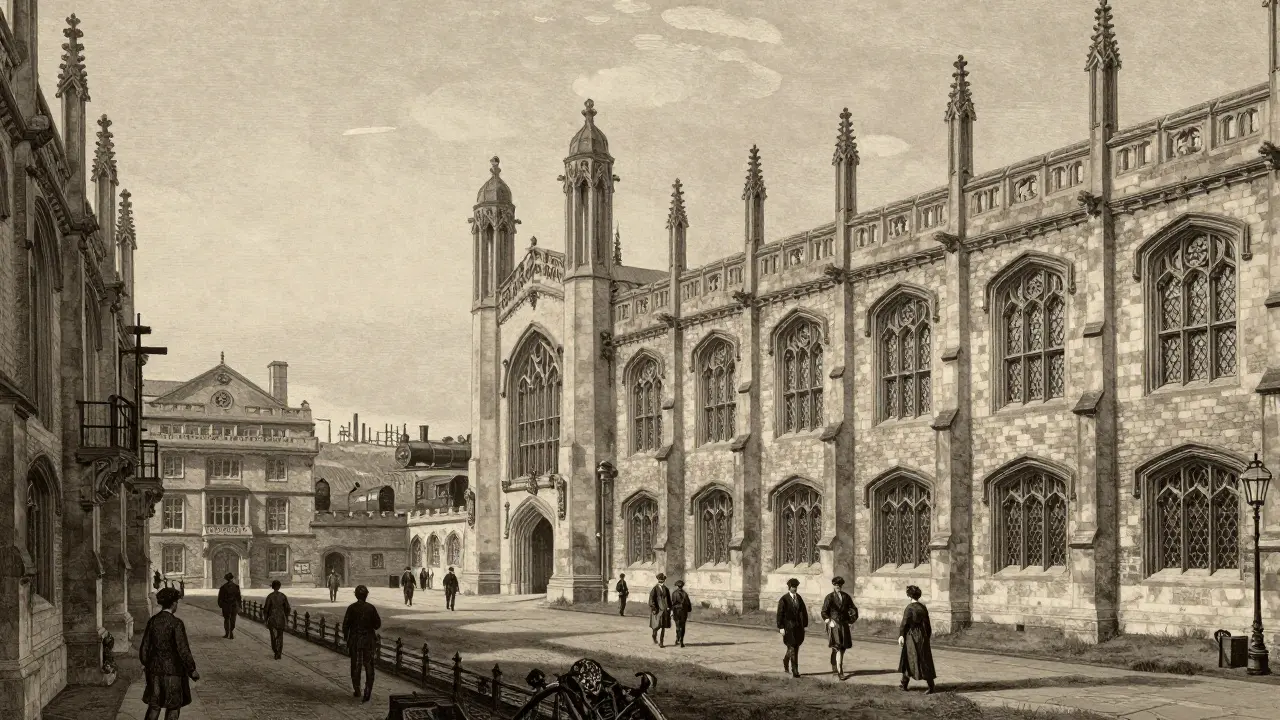
- Universities: Yale, Princeton, and the University of Chicago built entire campuses in the style. Their libraries, chapels, and dorms use pointed arches, cloisters, and rose windows-not because they’re medieval, but because they signal tradition and intellectual seriousness.
- Courthouses and City Halls: Many 19th-century civic buildings used Gothic Revival to suggest permanence and justice. The Toronto City Hall (1899) and the old New York City Hall (1812) both borrow from it.
- Churches: Thousands of Protestant and Catholic churches across North America and the UK were built in this style between 1840 and 1910. Even small towns had their own version-a stone spire, stained glass, and a bell tower.
- Residential Homes: The Carpenter Gothic style turned the style into wooden cottages with gingerbread trim. You’ll find them in rural New England and the Midwest. They look like miniature cathedrals.
Some of these buildings are still in active use. Others have been repurposed. But they’re all still standing. That’s not luck. It’s durability. Gothic Revival buildings were made to last. Thick stone walls, heavy timber frames, and high-quality craftsmanship meant they didn’t crumble like early 20th-century concrete boxes.
Why It Still Matters
Modern architecture loves clean lines, glass, and steel. But people still crave spaces that feel sacred, dramatic, or deeply human. Gothic Revival offered that. It didn’t just make buildings taller-it made them feel alive. The way light filters through stained glass, the echo of footsteps in a vaulted hall, the weight of stone carved by hand-these aren’t just aesthetics. They’re emotional experiences.
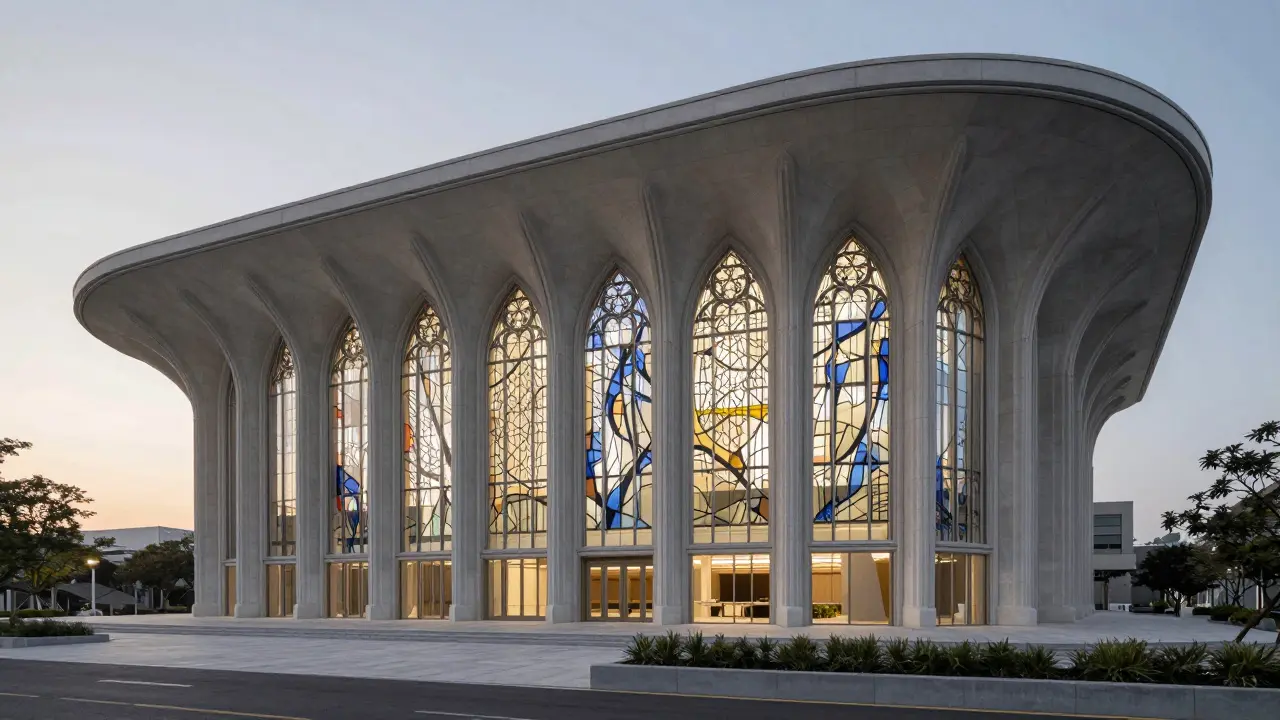
Even today, architects borrow from it. The Walt Disney Concert Hall in Los Angeles? Its curves echo Gothic vaults. The new Apple Park visitor center? Its circular form and soaring rooflines recall cathedral naves. The style didn’t die. It evolved.
And in an age of digital overload, people are rediscovering physical spaces that make them feel small in the best way. That’s why restoration projects for Gothic Revival buildings are booming. Cities are spending millions to clean centuries-old stonework, replace broken stained glass, and repair crumbling gargoyles. Why? Because these buildings aren’t just old. They’re still speaking.
The Tools That Made It Possible
Gothic Revival didn’t just rely on old ideas. It used new technology to make them better.
- Cast iron: Allowed for thinner walls and larger windows without losing structural strength. Used in rail stations and market halls. Machine-cut stone: Made intricate carvings cheaper and faster. Enabled mass production of decorative elements.
- Colorfast glass: New chemical processes allowed for richer, longer-lasting stained glass. Windows could tell complex biblical stories without fading.
- Photography: Allowed architects to study medieval buildings in detail before rebuilding them. Pugin used photos to replicate French cathedrals accurately.
This wasn’t nostalgia. It was innovation disguised as tradition. Architects weren’t copying-they were upgrading.
Common Misconceptions
People think Gothic Revival is just about churches. It’s not. It was used for schools, libraries, train stations, even factories. The style was flexible.
Another myth: it was only for the rich. While grand cathedrals cost millions, simpler Carpenter Gothic homes were affordable. Hundreds of working-class families lived in them. The style wasn’t about wealth-it was about meaning.
And no, it wasn’t just British. Germany, France, and the U.S. each developed their own version. American Gothic Revival was more rugged, less ornate. German versions leaned into brickwork and verticality. It was never one-size-fits-all.
What Happened to the Style?
By the 1920s, modernism took over. Architects like Le Corbusier called Gothic Revival “backward.” Skyscrapers, steel frames, and glass boxes became the future. Gothic Revival fell out of fashion.
But it never disappeared. The buildings were too solid to tear down. Too beautiful to ignore. In the 1970s, preservation movements saved many. Today, it’s not about reviving the style-it’s about respecting it. You won’t see new Gothic Revival churches being built. But you’ll see its DNA in modern designs that prioritize light, verticality, and emotional impact.
| Feature | Original Gothic (12th-16th Century) | Gothic Revival (18th-20th Century) |
|---|---|---|
| Primary Purpose | Worship and spiritual awe | Symbolic meaning, civic pride, romantic nostalgia |
| Materials | Local stone, timber, hand-cut glass | Machine-cut stone, cast iron, mass-produced stained glass |
| Decoration | Functional ornamentation | Exaggerated, symbolic, often narrative |
| Construction Method | Skilled artisans, slow build | Industrial tools, faster construction |
| Typical Buildings | Cathedrals, abbeys, monasteries | Courthouses, universities, homes, train stations |
Why This Style Still Captures Us
There’s something about Gothic Revival that feels deeper than style. It’s not just about arches or spires. It’s about the idea that buildings can carry meaning. That craftsmanship matters. That light, when filtered through color, can change how you feel.
In a world of flat-pack buildings and prefab homes, Gothic Revival reminds us that architecture can be poetry. You can’t mass-produce awe. But you can design spaces that invite it. That’s why we still restore these buildings. Not because we want to live in the past. But because we still need spaces that lift us up.
Is Gothic Revival architecture still being built today?
New buildings in full Gothic Revival style are extremely rare today. Most architects use modern materials and methods. But elements of the style-pointed arches, vertical lines, stained glass, and intricate stonework-are still borrowed in churches, universities, and luxury homes. You won’t see a new cathedral with flying buttresses, but you might see a library with a Gothic-inspired tower or a chapel with stained glass windows designed in the revival tradition.
What’s the difference between Gothic Revival and Victorian architecture?
Gothic Revival is a subset of Victorian architecture. Victorian refers to the entire era (1837-1901) and includes many styles: Italianate, Queen Anne, Second Empire. Gothic Revival was one of the most popular Victorian styles, especially for public and religious buildings. So all Gothic Revival buildings from that time are Victorian, but not all Victorian buildings are Gothic Revival.
Why did Gothic Revival become popular in America?
Americans in the 1800s were searching for cultural identity. Many saw Europe as the source of civilization, and Gothic architecture as its highest expression. Building in this style signaled sophistication and moral seriousness. It also appealed to Protestant churches that wanted to distance themselves from Catholic Baroque styles. Gothic Revival felt both ancient and pure.
Are there any famous Gothic Revival buildings still in use?
Yes. The Houses of Parliament in London, Trinity Church in New York, the University of Chicago’s Rockefeller Chapel, and the Basilica of Sainte-Clotilde in Paris are all still actively used. Many university libraries, city halls, and churches built in this style remain in daily operation. Their durability is one reason they’ve survived.
Can you identify a Gothic Revival building just by looking at it?
Yes, if you know what to look for. Key signs include: pointed arches on windows and doors, tall narrow windows with tracery, decorative stone carvings (gargoyles, foliage), buttresses (often ornamental), and steeply pitched roofs. If a building looks like a medieval cathedral but was built between 1840 and 1920, it’s likely Gothic Revival.