The Enchanting World of Art Nouveau Architecture: Curves, Nature, and Craftsmanship
 Dec, 13 2025
Art Nouveau Restoration Cost Calculator
Why Restoration Costs Are High
Art Nouveau's value lies in its handmade craftsmanship. Unlike mass-produced buildings, every element was created by skilled artisans using traditional techniques. As the article explains: "Replacing a single stained-glass window or wrought-iron balcony requires skilled artisans who know the original techniques. Mass-produced replacements won't match."
Enter Your Project Details
Walk through Brussels, Barcelona, or Budapest, and you’ll see buildings that look like they’re alive. Walls twist like vines. Windows curl like petals. Iron railings flow like water frozen mid-splash. This isn’t fantasy-it’s art nouveau architecture, a style that turned cities into living canvases between 1890 and 1910. It didn’t just change how buildings looked-it changed how people felt about them.
What Makes Art Nouveau Different?
Before art nouveau, most buildings followed strict rules: straight lines, symmetry, heavy ornamentation copied from the past. Art nouveau broke all of that. It didn’t copy history. It drew inspiration from nature-flowers, insects, vines, waves-and turned them into structure. Architects didn’t just add decoration; they made the whole building part of the design.
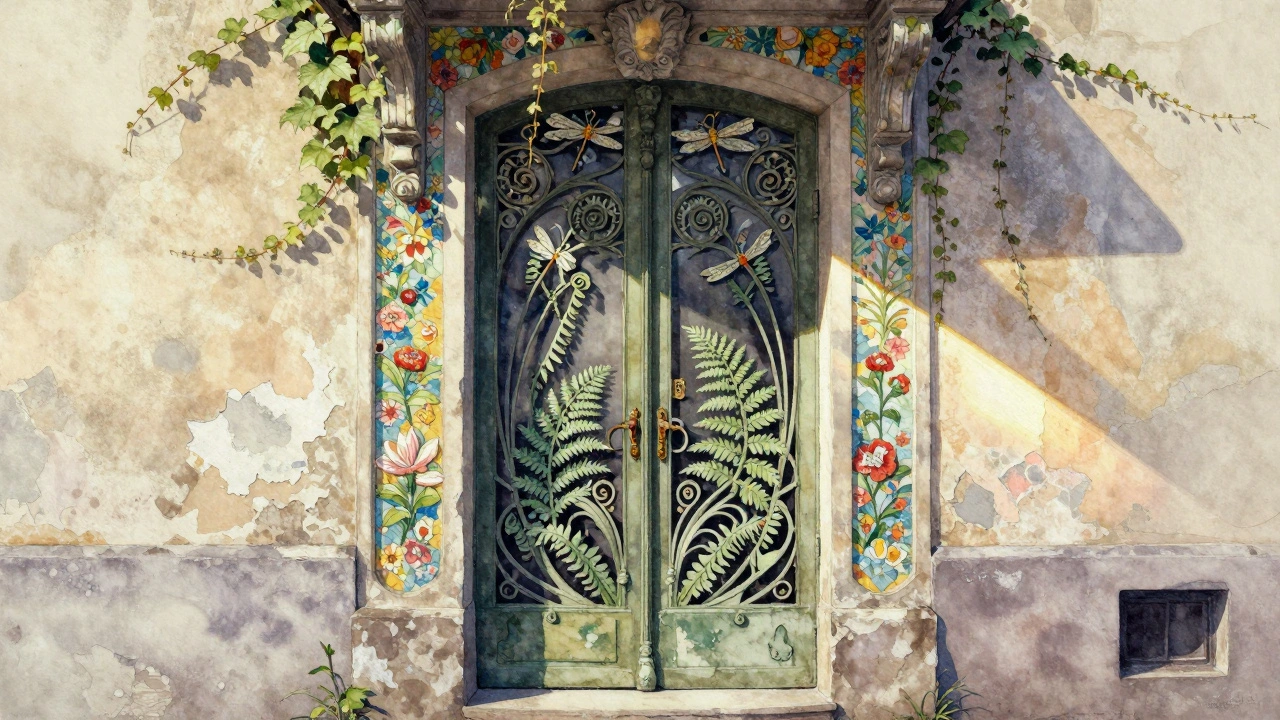
Think of a door handle. In older styles, it was a simple metal knob. In art nouveau, it might be shaped like a dragonfly’s wing, fused seamlessly into the wood. The window frame? Not just a rectangle-it could spiral upward like a fern unfurling. Even the bricks and tiles were custom-made to follow the curve of the wall. Every detail had purpose and poetry.
This wasn’t just about looks. It was a reaction. Industrialization was flooding cities with mass-produced, soulless goods. Art nouveau said: Let’s bring back the hand, the craft, the breath of life. It was architecture as art, made by artists, not just builders.
Where Did It Come From? Names Across Europe
Art nouveau didn’t have one birthplace-it had many, each with its own name.
- In France, it was called art nouveau-new art.
- In Germany and Scandinavia, it was Jugendstil, after the magazine Jugend that popularized the style.
- In Austria, it became Secessionstil, named after the Vienna Secession group that broke away from traditional academies.
- In Spain, especially Barcelona, it was modernismo, led by Antoni Gaudí.
- In Italy, it was stile liberty, after the London department store Liberty & Co., which sold art nouveau goods.
Despite the names, the core idea stayed the same: nature as the ultimate architect. No two buildings looked alike, but they all whispered the same thing: Look closer. There’s life here.
Key Features You Can’t Miss
If you’re trying to spot art nouveau architecture, here’s what to look for:
- Organic curves-no straight lines unless they’re forced by function. Walls bend, columns swell, balconies ripple.
- Floral and insect motifs-lilies, irises, peacocks, dragonflies, snails. Not as carved decorations, but as structural elements.
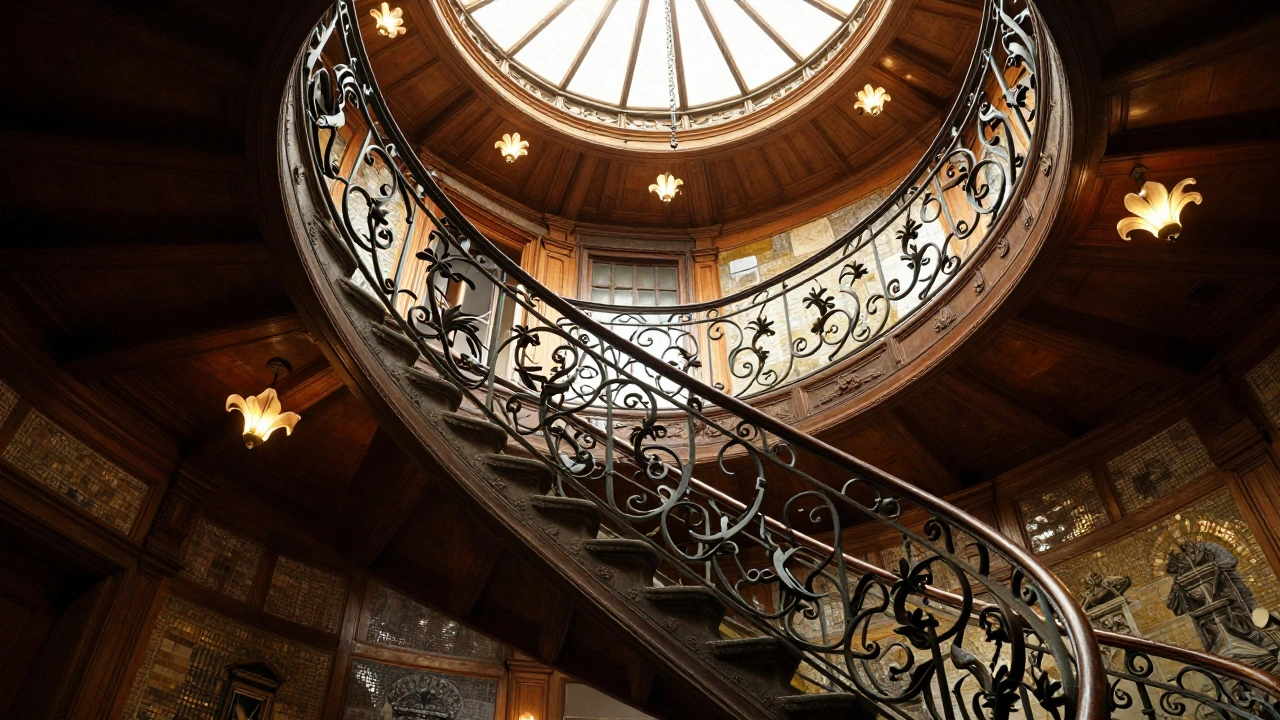
- Ironwork that flows-balconies, stair railings, and gates made of wrought iron, shaped like tendrils or wings.
- Stained glass with natural scenes-not religious figures, but sun-dappled forests or water lilies.
- Handcrafted materials-ceramic tiles, etched glass, carved wood, mosaic work. Everything made by hand, often by the same artist who designed the building.
One of the most famous examples is the Hôtel Tassel in Brussels, designed by Victor Horta in 1893. The staircase isn’t just a way to get upstairs-it’s a swirling ribbon of iron and glass, lit from above, wrapping around like a vine climbing a tree. It’s not a feature. It’s the heart of the house.
Art Nouveau’s Greatest Masters
Behind every great art nouveau building was a visionary.
Victor Horta in Belgium didn’t just design buildings-he designed experiences. His homes had hidden doors, custom furniture, even light fixtures shaped like lilies. He treated every square inch as part of a whole. His work is why Brussels is still considered the birthplace of the movement.
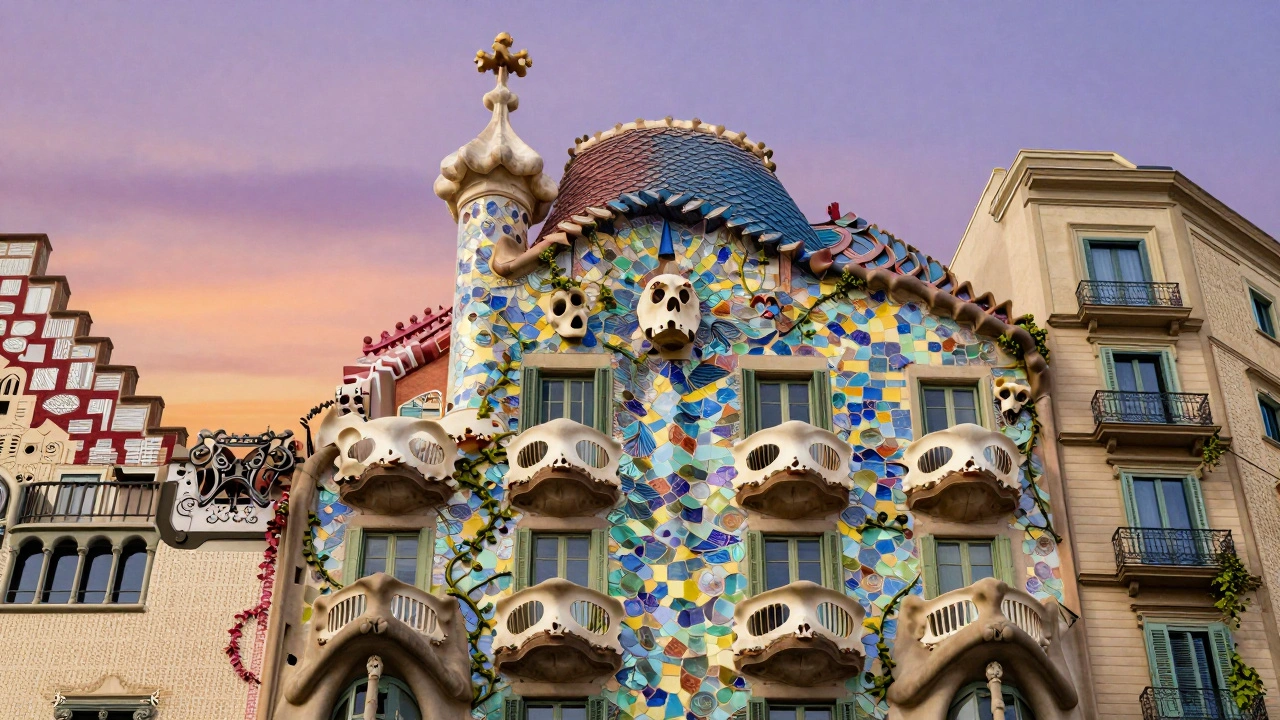
Antoni Gaudí in Barcelona took nature even further. His Casa Batlló looks like a dragon’s spine. The roof is tiled like scales. The balconies are skull-shaped, like the bones of some sea creature. His Sagrada Família? Still under construction, it’s less a church and more a forest of stone columns, reaching up like tree trunks into the sky.
Josef Hoffmann and Otto Wagner in Vienna brought a cleaner, more geometric version of art nouveau. Their buildings still had curves, but they were tighter, more controlled. Wagner’s Vienna Stadtbahn stations still stand today-elegant, functional, with bronze handles shaped like stems.
In Paris, Hector Guimard designed the city’s metro entrances. Those green iron lattices with flowing lines? They’re art nouveau. People used them every day without realizing they were walking under sculpture.
Why Did It Fade?
Art nouveau didn’t die because it failed. It died because it was too expensive, too slow, too personal.
Each building took years to build. Every tile, every hinge, every railing was handmade. As World War I approached, money tightened. People wanted efficiency, not elegance. The rise of modernism-clean lines, steel frames, glass boxes-made art nouveau seem like a romantic dream from a past era.
By the 1920s, most architects had moved on. Many art nouveau buildings were torn down. Others were covered over with plaster or paint. In some cities, like Paris, entire blocks were stripped of their original details.
But not all was lost. In the 1960s and 70s, people started looking back. They realized what had been thrown away wasn’t just style-it was soul. Restorations began. Brussels, Barcelona, and Budapest led the charge. Today, entire neighborhoods are protected as UNESCO World Heritage Sites.
Where to See the Best Examples Today
If you want to walk through the heart of art nouveau, these cities still hold its magic:
- Brussels, Belgium-Horta’s buildings, the Hôtel Solvay, the Autrique House. The city has over 400 art nouveau facades.
- Barcelona, Spain-Casa Batlló, Casa Milà (La Pedrera), and Gaudí’s Park Güell. The city feels like a sculpture garden.
- Budapest, Hungary-the Gresham Palace, the Museum of Applied Arts. The Hungarian version blends folk motifs with flowing lines.
- Paris, France-Guimard’s metro entrances, the Castel Béranger, and the Pavillon de l’Arsenal.
- Reykjavik, Iceland-yes, even here. The National Theatre has a striking art nouveau facade, rare in a city known for concrete.
Even in smaller towns-like Riga in Latvia or Nancy in France-you’ll find hidden gems. Look up. Look at the doorways. Look at the lamp posts. They’re still whispering.
Why It Still Matters
Today, we’re surrounded by buildings that look like they came from the same factory. Glass towers, identical apartments, cookie-cutter storefronts. Art nouveau reminds us that design doesn’t have to be cold to be efficient. It doesn’t have to be cheap to be beautiful.
It teaches us that buildings can be alive. That nature isn’t just something to admire from outside-it can be part of the structure. That craftsmanship still has value. That a railing, a window, a doorknob can carry emotion.
Art nouveau didn’t just decorate cities. It asked a question: Can a building make you feel wonder? The answer, still visible in its surviving facades, is yes.
What’s Left to Discover
Many art nouveau buildings still sit forgotten-hidden behind modern renovations, painted over, or used as offices with no signage. In cities like Milan, Glasgow, and even parts of New York, researchers are finding forgotten masterpieces under layers of plaster.
There’s no official global inventory, but local preservation groups are mapping them. If you’re curious, look for buildings built between 1895 and 1910. Check for curved ironwork, stained glass with botanical scenes, and asymmetrical facades. You might be standing next to something that changed architecture forever.
What’s the difference between art nouveau and art deco?
Art nouveau is organic, flowing, and inspired by nature-think vines, flowers, and curves. Art deco, which came after around 1920, is geometric, sharp, and machine-inspired-think zigzags, sunbursts, and chrome. Art nouveau feels alive; art deco feels modern and polished.
Is art nouveau still being built today?
Not in the original form. But many contemporary architects draw inspiration from it. You’ll see curved glass walls, handcrafted iron details, or nature-inspired patterns in new buildings-especially in luxury homes or cultural centers. It’s not revival-it’s influence.
Why is art nouveau so expensive to restore?
Because every detail was handmade. Replacing a single stained-glass window or wrought-iron balcony requires skilled artisans who know the original techniques. Mass-produced replacements won’t match. Restoration isn’t just repair-it’s craftsmanship resurrection.
Can I find art nouveau architecture outside Europe?
Yes, but it’s rare. You’ll find examples in Buenos Aires, Havana, and parts of the U.S.-like the Louis Sullivan buildings in Chicago. But Europe remains the epicenter. Outside Europe, it was often adapted by local craftsmen, blending with regional styles.
How do I know if a building is truly art nouveau and not just decorative?
Look at the structure. If the curves are just added on top-like stickers on a wall-it’s probably not art nouveau. True art nouveau integrates the design into the building’s bones: the railing becomes the column, the window frame becomes the flower, the roofline flows like a wave. It’s not decoration. It’s architecture made from nature’s language.