The Cultural Significance of Expressionist Architecture: Emotion Over Form
 May, 25 2026
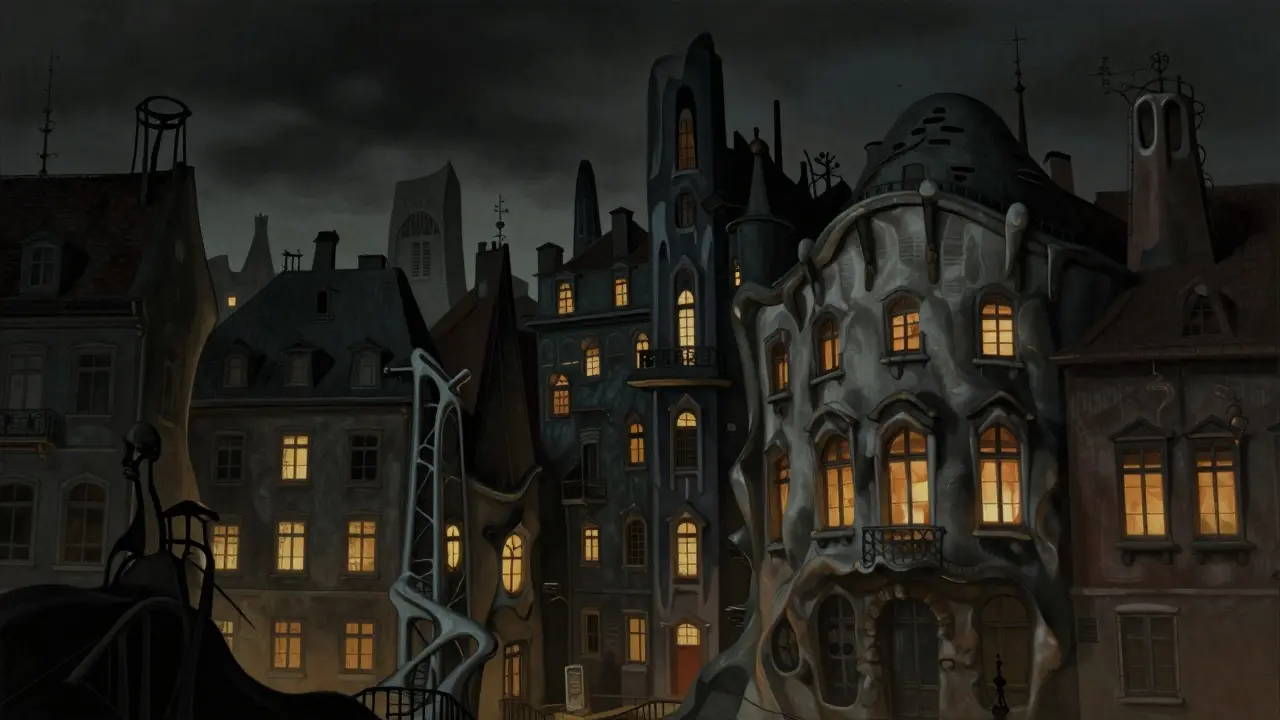
Imagine walking past a building that looks like it’s melting. The lines curve unnaturally, the materials seem to twist under pressure, and the whole structure feels less like a shelter and more like a giant sculpture caught in mid-motion. That is Expressionist architecture, a style that prioritizes emotional experience over functional logic. It doesn't ask you to admire its efficiency. It asks you to feel something.
This wasn't just an aesthetic choice. It was a cultural rebellion. Born in early 20th-century Europe, this style emerged when society was fracturing under the weight of industrialization and impending war. Architects stopped trying to hide the machinery of building. Instead, they let the structures scream their anxiety, hope, and spiritual longing. Today, looking back at these jagged skylines and organic forms, we see more than just weird buildings. We see a mirror held up to a culture in crisis.
The Rejection of Rationalism
To understand why Expressionism mattered, you have to look at what it was fighting against. Before World War I, the dominant architectural mindset was rooted in rationalism and historicism. Buildings were supposed to be orderly, symmetrical, and respectful of tradition. They followed strict rules about proportion and material usage. But for a generation of artists and architects, those rules felt suffocating. They felt dead.
Expressionism flipped the script. If classical architecture was about order, Expressionism was about chaos. If modernism (in its later, sleek form) was about machine-age efficiency, Expressionism was about human vulnerability. This shift wasn't just stylistic; it was philosophical. It suggested that truth in art-and in architecture-came from inside the creator, not from external standards. A building didn't need to make sense logically if it made sense emotionally.
This rejection of rationalism had deep cultural roots. It aligned with psychological theories emerging at the time, particularly those of Sigmund Freud. Just as psychoanalysis explored the hidden depths of the human mind, Expressionist architecture explored the hidden tensions of urban life. The twisted forms weren't random. They were visual representations of inner turmoil.
Key Figures and Their Emotional Blueprints
You can't talk about this movement without mentioning the people who built it. These architects weren't just drafting plans; they were crafting manifestos in brick, steel, and glass.
Hans Poelzig stands out as one of the most dramatic figures. His designs often featured skeletal frames and exotic, almost theatrical facades. He didn't care about hiding the structure. He wanted the building to look alive, pulsing with energy. His work challenged the idea that a building should be a static object. Instead, he treated architecture as a dynamic performance space.
Then there is Erich Mendelsohn, known for his "Einstein Tower" in Potsdam. This building looks like a blob of clay stretched by gravity. There are no straight lines. No right angles. It flows. Mendelsohn called this "plasticity." He believed that concrete and stone could be molded to express movement and fluidity, much like a living organism. This was a radical departure from the rigid box-like structures common at the time.
In Germany, Bruno Taut pushed the boundaries even further with his glass pavilions. He saw glass not just as a material for windows, but as a symbol of transparency, light, and social utopia. His "Alpine Architecture" proposals imagined cities built into mountainsides, glowing with colored glass. For Taut, architecture was a tool for spiritual renewal. He believed that living in beautiful, light-filled spaces could heal the soul of the modern worker.
| Architect | Signature Style | Cultural Message |
|---|---|---|
| Hans Poelzig | Skeletal frames, theatrical facades | Architecture as dynamic performance |
| Erich Mendelsohn | Fluid, plastic forms | Movement and organic growth |
| Bruno Taut | Colored glass, crystalline structures | Spiritual renewal through light |
Materials as Emotional Carriers
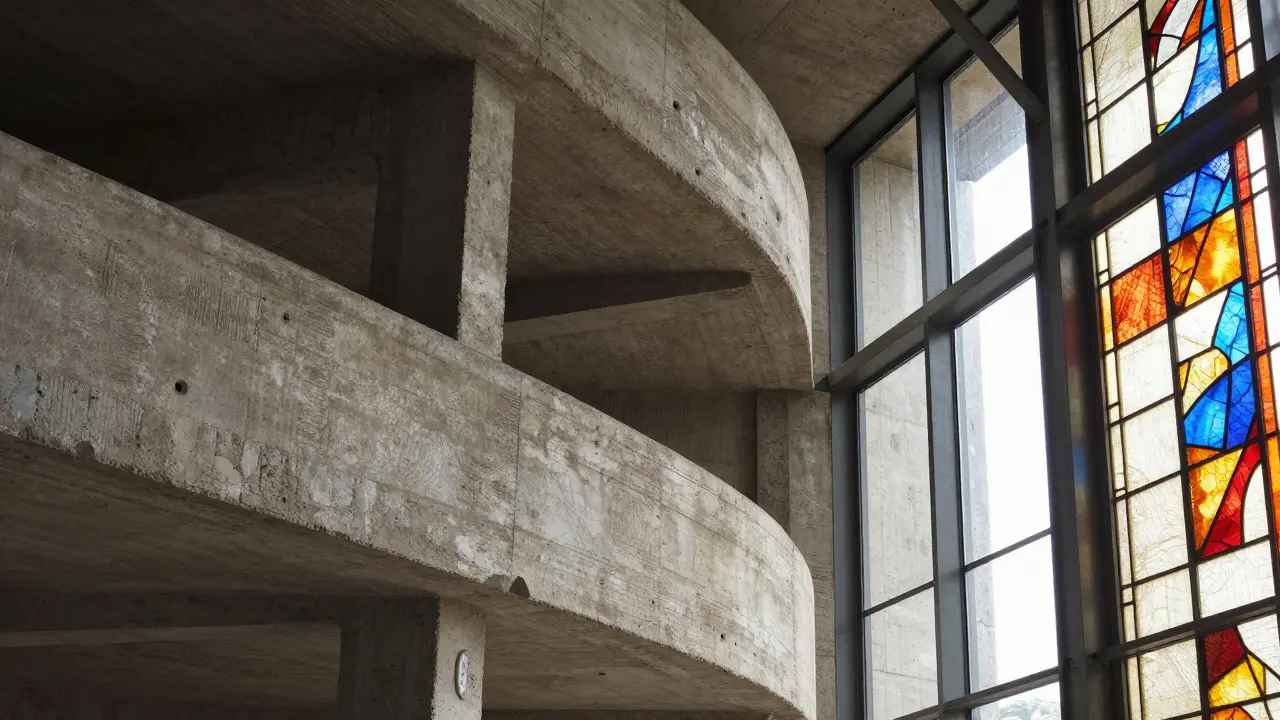
One of the most fascinating aspects of Expressionist architecture is how it used materials. In traditional construction, materials were often covered up or standardized. Brick looked like brick. Stone looked like stone. Expressionists wanted to expose the raw nature of their materials, but also to manipulate them to evoke specific feelings.
Glass became a superstar in this movement. But not just clear, functional glass. Think stained glass, colored glass, and massive curtain walls that dissolved the boundary between inside and outside. Glass represented clarity and honesty. It also represented fragility. By using so much glass, architects were acknowledging the precariousness of modern life.
Concrete was another key player. But instead of pouring it into neat, rectangular molds, Expressionists poured it into curved, irregular shapes. They left the formwork marks visible, celebrating the process of creation rather than hiding it. This roughness added texture and depth, making the buildings feel tactile and immediate. You could almost feel the sweat and effort of the builders in the walls.
Steel was used not just for support, but for expression. Exposed steel frames created a sense of lightness and airiness. They allowed for larger spans and more open interiors, breaking down the heavy, compartmentalized rooms of older homes. This openness reflected a desire for freedom and connection, both within the home and with the wider world.
Urban Fantasy and Social Utopia
Expressionism wasn't just about individual buildings. It was also about reimagining the city itself. Many Expressionist architects proposed grand urban plans that never got built, but which reveal a lot about their cultural hopes and fears.
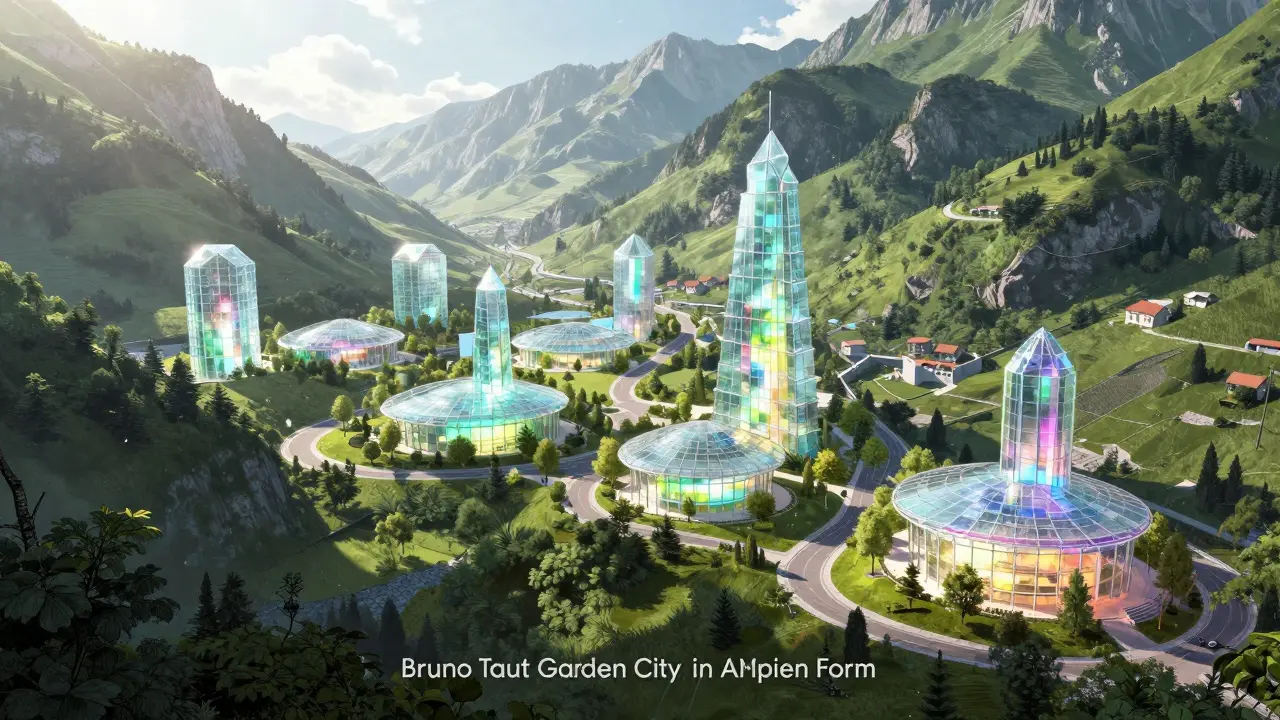
Bruno Taut's "Garden City in Alpine Form" is a perfect example. He envisioned a city where every house had its own garden, nestled into the hillsides. The streets would wind organically, following the contours of the land. This was a direct response to the crowded, polluted industrial cities of the time. Taut believed that nature and architecture could coexist harmoniously, creating a healthier, happier society.
These fantasies were deeply political. They offered an alternative to the capitalist sprawl and military fortifications that dominated European landscapes. By designing cities based on community, light, and nature, Expressionists were making a statement about what society could be. They were dreaming of a post-war world where peace and beauty were the foundations of daily life.
Even though many of these plans remained on paper, they influenced later movements like Organic Architecture and even contemporary sustainable design. The idea that buildings should respond to their environment, rather than dominate it, started here.
The Legacy in Contemporary Design
So, does Expressionist architecture still matter today? Absolutely. While we don't build Einstein Towers every day, the spirit of Expressionism lives on in many ways.
Look at the work of Frank Gehry. His Guggenheim Museum in Bilbao looks like a shipwreck of titanium sheets. It’s chaotic, unexpected, and deeply emotional. That’s pure Expressionism. Or consider Zaha Hadid’s flowing, futuristic forms. Her buildings refuse to sit still. They move, twist, and challenge your perception of space. These architects aren't trying to create efficient boxes. They're creating experiences.
Expressionism also paved the way for parametric design, where algorithms generate complex, non-linear forms. This technology allows architects to create shapes that would have been impossible to draw by hand in the 1920s. But the goal remains the same: to break free from the grid and explore new possibilities for form and feeling.
In a world increasingly dominated by generic, corporate architecture, Expressionism reminds us that buildings can have personality. They can surprise us. They can make us pause and wonder. That’s a valuable lesson for any era.
Why We Still Need Emotional Architecture
We live in a time of digital saturation and physical uniformity. Our cities are filled with glass towers that look identical, regardless of location. Our screens display content optimized for engagement, not meaning. In this context, the cultural significance of Expressionist architecture becomes even clearer.
It teaches us that design isn't just about function. It's about identity. It's about how we feel in our environments. When a building expresses emotion, it connects with us on a deeper level. It acknowledges our humanity. It says, "I am not just a container for your activities. I am part of your story."
By studying Expressionism, we learn to value diversity in design. We learn to appreciate the imperfect, the unusual, and the bold. We learn that sometimes, the most powerful statement a building can make is to simply be different.
What is the main difference between Expressionist architecture and Modernism?
While both movements rejected historical ornamentation, Modernism focused on functionality, standardization, and the machine age. Expressionism prioritized emotional impact, individual creativity, and organic or distorted forms. Modernism sought universal solutions; Expressionism sought unique, personal expressions.
Who are some famous examples of Expressionist buildings?
Key examples include the Einstein Tower in Potsdam by Erich Mendelsohn, the Chilehaus in Hamburg by Fritz Höger, and the Glass Pavilion by Bruno Taut. These buildings showcase the movement's characteristic use of fluid forms, exposed materials, and dramatic lighting.
Why did Expressionist architecture decline after the 1920s?
The rise of Nazism in Germany led to the suppression of "degenerate art," including Expressionism. Additionally, the economic pressures of the Great Depression favored cheaper, more functional building methods. The International Style, with its emphasis on efficiency and mass production, became the dominant global standard.
How does Expressionist architecture influence today's designers?
Contemporary architects like Frank Gehry and Zaha Hadid draw inspiration from Expressionism's freedom from geometric constraints. The movement's focus on emotional resonance and sculptural form continues to inspire designs that prioritize experience over mere utility.
Is Expressionist architecture considered ugly?
Beauty is subjective. To some, the distorted forms and lack of symmetry appear unsettling or chaotic. However, proponents argue that this "ugliness" is intentional, meant to provoke thought and reflect the complexities of the human condition. It challenges traditional notions of harmony and balance.