Architectural Fusion: Where Styles Collide and Create Something New
When architectural fusion, the intentional blending of distinct architectural styles into a single design. Also known as hybrid architecture, it’s what happens when a Gothic Revival cathedral gets a high-tech glass atrium, or when a Renaissance palazzo wears a deconstructivist roof. This isn’t random mixing—it’s a deliberate conversation between eras, cultures, and engineering philosophies. You see it in the way 19th-century architects borrowed Roman arches and Greek columns to build banks and courthouses, then in the 20th century, how postmodern designers slapped those same elements back on buildings with a wink and a rainbow.
Take Gothic Revival architecture, a 19th-century movement that revived medieval pointed arches and flying buttresses to evoke spiritual grandeur. Also known as Neo-Gothic, it was used for universities, churches, and even train stations. But today, you’ll find it fused with steel frames and LED-lit stained glass in modern civic centers. Then there’s Renaissance Revival architecture, a style built on symmetry, arched windows, and palazzo-inspired facades that spread from Italy to New York and beyond. Also known as Italianate, it gave us grand libraries and banks that still stand today. Now, those same proportions are being reinterpreted in minimalist homes, where clean lines echo Palladian balance—but without the ornate carvings. And let’s not forget postmodern architecture, a rebellion against cold modernism that brought back color, irony, and historical references. Also known as postmodern design, it made buildings that looked like giant typewriters or classical columns with cartoonish caps. That same spirit lives on in expressionist buildings with twisted forms and glowing glass, where emotion trumps function.
Architectural fusion isn’t just about looks—it’s about solving problems. How do you make a government building feel welcoming? Mix classical dignity with open, light-filled spaces. How do you honor history without copying it? Take the rhythm of a Roman aqueduct and turn it into a sustainable water tower. The buildings you’ll find in this collection don’t just show you what fusion looks like—they show you why it works. Whether it’s Rococo’s playful curves meeting brutalist concrete, or Greek columns holding up a smart home, every example here is a real-world answer to a simple question: What happens when old meets new, not as a copy, but as a conversation?
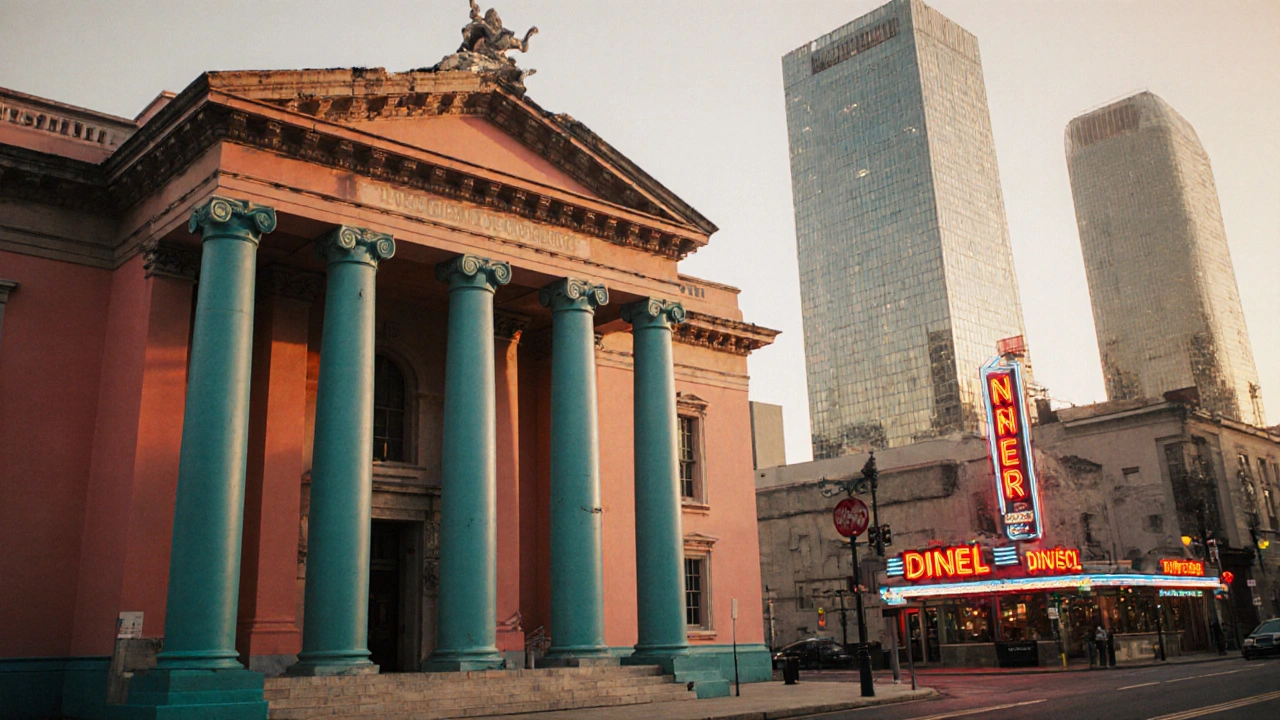
Postmodern Architecture: The Ultimate Fusion of Styles
Postmodern architecture breaks rules by mixing historical styles, bold colors, and playful forms. It rejects minimalism in favor of meaning, humor, and cultural references-creating buildings that tell stories, not just house them.
Read more