Rococo Art and Architecture: The Ornate Aesthetic That Shaped Europe
 May, 18 2026
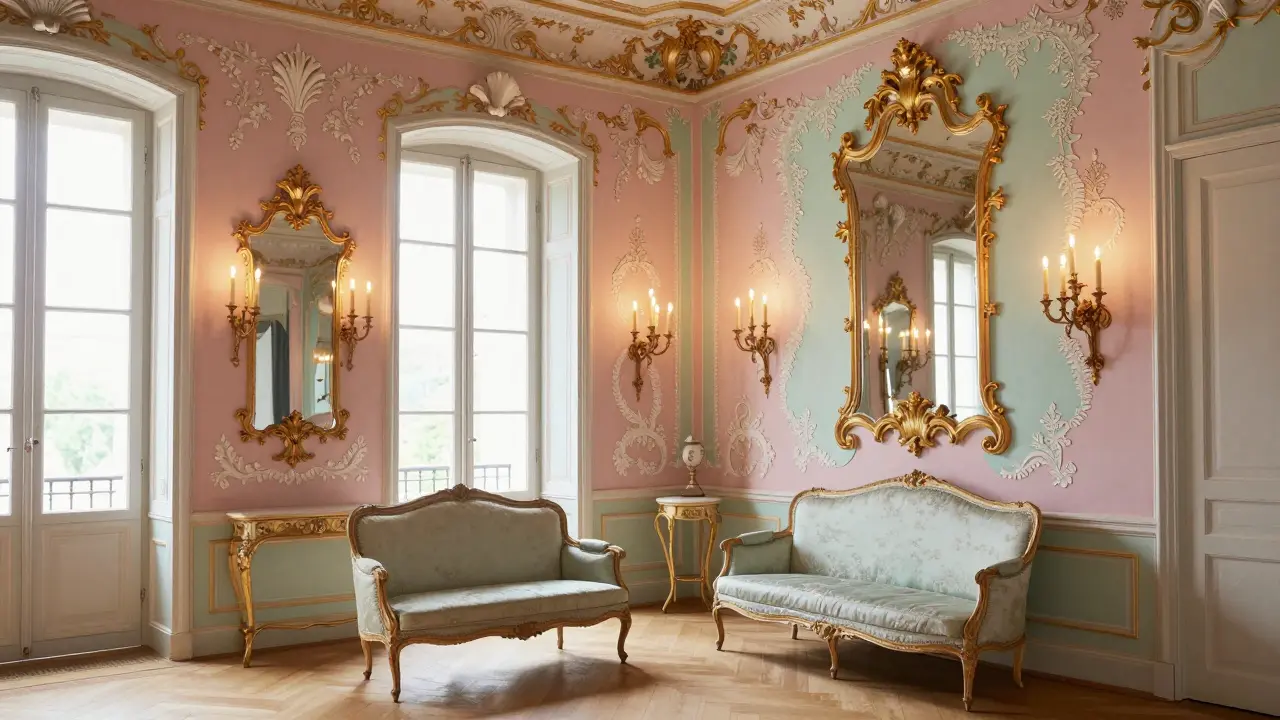
Imagine walking into a room where every surface curves away from you. There are no sharp corners, only soft, flowing lines that mimic the shape of shells or swirling clouds. The walls are painted in pastel pinks, mint greens, and creamy whites, adorned with delicate gold leaf patterns that look like frozen lace. This is not just decoration; it is an entire worldview made visible. You have stepped into the world of Rococo, an ornate artistic style that emerged in early 18th-century France and swept across Europe, replacing the heavy grandeur of the Baroque with intimate elegance and playful asymmetry.
The word itself comes from the French term rocaille, which originally referred to decorative garden work using rocks and shells. Over time, it evolved to describe a specific aesthetic sensibility-one that prized lightness, movement, and intricate detail over solemnity and symmetry. While many people associate this period with frivolous aristocratic parties, the reality is far more complex. Rococo was a reaction against the rigid political power displayed by Louis XIV’s Versailles. It shifted focus from the state to the individual, from public ceremony to private comfort.
From Baroque Grandeur to Rococo Intimacy
To understand why Rococo felt so revolutionary when it arrived, you need to look at what came before it. The preceding era, known as Baroque, was all about awe-inspiring scale and dramatic contrast. Think of massive churches with dark shadows and bright highlights, designed to overwhelm the viewer with the power of the Church and the State. Artists like Caravaggio and Bernini created works that demanded your attention through sheer force.
Rococo turned its back on that intensity. Instead of overwhelming you, it invited you in. The transition began in Paris around 1715, shortly after the death of King Louis XIV. His court had been centered at the Palace of Versailles, a symbol of absolute monarchy characterized by strict geometry and monumental proportions. When his successor, Louis XV, took the throne, the cultural center of gravity shifted toward smaller, more personal spaces in city townhouses called hôtels particuliers.
This shift wasn't just architectural; it was psychological. The new elite didn't want to be intimidated by their surroundings. They wanted environments that encouraged conversation, romance, and leisure. As a result, rooms became smaller but more elaborate. Walls were covered in mirrored panels to reflect candlelight and create an illusion of space. Furniture became lighter, with curved legs and upholstered seats that prioritized comfort over formality.
Key Characteristics of the Rococo Style
If you’re trying to identify a genuine Rococo piece-whether it’s a painting, a chair, or a ceiling fresco-look for these defining traits. These elements distinguish it clearly from both its predecessor (Baroque) and its successor (Neoclassicism).
- Asymmetry: Unlike the balanced compositions of earlier periods, Rococo designs often feature irregular, organic shapes. A mirror might be flanked by sconces that don’t match exactly, creating a sense of natural spontaneity.
- Pastel Color Palettes: Heavy browns and deep reds gave way to soft blues, pale yellows, blush pinks, and seafoam greens. These colors reflected daylight beautifully and made interiors feel airy.
- Natural Motifs: Expect to see lots of references to nature-but stylized nature. C-scrolls, S-curves, acanthus leaves, seashells, and floral garlands dominate the decorative vocabulary.
- Gilded Details: Gold leaf was used extensively, but applied delicately rather than boldly. It highlighted the contours of the plasterwork without dominating the visual field.
- Lightness and Airiness: Even heavy materials like stone or wood were carved to appear weightless. Columns might taper dramatically, and moldings would seem to float off the wall.
These characteristics weren’t arbitrary choices. They served a social function. In the intimate salons of Parisian high society, where women played a central role in shaping culture and politics, the environment needed to support fluid interaction. Sharp angles disrupt eye contact; curved surfaces guide it. Bright colors lift the mood; dim ones suppress it. Every element worked together to facilitate connection.
Famous Masters of the Rococo Era
A few artists defined this period so thoroughly that their names remain synonymous with the style today. Understanding their contributions helps clarify how diverse Rococo actually was-it wasn’t one single look, but a spectrum of expressions.
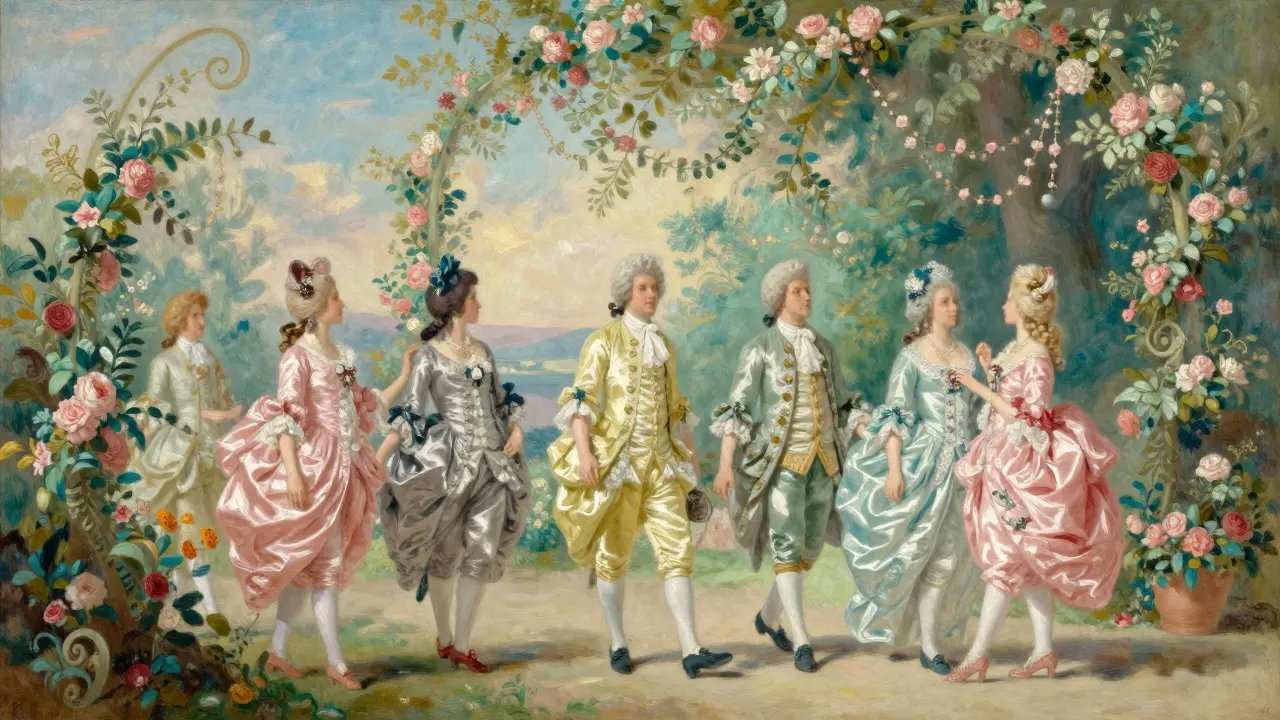
Antoine Watteau is often credited with launching the movement. Born in Valenciennes in 1684, he introduced a new genre called fêtes galantes-paintings depicting elegantly dressed figures strolling through dreamlike landscapes. His brushwork was loose and atmospheric, capturing fleeting moments of emotion rather than static poses. Works like Embarkation for Cythera blend theatricality with tenderness, setting the tone for decades to come.
In interior decoration, Germain Boffrand revolutionized French architecture. He redesigned the Salon de la Princesse in the Hôtel de Soubise, creating a masterpiece of Rococo plasterwork. The room features undulating walls, cascading garlands, and mirrors framed in scrolling foliage. It became the template for countless other interiors across Europe.
Meanwhile, François Boucher dominated the royal court under Louis XV. His paintings celebrated fertility, mythology, and sensual pleasure with lush color and dynamic composition. Though criticized later for being too indulgent, Boucher’s influence on textile design, tapestry weaving, and ceramic production was immense. He helped turn Rococo into a total lifestyle experience.
Beyond France, Tiepolo brought Rococo to Italy and Spain. His frescoes in the Würzburg Residence combine celestial grandeur with playful charm, proving that the style could adapt to larger scales without losing its essence. Meanwhile, in England, William Kent blended Rococo motifs with classical structures, paving the way for Neoclassicism while still honoring the decorative richness of the past.
Rococo Across Europe: Regional Variations
While France birthed Rococo, each country that adopted it added its own flavor. Here’s how the style manifested differently depending on location:
| Country | Distinctive Features | Notable Example |
|---|---|---|
| France | Refined elegance, restrained ornamentation, emphasis on salon culture | Hôtel de Soubise, Paris |
| Germany/Austria | Dramatic church interiors, intense emotional expression, bold use of light | Wieskirche Basilica, Bavaria |
| Italy | Theatrical ceilings, mythological themes, integration with sculpture | Würzburg Residence Frescoes |
| Spain | Exuberant detailing, vibrant colors, fusion with local folk traditions | Santiago Apostol Church, Madrid |
| England | Muted interpretation, focus on furniture and silverware, less architectural impact | Chippendale-style cabinets |
Notice how German Rococo tends to be more religious and emotionally charged compared to the secular, worldly focus of French versions. This difference stems partly from the Counter-Reformation context in Catholic regions, where churches competed to inspire devotion through sensory overload. In Protestant areas like England, the style remained confined mostly to domestic objects rather than public buildings.
Why Did Rococo Fade Away?
By the mid-1700s, critics began attacking Rococo as morally corrupt and intellectually shallow. Enlightenment thinkers valued reason, order, and civic virtue-all qualities they associated with ancient Greece and Rome. To them, Rococo represented excess, vanity, and distraction from serious matters.
The turning point came with archaeological discoveries at Pompeii and Herculaneum starting in 1738. Suddenly, scholars had access to authentic examples of classical architecture and decor. Inspired by these finds, designers started favoring straight lines, geometric forms, and historical accuracy over whimsical curves and fantasy motifs.
This backlash culminated in the rise of Neoclassicism. By the 1780s, even Queen Marie Antoinette abandoned her Rococo chambers at Versailles for simpler, more austere quarters. The French Revolution accelerated the decline, associating Rococo directly with aristocratic privilege and oppression. After 1789, anything resembling Rococo was seen as politically dangerous-and therefore unacceptable.
Legacy and Modern Revivals
Despite its fall from favor, Rococo never truly disappeared. Throughout the 19th century, there were periodic revivals, especially during the Belle Époque when luxury goods manufacturers sought to evoke nostalgia for pre-revolutionary France. Today, we see echoes of Rococo in contemporary design trends that emphasize craftsmanship, customization, and tactile beauty.
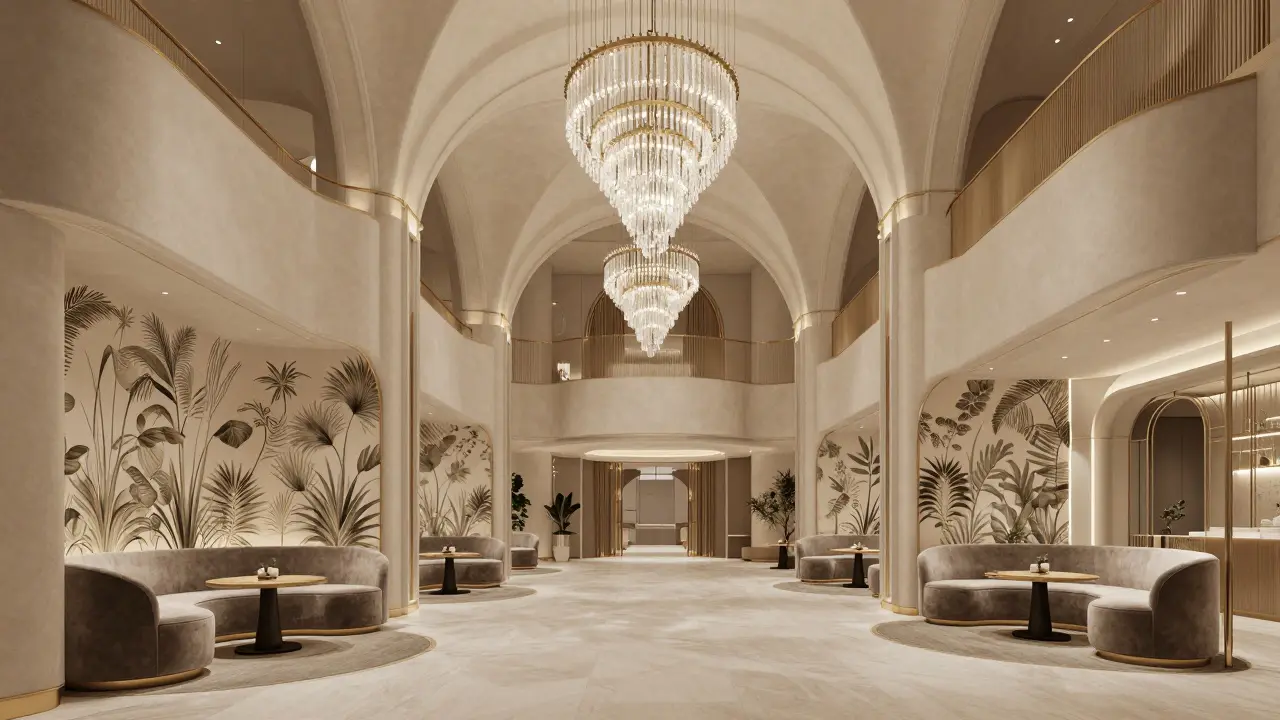
Modern architects sometimes borrow Rococo principles-not necessarily copying the exact forms, but adopting the underlying philosophy. For instance, some luxury hotels use curved partitions, custom millwork, and layered textures to create immersive experiences reminiscent of 18th-century salons. Interior designers also draw inspiration from Rococo’s approach to lighting, using multiple sources to eliminate harsh shadows and enhance warmth.
Moreover, digital art and virtual environments allow creators to experiment with impossible geometries inspired by Rococo’s love of fluidity. Video games, film sets, and even fashion runways frequently incorporate Rococo-inspired elements to convey opulence, femininity, or surrealism.
How to Incorporate Rococo Elements Today
You don’t need to restore an entire palace to enjoy the benefits of Rococo aesthetics. Small touches can transform modern spaces without overwhelming them. Consider these practical applications:
- Add Curved Mirrors: Replace rectangular mirrors with oval or arched ones featuring gilded frames. Position them opposite windows to maximize natural light reflection.
- Use Soft Textiles: Layer velvet cushions, silk drapes, and embroidered throws in pastel shades. Avoid monochromatic schemes; mix complementary tones for depth.
- Incorporate Floral Accents: Choose artwork or wallpaper prints that feature botanical motifs rendered in fine detail. Look for pieces that balance realism with stylization.
- Select Elegant Lighting: Opt for chandeliers with crystal droplets or sconces shaped like flowering vines. Warm white bulbs will complement the golden undertones typical of Rococo fixtures.
- Balance With Minimalist Foundations: Keep base surfaces clean-neutral floors, plain walls-to let decorative elements stand out without cluttering the space.
Remember, the goal isn’t replication but resonance. Capture the spirit of playfulness, refinement, and human-centered design that defined the original movement. Done right, these touches add character and sophistication without feeling dated or ostentatious.
What is the main difference between Baroque and Rococo styles?
Baroque emphasizes drama, symmetry, and grand scale, often using strong contrasts of light and shadow to evoke awe. Rococo favors intimacy, asymmetry, and delicate decoration, aiming to create comfortable, inviting spaces filled with soft colors and natural motifs. Essentially, Baroque impresses from afar, while Rococo engages up close.
When did the Rococo period begin and end?
Rococo emerged around 1715 in France following the death of Louis XIV and peaked during the reign of Louis XV (1723-1774). Its popularity declined rapidly after the 1760s due to rising criticism from Enlightenment intellectuals and the advent of Neoclassicism. By the time of the French Revolution in 1789, it was largely considered obsolete.
Who were the most important artists of the Rococo movement?
Key figures include Antoine Watteau (painter), François Boucher (court painter), Jean-Honoré Fragonard (late Rococo painter), Germain Boffrand (architect/decorator), Giovanni Battista Tiepolo (Italian fresco artist), and Thomas Chippendale (English furniture designer). Each contributed uniquely to spreading and refining the style across different media and regions.
Is Rococo still relevant in modern design?
Yes, though rarely copied directly. Contemporary designers extract core principles-such as curvature, layering, and personalized ambiance-to enrich minimalist or transitional interiors. Luxury brands, hospitality venues, and entertainment industries continue to reference Rococo visuals to signal exclusivity, romance, or theatrical flair.
Can I decorate my home in Rococo style affordably?
Absolutely. Focus on accent pieces rather than full renovations. Invest in quality mirrors, lamps, and textiles that echo Rococo silhouettes and palettes. Thrift stores, antique markets, and online retailers offer affordable options. Pair these with neutral backgrounds to maintain balance and avoid visual chaos.