Postmodern Architecture: Why the Weird and Colorful Style Still Matters
 Apr, 4 2026
The Break from the Glass Box
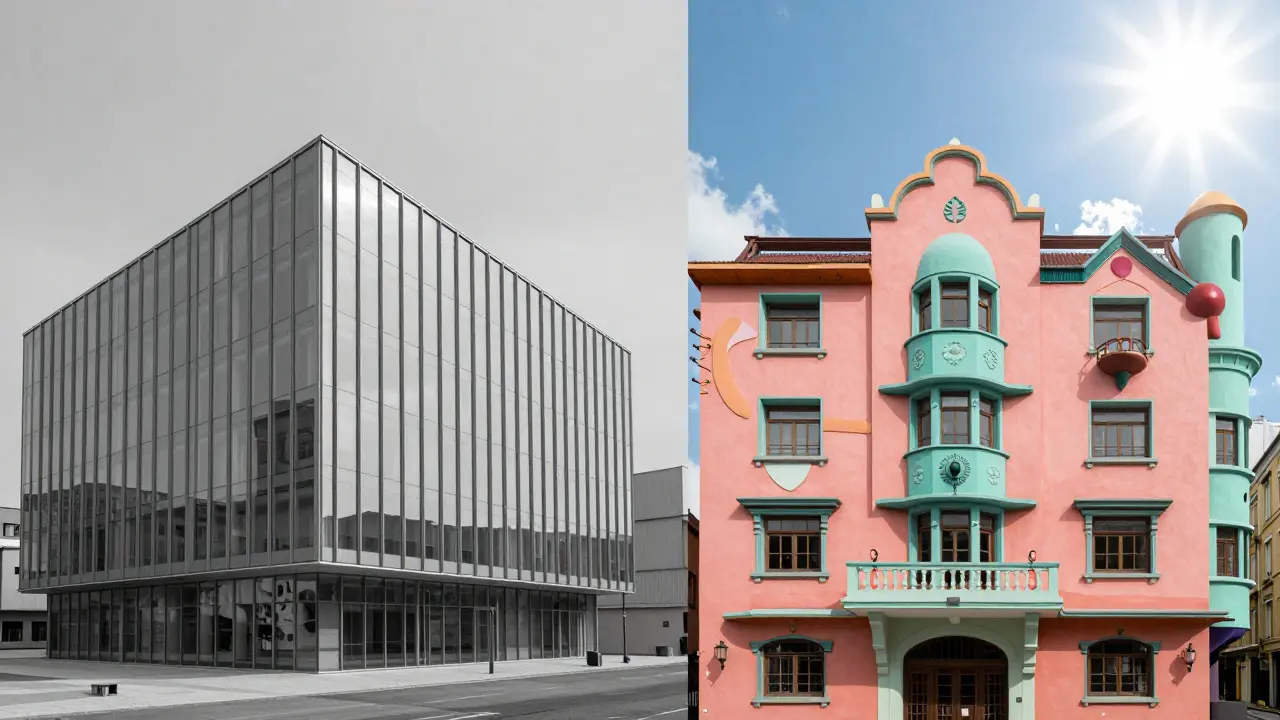
To get why this style is so wild, you have to understand what it was fighting against. Modernism-specifically the International Style-wanted to strip everything down to the essentials. The goal was universalism: a building in New York should look like a building in Tokyo. By the 1960s, people were bored. Cities felt cold. The focus on function over form had accidentally created environments that felt robotic and devoid of human emotion. Architects started asking: why does a building have to be a box? Why can't it be playful? This shift wasn't just about aesthetics; it was a philosophical pivot. Instead of trying to create a utopian future, designers started looking back at history. They began mixing elements from different eras-a Greek column next to a plastic window, or a Baroque curve on a steel beam. It was about contradiction and complexity rather than purity.The Philosophers of the Playful
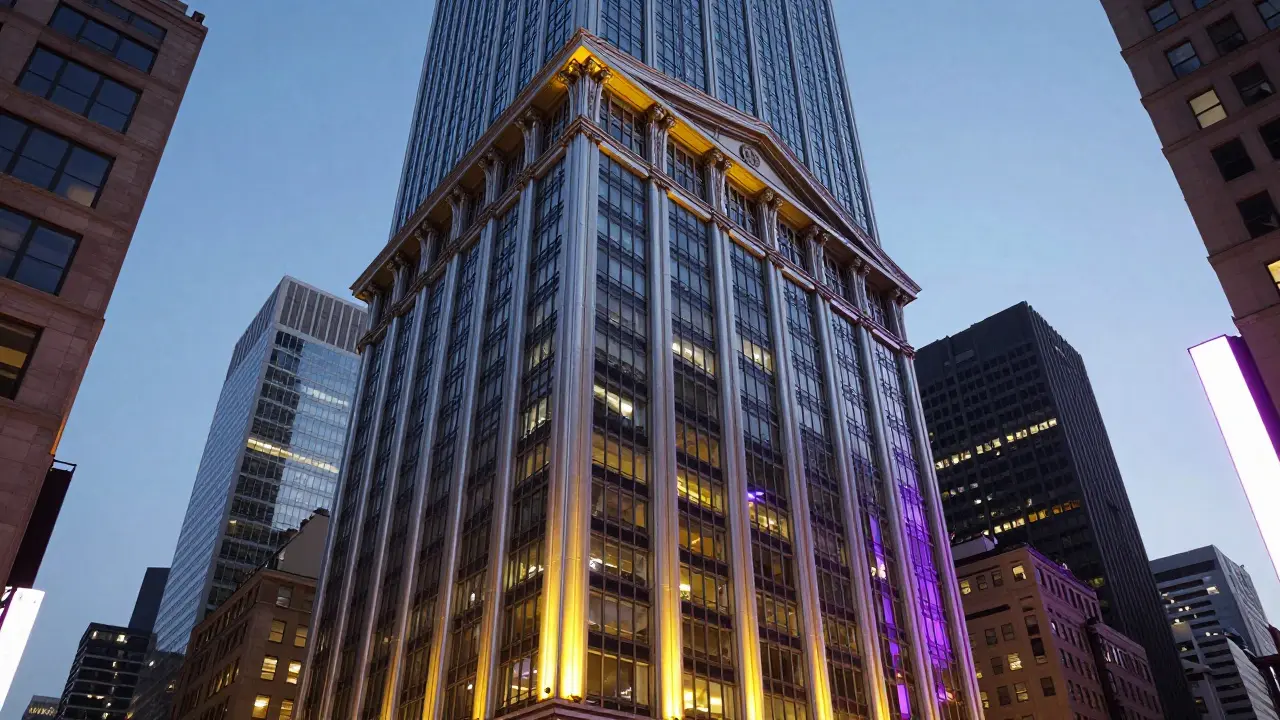
No conversation about this movement is complete without Robert Venturi. In 1966, he basically flipped the script on the entire industry. While the modernists said "less is more," Venturi famously quipped, "less is a bore." He argued that architecture should communicate with people, not just house them. He championed the idea of the "decorated shed"-a simple building with a fancy facade that tells you what the building is for, rather than a complex sculpture that leaves you guessing. Then you have Philip Johnson, who transitioned from a strict modernist to a postmodern provocateur. His AT&T Building in New York (now known as 550 Madison Avenue) shocked the world in 1984. Instead of a flat roof, he put a "Chippendale" pediment on top-basically making a skyscraper look like a piece of 18th-century furniture. It was a bold statement that the rules of the sky-line were officially broken.| Feature | Modernism (The Predecessor) | Postmodernism (The Rebel) |
|---|---|---|
| Philosophy | "Form follows function" | "Form follows fiction/emotion" |
| Aesthetic | Minimalist, sleek, monochromatic | Eclectic, colorful, ornamental |
| Materials | Steel, Glass, Raw Concrete | Mixed materials, plastics, neon |
| Influence | Industrialization / Machines | History / Pop Culture / Irony |
| Goal | Universalism and purity | Pluralism and contradiction |
The Elements of an Unconventional Building
How do you spot a postmodern building? Look for the things that don't seem to belong. The first is double-coding. This is when a building speaks to two audiences at once. To an architect, a specific curve might reference a 14th-century cathedral; to a regular person, it just looks like a cool, sweeping wave. It's a layer of intellectual irony that makes the building a puzzle to be solved. Another hallmark is the use of vibrant color palettes. Modernism loved white, gray, and black. Postmodernism loves teal, salmon pink, and electric yellow. These colors aren't just for show; they are meant to evoke a sense of joy and accessibility. Take a look at the works of Michael Graves, where colors are used to define different sections of a building, almost like a child's set of building blocks. Then there is the recontextualization of classical elements. You'll see columns that don't actually hold anything up, or arches that are sliced in half. It's not about building a Greek temple; it's about using the "idea" of a temple to create a feeling of stability or grandeur, then twisting it to make it feel modern. This is why so many postmodern buildings look like they are wearing a costume.Iconic Examples that Broke the Mold
If you want to see this in the wild, look at the Piazza d'Italia in New Orleans. Designed by Charles Moore, it's essentially an outdoor living room that celebrates Italian heritage. It uses neon lights to highlight classical Roman columns. It's loud, it's proud, and it completely ignores the "rules" of urban dignity. It treats architecture as a stage set, turning a city street into a theatrical experience. Another mind-bender is the Portland Building in Oregon. When it opened, it was the poster child for the movement. With its bold colors and oversized ornaments, it looked more like a giant gift-wrapped box than a government office. While some people hated it-calling it a "cake" of a building-it proved that public architecture didn't have to be intimidating and gray. Even the Walt Disney Concert Hall by Frank Gehry, while often categorized as Deconstructivism, owes a debt to postmodernism. Its swirling, metallic surfaces challenge the very idea of what a wall should be. It takes the postmodern spirit of "why not?" and pushes it to the absolute limit of engineering.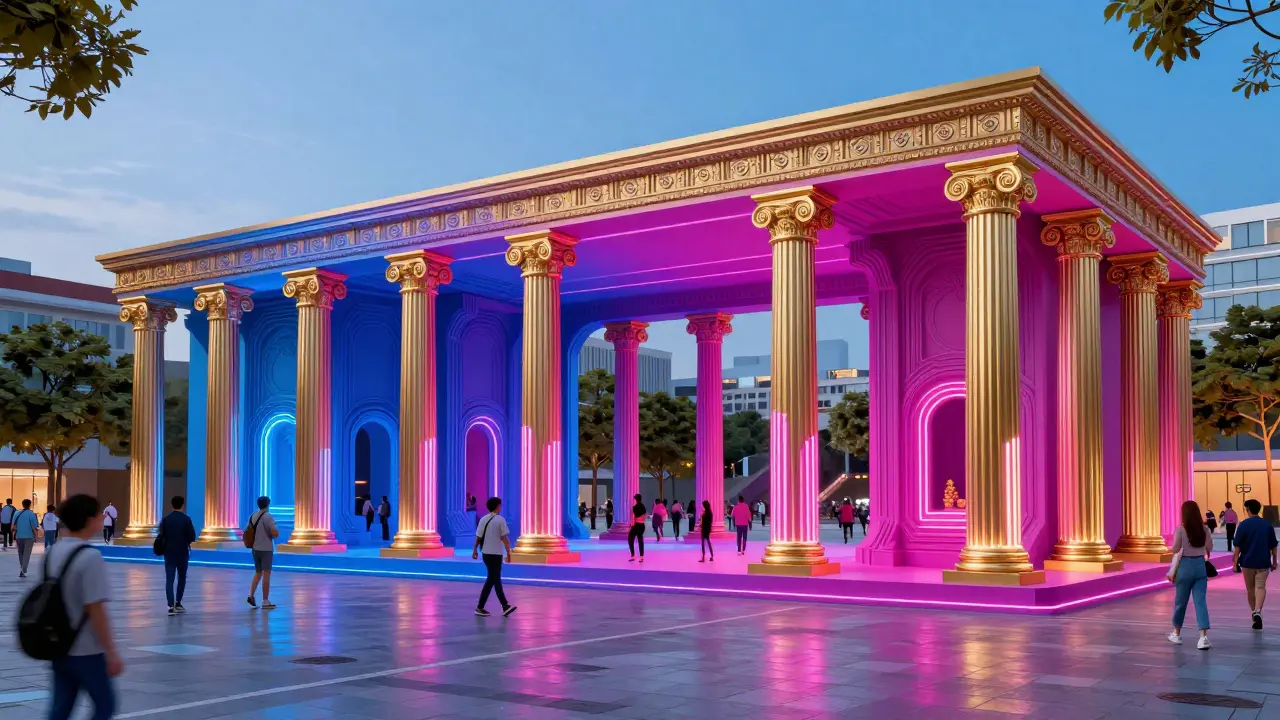
The Dark Side: Why Some People Hate It
Not everyone is a fan of the neon and the curves. Critics often argue that postmodernism is "surface deep." Because it focuses so much on the facade-the "decorated shed" idea-some believe it ignores the actual quality of the space inside. There are stories of postmodern buildings that look like masterpieces from the street but feel like confusing labyrinths once you step inside. There's also the issue of aging. Modernist concrete might look brutal, but it has a certain timelessness. Postmodern colors, however, can fade. A bright pink wall that looked daring in 1982 can look like a peeling sunburn in 2026. This has led to a wave of "postmodern fatigue," where some cities have tried to strip away the ornaments to return to a cleaner look. But here is the thing: hate it or love it, these buildings are honest about their desire to be noticed. They don't pretend to be invisible. In a world of corporate architecture that looks like it was generated by a spreadsheet, a building that tries to be funny or weird is actually a brave act.The Legacy and the New Wave
We are currently seeing a massive resurgence of interest in this style. Gen Z and Millennials, fueled by the "maximalism" trend on social media, are rediscovering the joy of the unconventional. We see it in interior design-mixing mid-century modern chairs with neon lights and bold patterns-which is essentially postmodernism for the living room. Contemporary architects are also moving away from the sterile "glass cube" era. We are seeing a return to ornament, though it's now being done with 3D printing and sustainable materials. The lesson of the postmodern era remains: architecture is not just about shelter; it's about communication. A building should tell a story, spark a conversation, or even make you laugh. Whether it's a skyscraper with a hat or a plaza that looks like a disco, these structures remind us that humans aren't robots. We crave variety, we love history, and we aren't afraid of a little bit of chaos. The unconventional beauty of this style lies in its refusal to be boring.What is the main difference between Modernism and Postmodernism?
Modernism is defined by simplicity, function, and the removal of ornament ("less is more"). It focuses on universal truths and industrial materials. Postmodernism, on the other hand, embraces complexity, ornament, and historical references ("less is a bore"). It values irony, color, and the idea that architecture should be a playful communication with the viewer rather than just a functional machine.
Who are the most influential postmodern architects?
Robert Venturi is often credited with starting the movement by challenging the austerity of modernism. Philip Johnson is another key figure who pivoted from modernism to create iconic postmodern skyscrapers. Michael Graves is famous for his use of bold colors and classical shapes, while Charles Moore created experiential, theatrical spaces like the Piazza d'Italia.
Why is postmodern architecture often criticized?
Critics often argue that it prioritizes the "look" (the facade) over the actual utility and experience of the interior space. Because it relies heavily on trends and bold colors, some find it visually overwhelming or "tacky." Additionally, certain materials used in the 70s and 80s have not aged as well as the raw concrete of the modernist era.
Does postmodern architecture still exist today?
While the specific peak of the movement was in the 70s and 80s, its influence is everywhere. You can see it in contemporary "maximalist" design and in the work of architects who blend high-tech materials with historical oddities. The philosophy of breaking the rules and using architecture to evoke emotion continues to influence urban design globally.
What does "double-coding" mean in architecture?
Double-coding is a technique where a building is designed to be interpreted in two different ways. For example, a regular passerby might see a decorative arch and find it visually pleasing (the "popular" code), while an architecture student might recognize the arch as a specific reference to a 12th-century Gothic cathedral (the "professional" code). It allows the building to be accessible and intellectual at the same time.