Postmodern Architecture: When Looks Trumped Function
 Dec, 1 2025
Postmodern Architecture Assessment Tool
This tool helps you assess how postmodern a building design is based on key principles discussed in the article. Input your design features to see how they align with postmodern architecture's focus on symbolism, playfulness, and historical references versus functionality.
Design Input
Postmodern Score
How This Compares to Postmodern Principles
Think about the last time you walked past a building that made you stop and stare-not because it was beautiful, but because it looked like it was having a joke at your expense. Maybe it had a pitched roof that didn’t match the rest of the structure. Or columns that didn’t hold anything up. Maybe it was painted bright pink with a giant pediment that looked like it was borrowed from a Greek temple, but slapped onto a shopping mall. That’s postmodern architecture. And it wasn’t trying to be subtle.
What Exactly Is Postmodern Architecture?
Postmodern architecture emerged in the late 1960s and peaked in the 1980s and early 1990s. It was a direct reaction against the cold, glass-and-steel boxes of modernism-buildings that looked like they were designed by robots who hated human emotion. Modernist architects like Le Corbusier and Mies van der Rohe believed in the mantra ‘form follows function.’ Everything had to be efficient, minimal, and stripped of ornament. But by the 1970s, people were tired of it. Offices felt like prisons. Public buildings felt soulless. Postmodernism answered back with irony, color, and a wink.
It didn’t reject function entirely. It just said: why can’t a building be useful and fun? Why can’t a bank have a broken pediment? Why can’t a library look like a giant typewriter? The answer, for postmodernists, was: it totally can.
The Aesthetic Rebellion
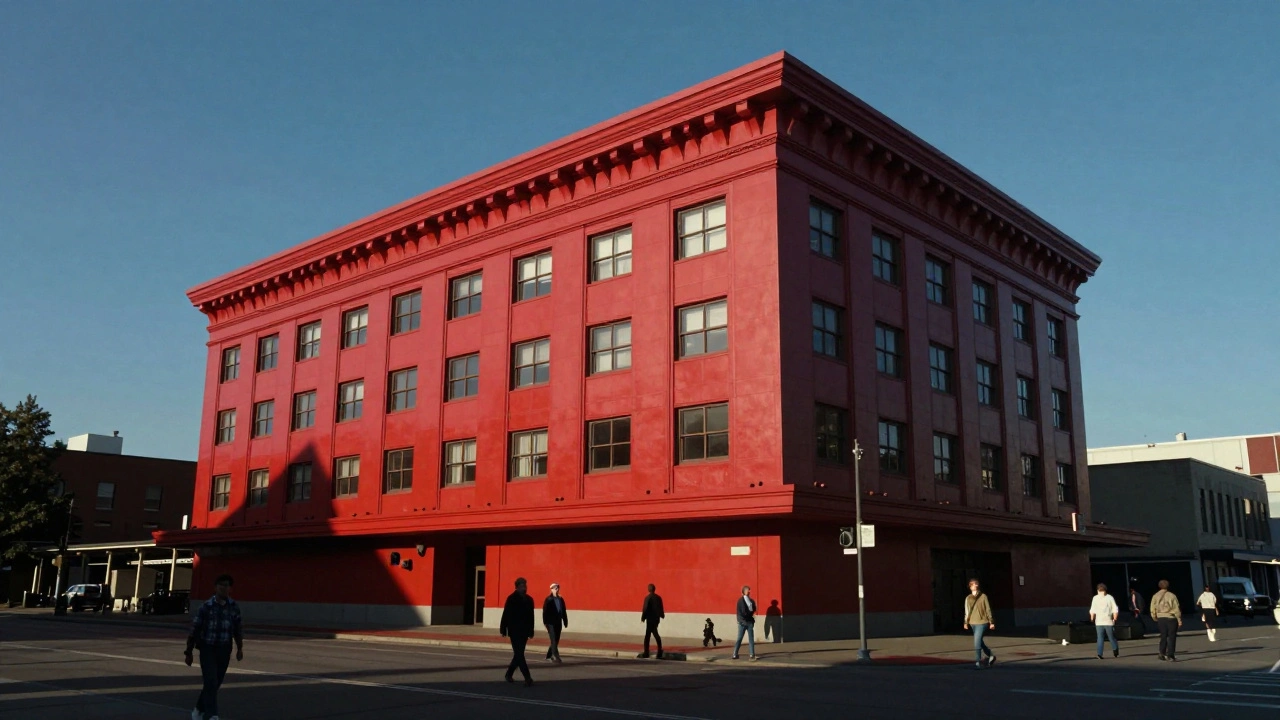
Postmodern architects didn’t just want to build-they wanted to provoke. They mixed styles like a kid dumping LEGO bricks out of every box. Classical columns? Sure. But make them crooked. Gothic arches? Why not, but scale them up to absurd heights. Bright colors? Absolutely. The Portland Building in Oregon, designed by Michael Graves in 1982, became an instant icon-not because it worked well as an office space, but because it looked like a giant, colorful toy. It had oversized keystones, bright red panels, and a giant dentil molding that didn’t serve any structural purpose. Critics called it a joke. Supporters called it a statement.
Robert Venturi, often called the father of postmodern architecture, wrote in his 1966 book Complexity and Contradiction in Architecture: ‘Less is a bore.’ That line became the movement’s battle cry. He didn’t just mean decoration. He meant that real life is messy, layered, contradictory. Buildings should reflect that.
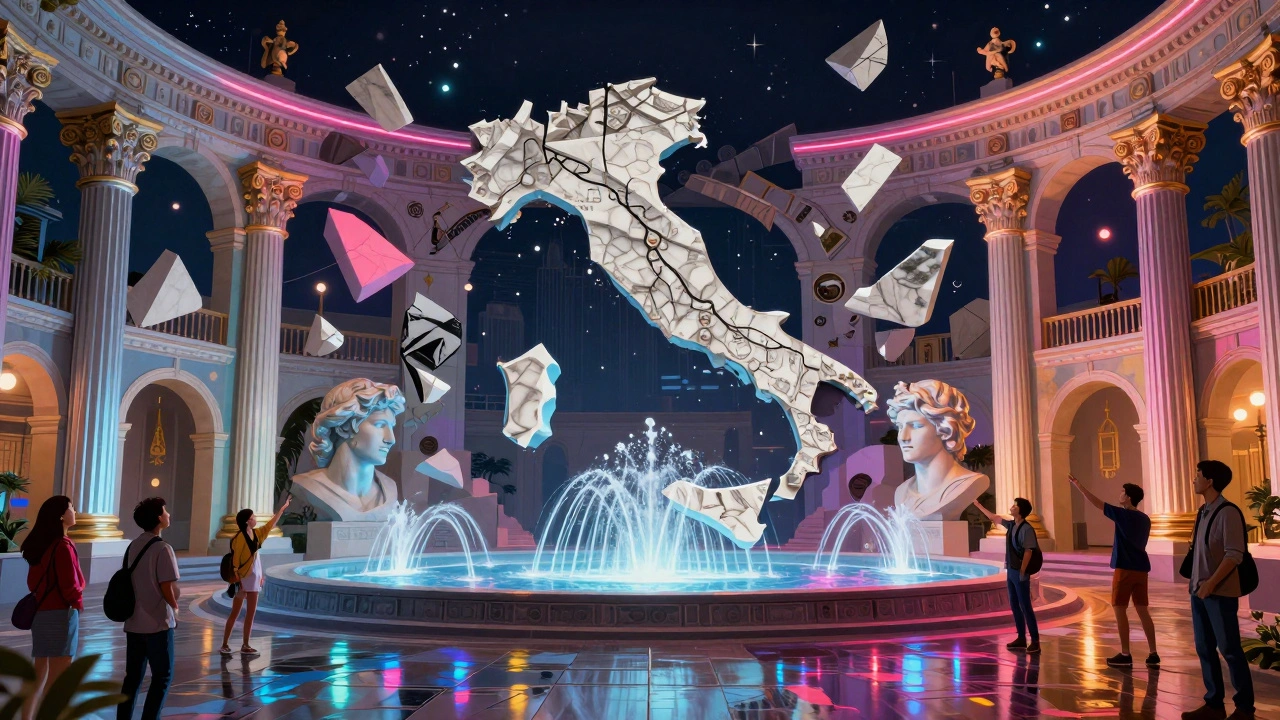
Take the Piazza d’Italia in New Orleans, designed by Charles Moore in 1978. It’s a public square made of steel, neon, and marble, shaped like a map of Italy. Fountains spray from the tops of columns that look like they’re from ancient Rome. But the columns are made of aluminum. The arches are painted. The whole thing is a pastiche-a collage of historical references, none of them authentic, all of them intentional. It wasn’t trying to fool anyone. It was saying: ‘I know this is fake. And that’s the point.’
Where Did Function Go?
Here’s the problem. While postmodern buildings looked amazing in photos, many were terrible to live or work in. The Portland Building had leaking roofs, poor insulation, and narrow elevators. The AT&T Building in New York (now 550 Madison), with its Chippendale-style broken pediment on top, was a stunning silhouette-but its interior layout was inefficient, with wasted floor space and awkward corners. Architects prioritized symbolism over usability.
Some buildings were so obsessed with their own appearance that they became liabilities. The Humana Building in Louisville, designed by Michael Graves in 1985, had a giant, ornate crown that looked like a crown from a cereal box. It was visually striking-but it added 12 extra stories of structural load that didn’t need to be there. Maintenance costs skyrocketed. Tenants complained about the lack of natural light because of the heavy ornamentation blocking windows.
Postmodernism didn’t ignore function-it just treated it as an afterthought. And when the economy slowed in the early 1990s, clients stopped paying for buildings that looked like art installations and started asking for ones that saved money on energy and maintenance.
The Legacy: Still Here, Still Controversial
Postmodern architecture never disappeared. It just got quieter. You can still see its fingerprints everywhere. The Walt Disney Concert Hall in Los Angeles? That’s Frank Gehry-modernist, yes, but the curves and shimmering metal? That’s postmodern playfulness in disguise. The CCTV Headquarters in Beijing by Rem Koolhaas? It’s a loop of steel that looks like a giant donut. It doesn’t follow any traditional logic of verticality or efficiency. But it’s unforgettable. That’s postmodern DNA.
Even today, architects borrow from postmodernism’s playbook: bold colors, unexpected shapes, historical references turned upside down. But now, they’re smarter about it. They don’t just slap on a pediment-they use it to cast shade, or to channel wind, or to create public seating. The new generation of postmodernism doesn’t reject function. It redefines it.
Take the Sainsbury Wing of the National Gallery in London, completed in 1991. It uses classical proportions and stone cladding to blend with the original building. But the windows are oversized. The entrance is asymmetrical. The roofline has a playful slope. It’s respectful, but not boring. It’s functional, but not dull. That’s the balance postmodernism promised-and only later learned how to deliver.
Why It Still Matters
Postmodern architecture was never just about style. It was a cultural moment. It said: ‘We don’t have to accept the rules. We can rewrite them.’ In a world where everything feels algorithmically designed-uniform apartments, cookie-cutter offices, identical shopping centers-postmodern buildings remind us that architecture can be personal, ironic, even emotional.
Today, we’re seeing a quiet revival. Young architects are tired of minimalist gray boxes. They’re asking: Why can’t a school look like a giant book? Why can’t a café have a roof shaped like a coffee cup? The answer isn’t just about aesthetics. It’s about connection. People don’t just want buildings that work. They want buildings that make them feel something.
Postmodernism didn’t get everything right. But it didn’t get everything wrong, either. It reminded us that buildings aren’t machines. They’re stories. And stories don’t have to be efficient to be meaningful.

Postmodern vs. Modern: A Quick Comparison
| Feature | Modern Architecture | Postmodern Architecture |
|---|---|---|
| Philosophy | Form follows function | Form can be fun, ironic, or symbolic |
| Materials | Steel, glass, concrete | Stone, brick, neon, colored metal |
| Ornament | Absent | Abundant and intentional |
| Historical References | Rejected | Quoted, exaggerated, or mocked |
| Color | Neutral tones | Bold, playful, often clashing |
| Public Reception | Seen as clean, efficient | Seen as playful, confusing, or kitschy |
What’s Next for Architecture?
Today’s architects aren’t choosing between modern and postmodern. They’re blending them. Sustainability is now the new function. Energy efficiency, passive design, and material reuse are non-negotiable. But that doesn’t mean buildings have to be boring.
Look at the Edge in Amsterdam-ultra-efficient, smart, and green-but also full of curves, natural light, and unexpected spatial surprises. Or the Bosco Verticale in Milan-two towers covered in trees, designed to absorb CO2 and reduce urban heat. They’re functional to the core. But they’re also poetic. That’s the real legacy of postmodernism: it taught us that buildings can be both smart and soulful.
Frequently Asked Questions
Is postmodern architecture still being built today?
Not in its original 1980s form, but its spirit lives on. Today’s architects use postmodern ideas-color, historical references, playful forms-but combine them with sustainability and efficiency. Buildings like the Apple Park Visitor Center or the National Museum of African American History and Culture use symbolic shapes and cultural references, but they’re engineered for performance. So yes, the ideas are still here-they’re just more thoughtful.
Why do people criticize postmodern architecture?
Because many early postmodern buildings were expensive to maintain, poorly insulated, and functionally awkward. The Portland Building leaked. The AT&T Building wasted space. Critics called it architecture as performance art-beautiful to look at, terrible to use. The movement’s biggest flaw was treating aesthetics as the primary goal, not one part of a bigger system.
Can a building be both postmodern and sustainable?
Absolutely. Modern postmodernism doesn’t mean adding a fake column to a glass tower. It means using shape, color, and form to improve performance. A building with a deep overhang for shade, or a facade that echoes local history while reducing heat gain, is both sustainable and postmodern. The key is intentionality-not decoration for decoration’s sake.
What’s the difference between postmodern and deconstructivist architecture?
Postmodernism plays with history and meaning. Deconstructivism breaks form apart. Think Frank Gehry’s Guggenheim Bilbao-it looks like it’s melting. That’s deconstructivism: chaotic, fragmented, emotional. Postmodernism is more like a joke you get after a second thought. One quotes the past; the other shatters it.
Are postmodern buildings valuable today?
Some are. The Portland Building was almost torn down in the 2010s-but after public outcry and a heritage review, it was preserved as a cultural landmark. The AT&T Building is now a protected structure. Their value isn’t in their efficiency-it’s in their cultural impact. They represent a moment when architecture dared to be human again.