Mid-Century Modern: A Style That Defies Time
 Jan, 5 2026
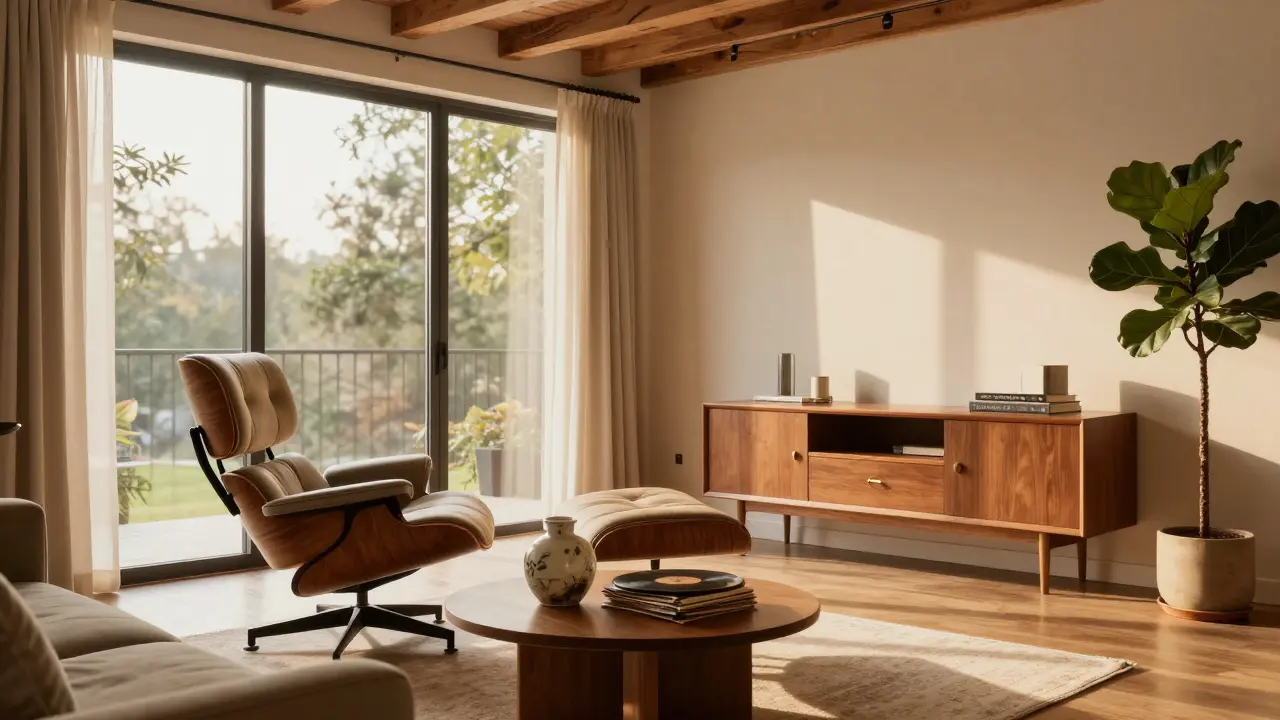
Mid-century modern isn’t just a style-it’s a quiet revolution that still lives in your living room, your favorite coffee shop, and even your kid’s school library. It didn’t come from a trend report or a viral Instagram post. It came from architects and designers who believed form should follow function, and beauty should be honest. No ornate carvings. No gilded frames. Just clean lines, warm wood, and furniture that actually made you feel comfortable. And 70 years later, it’s more popular than ever.
What Exactly Is Mid-Century Modern?
Mid-century modern, often shortened to MCM, refers to the design movement that emerged between 1933 and 1965. It wasn’t a single country’s idea-it was a global conversation. Architects in the U.S., Scandinavia, and Brazil all pushed the same core ideas: simplicity, honesty in materials, and a break from the heavy, cluttered styles of the past. Think of it as modernism’s human side-less cold, more lived-in.
The term itself wasn’t widely used until the 1980s, when collectors and designers began re-discovering post-war furniture. But the roots go deeper. After World War II, materials like plywood, steel, and plastic became affordable and widely available. Designers like Charles and Ray Eames, Eero Saarinen, and Arne Jacobsen used them to create pieces that were lightweight, stackable, and built to last. They weren’t making art for museums. They were making things for real homes-with kids, dogs, and messy dinners.
Key Features You Can’t Miss
If you’ve ever walked into a room and instantly felt calm, it might be mid-century modern at work. Here’s what makes it unmistakable:
- Organic shapes-curved sofas, teardrop tables, and rounded armrests that feel like they were carved by nature, not machines.
- Wood tones-walnut, teak, and oak weren’t just materials; they were the heartbeat of the style. The grain was left visible, not covered with glossy paint.
- Minimal ornamentation-no moldings, no tassels, no lace. Even the legs of chairs were often tapered, not chunky.
- Open floor plans-walls were knocked down to let light flow. Kitchens opened into living areas. This wasn’t just fashion; it was a new way of living together.
- Industrial touches-metal legs on wooden chairs, glass tabletops, and exposed joinery. These weren’t hidden. They were celebrated.
One of the most telling signs? The furniture doesn’t look like it’s trying to impress you. It looks like it’s waiting for you to sit down.
Why It Still Works Today
Why do people still buy Eames chairs for $1,200 when they can get a $200 IKEA version? Because mid-century modern isn’t about nostalgia-it’s about durability and intelligence.
Modern life is noisy. Our homes are full of screens, notifications, and clutter. MCM design offers a kind of visual silence. It doesn’t scream. It doesn’t compete. It just holds space. A teak credenza doesn’t need to be the center of attention-it just needs to hold your records and your coffee cups without looking out of place.
Studies show that environments with natural materials and simple forms reduce stress levels. A 2021 study from the University of Oregon found that people in rooms with mid-century furniture reported higher levels of calm and focus than those in rooms with ornate or overly colorful decor. It’s not magic. It’s design.
And it’s adaptable. You can mix MCM with industrial, boho, or even Japanese minimalism. A Danish side table looks just as at home next to a linen sofa as it does beside a concrete floor and a black steel lamp.
The Icons That Changed Everything
Some pieces didn’t just become popular-they became part of the cultural fabric. Here are the ones that still define the style:
- Eames Lounge Chair and Ottoman-designed in 1956, it’s still in production today. Leather, molded plywood, and aluminum. It cost $1,200 then. It costs over $6,000 now. People still wait months for one.
- Wassily Chair-Marcel Breuer’s 1925 design used steel tubing from bicycle frames. It looked like science fiction. Now it’s in museums and apartments alike.
- Noguchi Coffee Table-a single sculpted base holding a glass top. No legs. No corners. Just balance. It’s the kind of table that makes you want to sit on the floor and read.
- Arne Jacobsen’s Egg and Swan Chairs-designed for a Copenhagen hotel in 1958, they look like they’re floating. People still buy them for living rooms and lobbies.
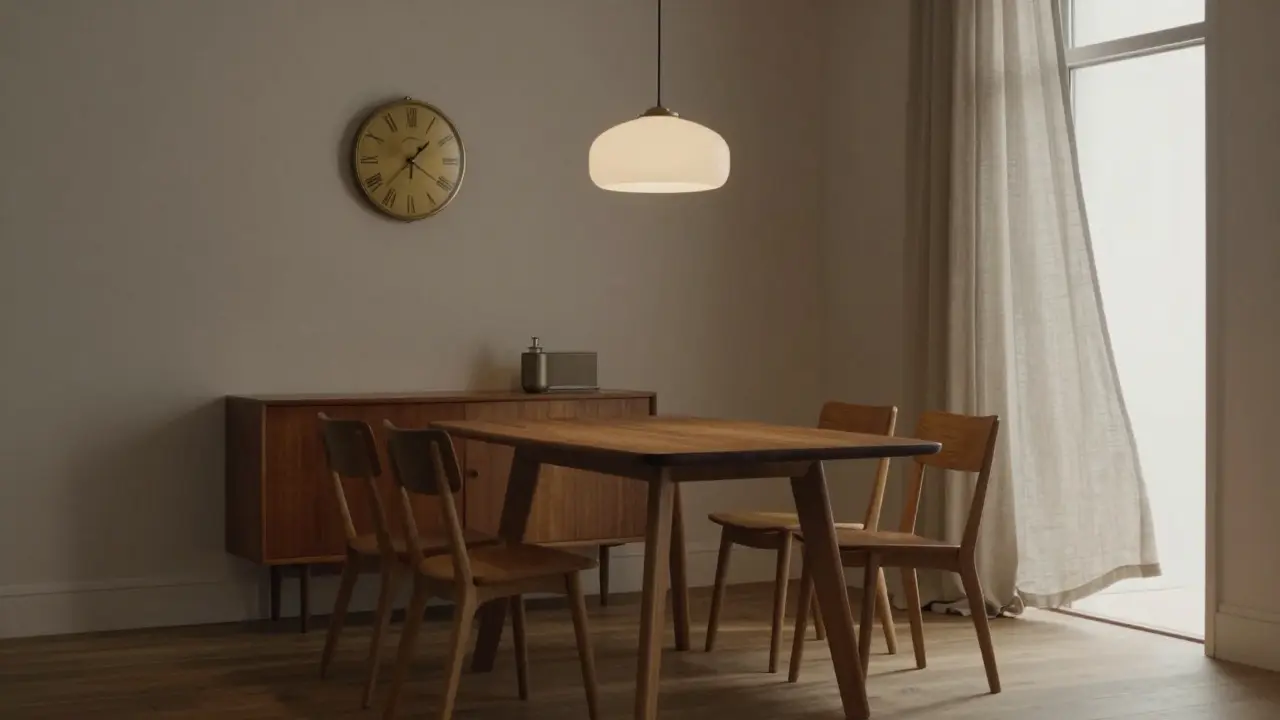
- George Nelson’s Ball Clock-a simple circle of white plastic with Roman numerals. It’s still sold by Herman Miller. It doesn’t tell time better than your phone. But it tells it more beautifully.
These aren’t just furniture. They’re objects that were designed to be used, not just looked at. And that’s why they haven’t aged.
How to Spot Real vs. Reproduction
The market is flooded with MCM-style pieces. But not all are created equal. Here’s how to tell the difference:
- Joinery-Real MCM furniture uses dowels, mortise-and-tenon joints, or metal brackets. Fake ones use glue or screws from the outside.
- Wood-Authentic pieces use solid wood, not veneer over particleboard. Run your hand along the edge. If it feels thin or cheap, it’s not original.
- Maker’s marks-Look under chairs, on the back of cabinets. Brands like Herman Miller, Knoll, and Fritz Hansen stamped their pieces. If there’s no mark, it’s likely a copy.
- Weight-Real MCM furniture is heavier. It’s built to last decades. A fake Eames chair might weigh 15 pounds. The real one? Over 40.
Don’t be fooled by the word “vintage.” Many sellers use it to mean “old-looking.” True vintage means made between 1933 and 1965. If it was made after 2000, it’s a reproduction-even if it looks perfect.

Where to Find Authentic Pieces
You don’t need to pay auction prices to own real MCM. Start local:
- Thrift stores and estate sales-Especially in neighborhoods built in the 1950s and 60s. People often don’t know what they have.
- Local design shops-Many cities have small dealers who specialize in mid-century. They’ll let you test the chairs, check the joints, and ask questions.
- Online marketplaces-Etsy and Chairish have legit sellers, but read reviews carefully. Look for photos of maker’s marks and close-ups of the wood grain.
- Architectural salvage yards-These are goldmines. You’ll find original cabinets, light fixtures, and even doors from mid-century homes.
Don’t rush. The best pieces aren’t listed with flashy ads. They’re tucked in the back of a garage sale, covered in dust. Wait for the right one.
How to Style It Without Going Full Retro
You don’t need to turn your home into a 1962 showroom. MCM works best as a foundation, not a theme.
Start with one statement piece-a walnut sideboard or a pair of tapered-leg chairs. Then build around it with modern elements: a neutral rug, a minimalist lamp, a few abstract prints. Add plants. MCM and greenery go together like coffee and toast.
Avoid matching sets. Real MCM homes never looked like catalogs. They looked lived-in. Mix a Danish sofa with a Mexican textile blanket. Put a Noguchi table next to a ceramic vase from a local artist. The style thrives on contrast.
Lighting matters too. Original MCM fixtures often have frosted glass or brass finishes. But you can get the same feel with modern LED pendants that mimic those shapes. It’s not about copying-it’s about continuing the conversation.
Why It Won’t Go Away
Design trends come and go. Neon colors. Farmhouse sinks. Shabby chic. All faded. But mid-century modern? It’s still here. Why?
Because it was never just about looks. It was about values: simplicity, honesty, durability, and humanity. In a world of disposable furniture and fast fashion, MCM is a quiet rebellion. It says: Make something that lasts. Make something that feels good. Make something that doesn’t need to shout.
It’s not about being trendy. It’s about being timeless. And that’s why, in 2026, you’ll still find MCM in homes, offices, and cafes-not because it’s cool, but because it works.
Is mid-century modern the same as modernism?
No. Modernism is a broad movement that started in the early 1900s and includes everything from Bauhaus to Brutalism. Mid-century modern is a subset of modernism that specifically refers to the post-war period (1933-1965). It’s warmer, more organic, and focused on home life, while other modernist styles can be colder or more industrial.
Can mid-century modern work in a small apartment?
Absolutely. One of its biggest strengths is scalability. Low-profile furniture, open silhouettes, and light wood tones make spaces feel larger. A small Eames stool can replace a bulky side table. A wall-mounted shelf replaces a heavy cabinet. MCM was designed for post-war housing-small, efficient, and smart.
Are mid-century modern pieces expensive?
Authentic pieces from top designers can be, yes-especially chairs like the Eames Lounge. But you don’t need to buy originals. Many reputable companies like Vitra, Hay, and Article make high-quality reproductions for under $500. The key is to focus on materials and craftsmanship, not the brand name.
What colors go with mid-century modern?
Neutral tones-beige, olive, mustard, charcoal-are classic. But MCM wasn’t afraid of bold color either. Think burnt orange, teal, or deep brown. The trick is using color as an accent, not a background. A single mustard armchair in a gray room? Perfect. A whole mustard wall? Too much.
Is mid-century modern sustainable?
Yes, more than most modern furniture. Authentic MCM pieces were made to last-solid wood, durable joints, repairable parts. Buying vintage is one of the most sustainable choices you can make. Even reproductions from ethical brands use FSC-certified wood and non-toxic finishes. It’s the opposite of fast furniture.
If you’re looking for calm in a chaotic world, mid-century modern isn’t just a style-it’s a reset button. It doesn’t ask you to change your life. It just asks you to sit down, breathe, and stay awhile.