How to Incorporate Sustainable Architecture in Your Next Project
 Jan, 12 2026
Building something that lasts shouldn’t mean breaking the planet. If you’re planning your next project-whether it’s a home, office, or community space-you have a real chance to make it better. Not just for today, but for decades to come. Sustainable architecture isn’t a trend. It’s a smarter way to build. And it’s more accessible than you think.
Start with the Site, Not the Style
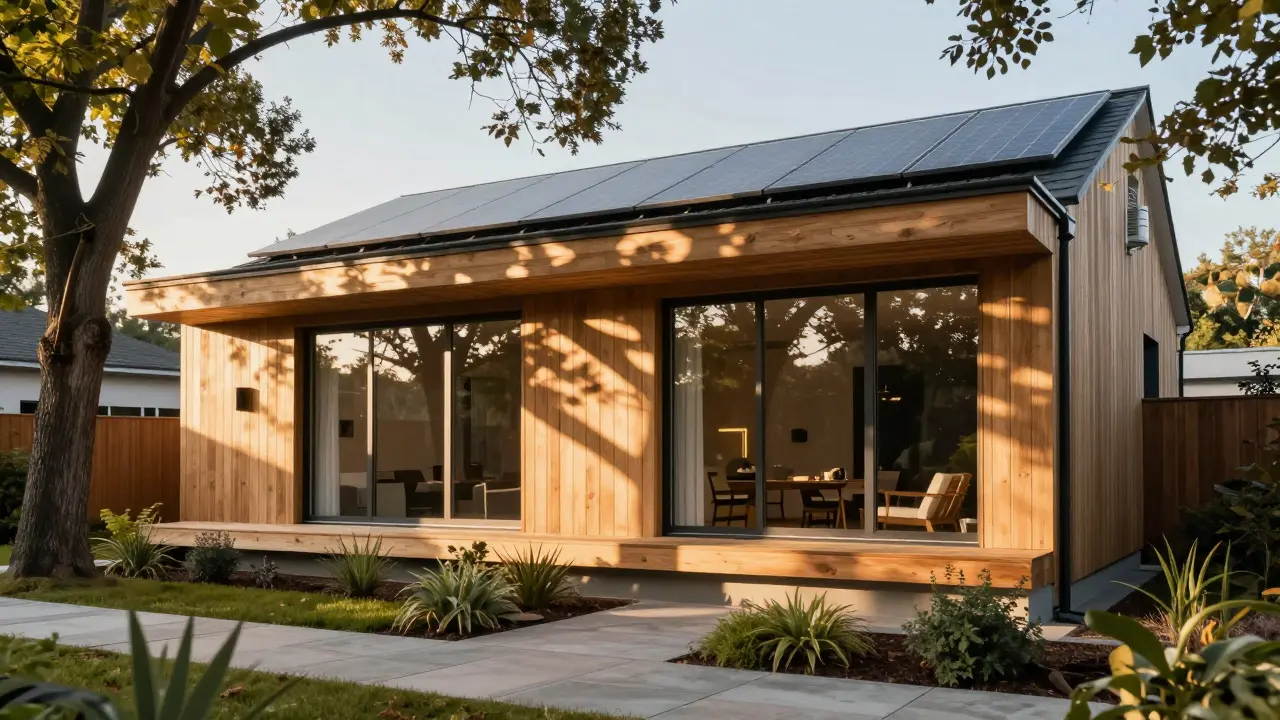
Too many people jump straight to materials or solar panels. But the first and most powerful decision is where you put the building. A well-placed structure can cut energy use by half before you lay a single brick. Look at the sun’s path. In the northern hemisphere, the south-facing wall gets the most sunlight. That means you can design large windows there to capture winter heat, then use overhangs or deciduous trees to block summer sun. In hot climates, narrow buildings with cross-ventilation work better than wide, boxy ones. A site analysis doesn’t need fancy software. Just a notebook, a compass, and a few days of watching how light moves across your land. Avoid clearing every tree. Mature trees can reduce cooling costs by up to 30%. If you have to remove one, plant two in its place. Native species are best-they need less water, attract local wildlife, and survive droughts.Choose Materials That Don’t Cost the Earth
Concrete and steel are everywhere. But they’re also responsible for nearly 10% of global CO2 emissions. You don’t need to avoid them entirely, but you can replace a lot of them. Cross-laminated timber (CLT) is one of the biggest shifts in construction over the last decade. It’s strong enough for mid-rise buildings, stores carbon instead of releasing it, and looks beautiful left exposed. Companies like Katerra and Moxie have made CLT panels affordable and easy to order. In the U.S., CLT prices dropped 22% between 2021 and 2025. Recycled steel? Still great. It uses 75% less energy than new steel. Look for suppliers who track the origin of their scrap. Reclaimed brick and wood from demolished buildings are also excellent. They carry history, reduce landfill waste, and often have better quality than new lumber. Avoid vinyl, PVC, and synthetic insulation made from petroleum. These release toxins during production and can’t be easily recycled. Instead, go for cellulose insulation (recycled newspaper treated with borate) or wool insulation, which naturally regulates moisture and fire risk.Design for Energy, Not Just Appearance
A beautiful building that wastes energy isn’t sustainable. It’s just stylish waste. Start with insulation. Don’t just meet code-exceed it. In cold climates, aim for R-40 in walls and R-60 in roofs. In hot climates, focus on radiant barriers and reflective roofing. Cool roofs, which reflect sunlight instead of absorbing it, can lower surface temperatures by up to 50°F. That means less AC, lower bills, and fewer power plant emissions. Windows matter more than you think. Triple-pane glass with low-e coatings and argon gas fills can cut heat loss by 60% compared to single-pane. Look for windows certified by the Passive House Institute. They’re expensive upfront, but pay for themselves in 5-8 years through energy savings. Don’t forget air sealing. Even the best insulation won’t help if air leaks through gaps around pipes, outlets, and windows. Use spray foam or caulk to seal every crack. Then test the building with a blower door test. Most contractors can do this for under $300. It’s the single most cost-effective upgrade you can make.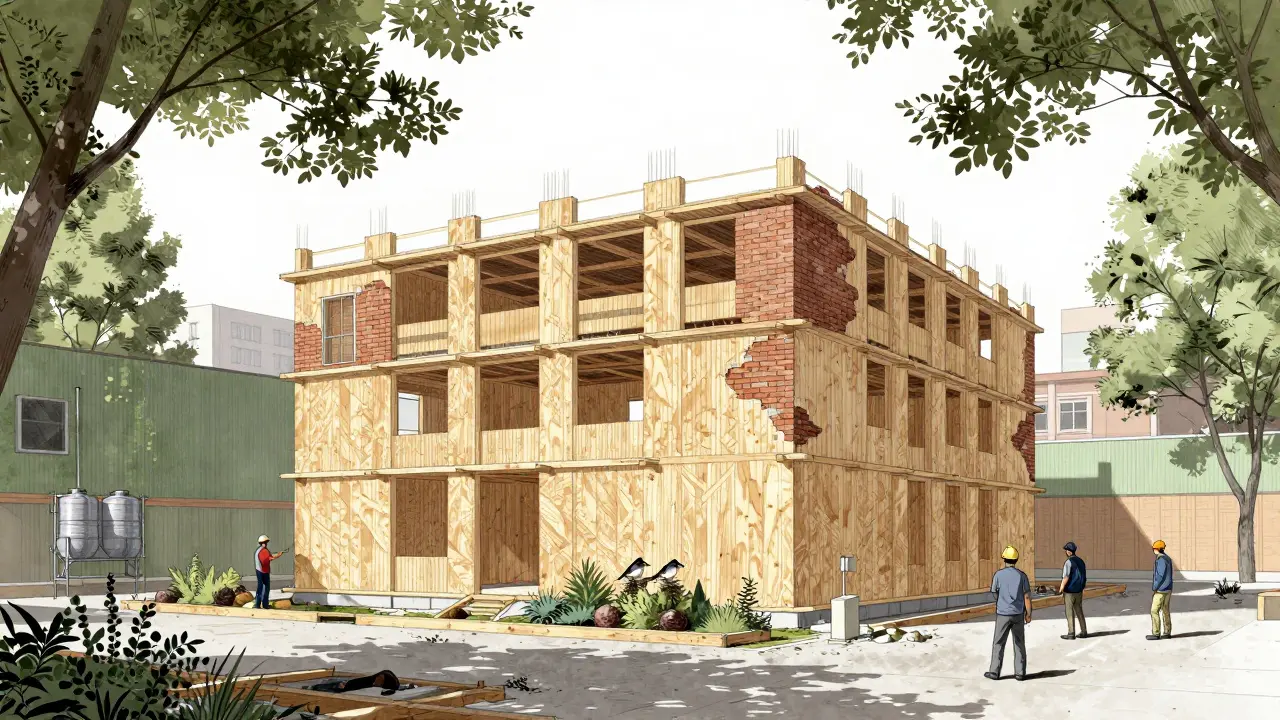
Use Renewable Energy Like a Default Setting
Solar panels are no longer a luxury. In 2025, the average residential solar system in the U.S. costs $2.50 per watt after tax credits. That’s down from $7.50 in 2010. A 6-kW system now pays for itself in under 6 years in most states. But solar alone isn’t enough. Pair it with a smart energy management system. Devices like the Tesla Powerwall or Enphase IQ Battery store excess power for night use and can even supply backup during outages. Some utilities now pay you more for sending power back to the grid during peak hours. That turns your house into a mini power plant. If you’re in a cloudy region, consider geothermal heat pumps. They use the stable temperature of the ground (about 55°F year-round) to heat and cool your building. They cost more to install-$15,000 to $30,000-but last 25+ years and cut HVAC bills by 50-70%.Think Water Like It’s Finite (Because It Is)
Water waste is a silent killer of sustainability. A typical American home uses 300 gallons a day. Sustainable design slashes that. Install low-flow fixtures: showerheads that use 1.5 gallons per minute, dual-flush toilets, and faucet aerators. These cost less than $50 total and can cut indoor water use by 40%. Rainwater harvesting is easier than ever. A simple system with a 5,000-gallon tank, a filter, and a pump can supply all your landscape irrigation-and even flush toilets if you add a greywater system. In dry states like Arizona and California, rebates cover up to 50% of installation costs. Permeable paving for driveways and walkways lets rain soak into the ground instead of flooding sewers. It reduces runoff, recharges aquifers, and prevents erosion. Materials like porous concrete, gravel, or interlocking pavers work well.Build for People, Not Just Performance
Sustainable architecture isn’t just about energy and materials. It’s about health and well-being. Use non-toxic paints, adhesives, and finishes. Look for products with Declare labels or Cradle to Cradle certification. These guarantee no VOCs, formaldehyde, or phthalates. Poor indoor air quality causes headaches, fatigue, and long-term respiratory issues. In schools and offices, better air has been linked to 15% higher test scores and productivity. Natural light isn’t just nice-it’s necessary. Design for daylighting. Place rooms so they get morning or afternoon sun. Use light shelves to bounce sunlight deeper into rooms. Studies show workers in naturally lit offices take 15% fewer sick days. Include biophilic design: indoor plants, wood textures, water features, views of nature. These reduce stress and improve focus. Even a small indoor courtyard or green wall makes a difference.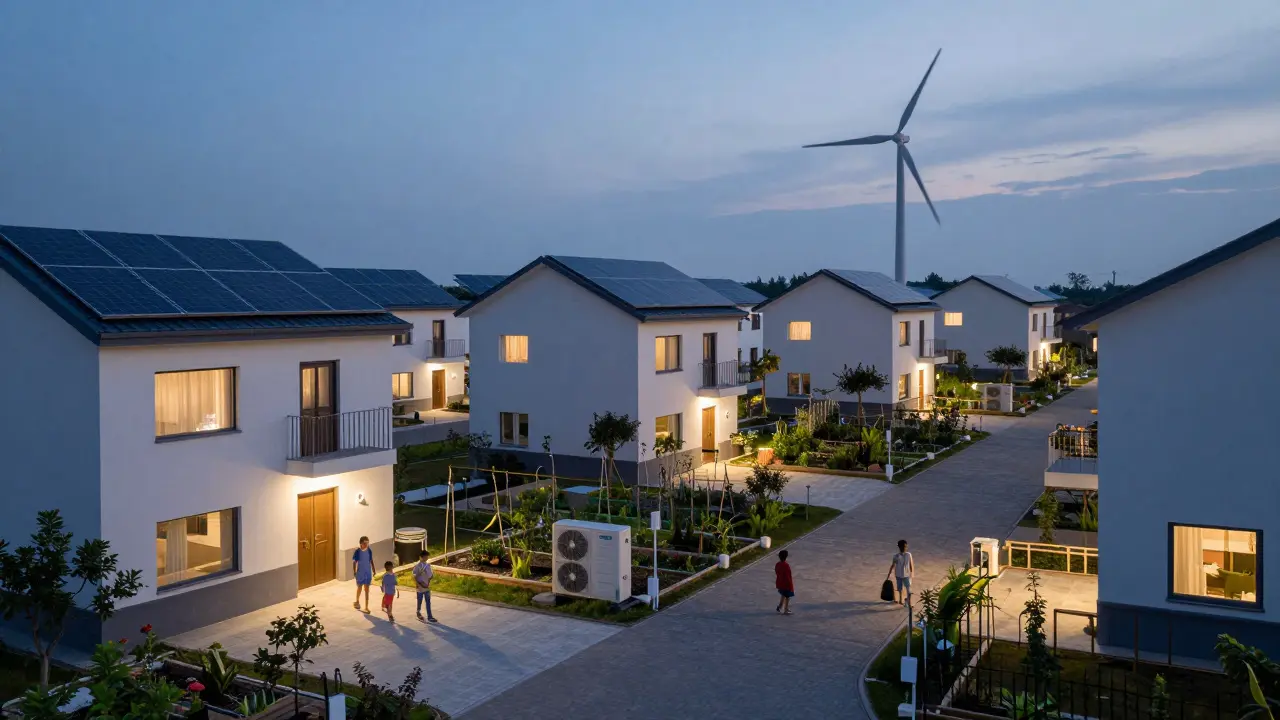
Plan for the Long Game
A truly sustainable building doesn’t just save resources today. It adapts tomorrow. Design flexible spaces. Open floor plans, removable walls, and multi-use rooms mean your building can change with your needs. A home office can become a nursery. A garage can turn into a studio. This avoids demolition and rebuilding. Choose durable materials. Steel frames last 100+ years. Brick and stone outlast drywall. Avoid trendy finishes that will look dated in 5 years. Timeless design lasts longer-and that’s the most sustainable choice of all. Track your building’s performance. Install simple energy monitors. Check your monthly usage. See where you’re using too much. Adjust habits. Sustainable architecture isn’t a one-time fix. It’s a habit.What to Avoid
Don’t fall for greenwashing. A building with solar panels and bamboo floors isn’t automatically sustainable if it’s oversized, poorly insulated, and uses imported materials shipped across oceans. Don’t overbuild. The greenest building is the one you don’t need to build. Can you renovate instead? Can you share space? Can you downsize? Don’t ignore maintenance. A high-efficiency HVAC system that’s never cleaned will use 30% more energy. Sustainable design includes care plans.Real Results, Not Just Theory
The Bullitt Center in Seattle, built in 2013, produces more energy than it uses. It collects rainwater, treats its own sewage, and uses only non-toxic materials. It cost 15% more to build-but now sells for 30% more than comparable office space. In Europe, the Passivhaus standard has been used in over 60,000 buildings since 1990. Homes use 90% less heating energy than conventional ones. In Germany, entire neighborhoods are built to this standard. In India, the Centre for Environmental Planning and Technology (CEPT) designed affordable housing with natural ventilation, rooftop gardens, and recycled brick. The units cost 20% less to run and are 10 degrees cooler inside than nearby homes. Sustainable architecture isn’t about perfection. It’s about progress. Start with one change. Then another. Your next project doesn’t have to be 100% green. But if it’s 20% better than the last one, you’re moving in the right direction.Is sustainable architecture more expensive?
Upfront, yes-sometimes 5% to 15% more. But over 10 years, most sustainable buildings save 20% to 40% on energy and water bills. Many also qualify for tax credits, rebates, and faster permitting. In cities like Portland and San Francisco, green buildings sell faster and for higher prices. The real cost is in ignoring it.
Can I make my existing home more sustainable?
Absolutely. Start with sealing air leaks, upgrading insulation, switching to LED lighting, and installing a programmable thermostat. Add solar panels if your roof gets good sun. Replace old windows with double-pane models. Install low-flow fixtures. You don’t need a full rebuild. Small steps add up.
What’s the easiest sustainable upgrade for beginners?
Air sealing and insulation. Most homes leak more air than they should. A blower door test finds the leaks, and spray foam or weatherstripping fixes them. It’s cheap, fast, and cuts energy bills immediately. It’s also the most overlooked step in green building.
Do I need a special architect for sustainable design?
Not necessarily. Many general architects now understand passive design, energy modeling, and green materials. But if you want deep expertise, look for someone with LEED AP or Passive House certification. These credentials mean they’ve passed rigorous training. Ask for past projects that show energy performance data.
Are there government incentives for sustainable building?
Yes. In the U.S., the Inflation Reduction Act offers up to $3,200 in tax credits for home energy upgrades, $7,500 for solar, and $1,750 for heat pumps. Many states add their own rebates-for example, New York gives $1,000 for geothermal systems. Check dsireusa.org for local programs. Don’t assume you’re not eligible.
If you’re ready to start, pick one thing to change in your next project. Maybe it’s switching to reclaimed wood. Or adding a green roof. Or just sealing the attic. Do that. Then do one more next time. Sustainable architecture isn’t a destination. It’s a habit you build one decision at a time.