How Revivalism is Shaping Contemporary Art
 Dec, 6 2025
Revivalism Authenticity Checker
Evaluate how an artwork engages with historical styles using the 3 key criteria from the article.
Evaluation Result
What This Means
Authentic revivalism engages with history through contemporary relevance, genuine transformation, and respectful cultural perspective. Real revivalism doesn't imitate—it converses.
When you walk into a modern gallery and see a painting that looks like it came straight out of the 18th century, you might think it’s a mistake. But it’s not. Revivalism isn’t just repeating the past-it’s rethinking it, remixing it, and making it speak to today’s world. From Victorian Gothic motifs showing up in digital installations to Renaissance chiaroscuro lighting in VR experiences, artists aren’t copying history-they’re having conversations with it.
What Revivalism Really Means in Art Today
Revivalism in art doesn’t mean slapping a Baroque frame on a selfie. It’s a deliberate return to styles, techniques, or themes from earlier periods, but filtered through modern eyes. Think of it like wearing a vintage jacket with sneakers-same fabric, different context. Artists aren’t nostalgic for the past; they’re using it as a tool to question the present.
In 2023, the Tate Modern’s After the Fall exhibit featured 14 artists who reinterpreted 19th-century Romantic landscapes using drone footage and AI-generated textures. One piece, Storm Over the Ruins by Lena Voss, combined Caspar David Friedrich’s lonely figures with real-time weather data from the Arctic. The result? A haunting meditation on climate grief wrapped in 1820s aesthetics.
Revivalism works because it’s familiar enough to feel comforting, but strange enough to make you pause. It taps into collective memory-something we’re all searching for in a world that changes too fast.
Why Now? The Cultural Need for Historical Anchors
Post-pandemic, post-digital, post-truth-people are tired of constant novelty. We’re craving meaning. And history, with its rituals, symbols, and craftsmanship, offers that. A 2024 survey by the International Art Market Association found that 68% of collectors under 35 actively seek out works that reference historical movements. Not because they want to live in the past, but because they want to understand how we got here.
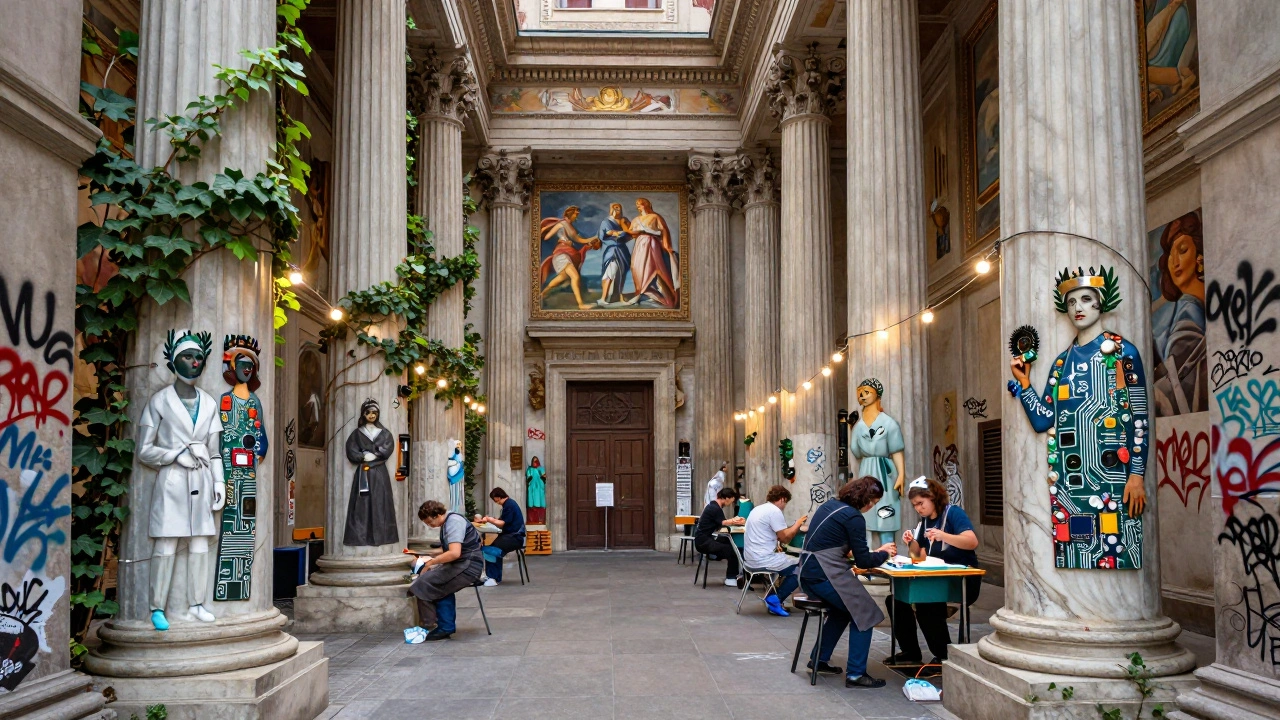
Look at the rise of hand-painted murals in urban spaces. Cities like Berlin, São Paulo, and Melbourne now have entire alleyways covered in neo-Classical friezes-columns, laurel wreaths, mythological scenes-all done by street artists using traditional fresco techniques. These aren’t tourist gimmicks. They’re acts of resistance against the flattening of culture by algorithms and mass production.
Revivalism is a quiet rebellion. It says: Not everything old is obsolete. Not everything new is better.
Key Revival Styles Dominating Contemporary Art
Some revivals stick around longer than others. Here are the five that are most visible in today’s galleries and public spaces:
- Neo-Gothic: Pointed arches, stained-glass patterns, and skeletal structures appear in sculptural installations. Artist Ravi Mehta’s Light Cathedral (2024) uses LED panels to project medieval rose windows onto white walls, changing color with ambient noise levels.
- Neoclassical Revival: Clean lines, marble textures, and idealized human forms are being reimagined with 3D-printed polymers and motion sensors. A piece at the Venice Biennale featured a life-sized statue that slowly melted when viewers got too close-commenting on the fragility of perfection.
- Romantic Revival: Emotion over logic. Dramatic skies, solitary figures, wild nature. Contemporary artists are using generative AI to simulate 19th-century storm clouds over digital cityscapes, creating eerie, sublime contrasts.
- Art Deco Reboot: Geometric shapes, metallic finishes, and streamlined elegance are back-not as decoration, but as commentary on automation. Sculptor Marisol Chen’s Machine Goddess series blends 1920s silhouettes with robotic joints and circuit-board skin.
- Byzantine and Iconic Revival: Gold leaf, flat perspective, spiritual symbolism. In digital art, this shows up as NFT collections that mimic religious icons but depict modern figures-activists, scientists, nurses-as modern saints.
These aren’t just aesthetics. They’re languages. Each revival carries a set of values-order, emotion, spirituality, grandeur-that artists are using to speak to current anxieties.
The Craftsmanship Resurgence
One of the most surprising effects of revivalism is the return of slow, tactile processes. In a world of instant digital output, artists are spending months hand-carving wood, mixing natural pigments, and gilding with real gold leaf. Why? Because the time it takes becomes part of the message.
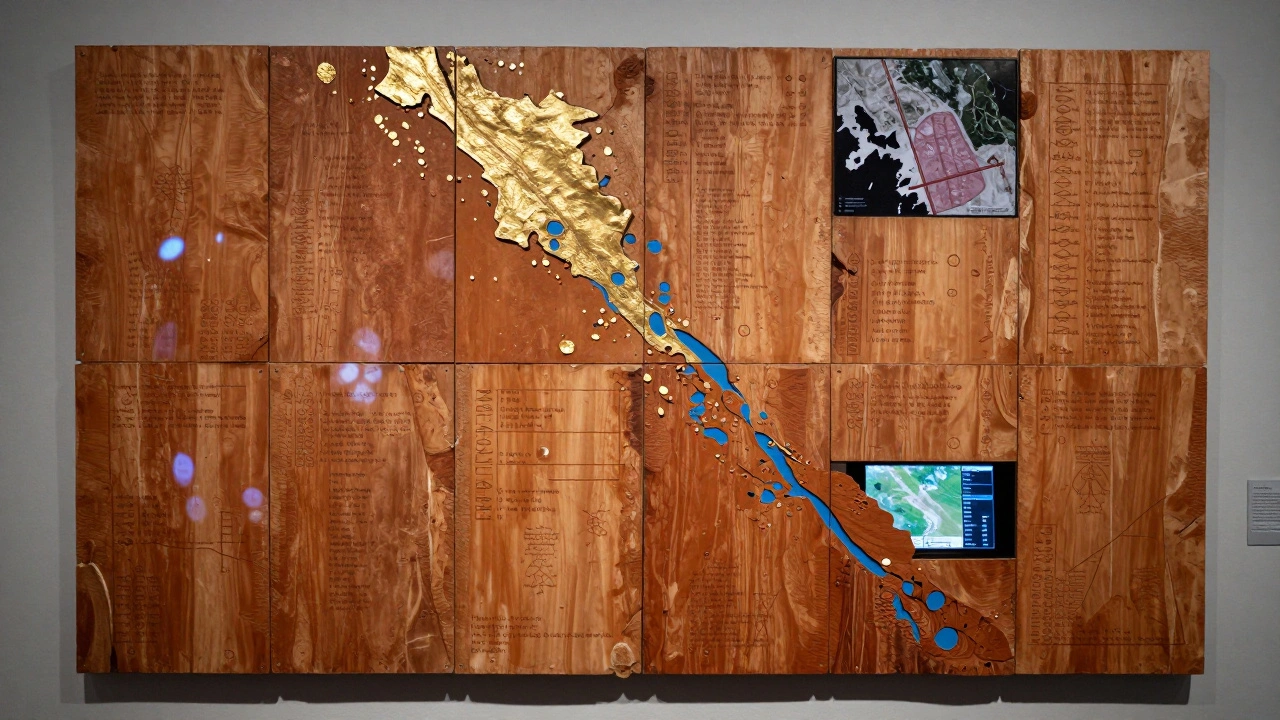
In 2022, the Australian National Gallery acquired a 12-panel altarpiece by Indigenous artist Yirrkala Marika, who used traditional ochre pigments and eucalyptus bark to depict colonial history through Yolŋu storytelling. The piece took 18 months to complete. It wasn’t just revived-it was resurrected, with cultural authority intact.
Similarly, textile artists across Europe and North America are reviving 17th-century embroidery techniques to stitch protest slogans onto linen. One piece, Stitching the Silence, features 3,000 hand-sewn words from letters written by women during the 1918 flu pandemic-now displayed beside real-time data on global mental health trends.
Revivalism here isn’t about looking old. It’s about resisting speed. It’s about saying: This matters enough to take time.
When Revivalism Goes Wrong
Not every revival works. Some feel like costume parties. Others accidentally glorify oppressive systems.
In 2023, a major U.S. museum faced backlash for an exhibit called Reimagining the Renaissance that featured white actors in Renaissance garb posing as mythological gods-without addressing the era’s colonial violence or exclusion of non-European perspectives. Critics called it aesthetic appropriation, not revival.
True revivalism doesn’t erase context. It deepens it. The best artists don’t just borrow forms-they ask: Who made this? Why? Who was left out? Then they add their own voice to the conversation.
Take Nigerian artist Chika Okeke-Agulu. He doesn’t paint in the style of the Italian Renaissance-he reinterprets its techniques to depict Yoruba deities using the same compositional balance. His work doesn’t mimic; it reclaims.
What’s Next? The Future of Revivalism
Revivalism isn’t fading-it’s evolving. The next wave will be hybrid. Think: Byzantine icons animated by AI, Gothic cathedrals rendered in Minecraft by teenagers, Baroque music sampled into protest chants.
Art schools in London and Tokyo are already offering courses in Historical Techniques for Digital Media. Students learn how to simulate oil painting brushes in Procreate, or how to code a glitch effect that mimics the decay of ancient frescoes.
And here’s the real shift: revivalism is no longer just about visual style. It’s about ethics. It’s about asking who gets to revive what, and why. It’s about honoring the past without romanticizing it.
Contemporary art isn’t rejecting history. It’s finally learning how to listen to it.
How to Spot Real Revivalism (Not Just Copying)
If you’re looking at a piece of art and wondering if it’s a revival-or just a cheap knockoff-ask yourself these three things:
- Is there a reason? Does it respond to something happening now-climate change, identity, technology, grief? If it’s just pretty, it’s decoration.
- Is it transformed? Does it use the old style in a new way? A Gothic arch made of recycled plastic? A Renaissance portrait with a smartphone screen for a face? That’s revival.
- Who’s speaking? Is the artist from the culture they’re referencing? Are they expanding the story, or just taking the surface?
Real revivalism doesn’t imitate. It interrogates. It doesn’t copy. It converses.