How Italianate Architecture Shaped Modern Urban Design
 Jan, 17 2026
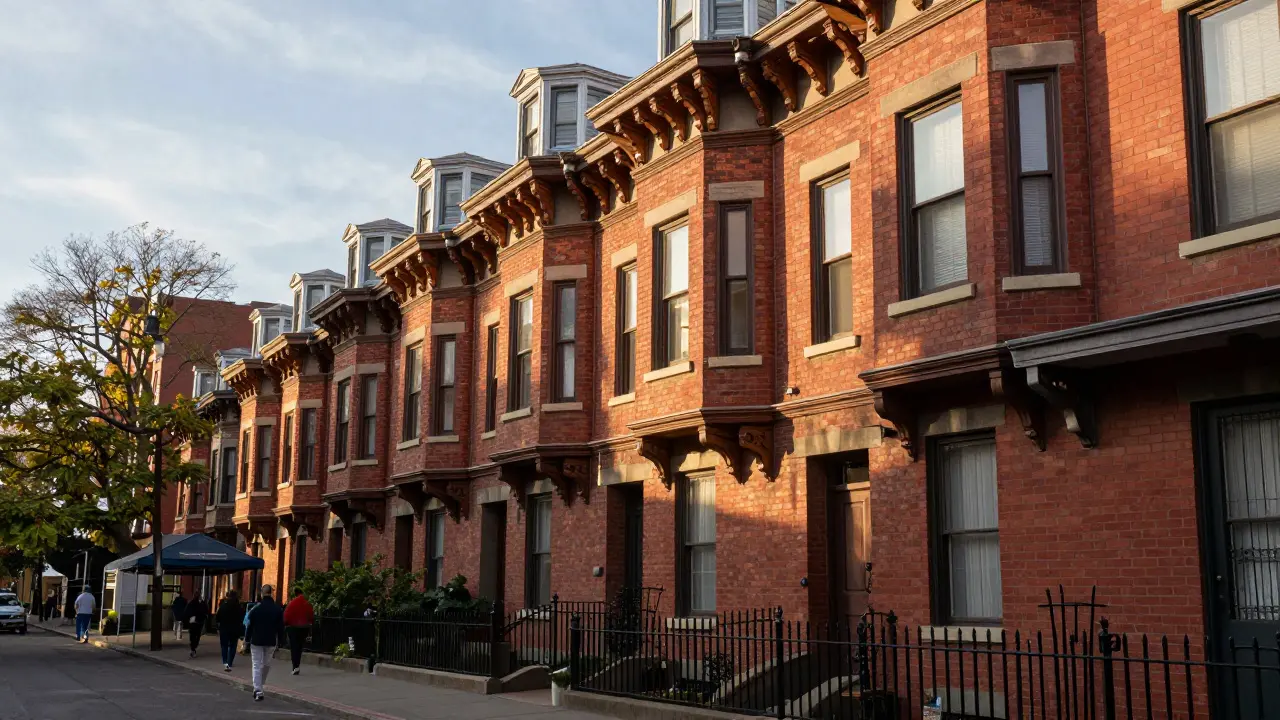
Walk through any historic neighborhood in New York, Melbourne, or even Wellington, and you’ll see it-the tall, narrow houses with ornate wooden brackets under the eaves, the rounded arches over windows, and those unmistakable cupolas or bell towers rising above the roofline. These aren’t just pretty details. They’re the fingerprints of Italianate architecture, a style that didn’t just influence homes-it reshaped entire cityscapes in the 19th century and left a legacy that still echoes in how we build today.
What Italianate Architecture Actually Is
Italianate architecture wasn’t born in Italy. It started in England in the 1820s as a romantic reinterpretation of Renaissance villas. Architects like John Nash and Charles Barry looked at Italian countryside homes-low, sprawling, with terraces and loggias-and turned them into urban buildings suited for growing cities. By the 1840s, it crossed the Atlantic and exploded in popularity across North America and the British Empire.
It wasn’t about copying Italy. It was about evoking it. Think of it as architectural fantasy: tall windows, heavy cornices with decorative brackets, asymmetrical facades, and tower-like structures that made ordinary houses feel like miniature palazzos. The style was cheap to build with new industrial materials like cast iron and mass-produced wood trim, which made it perfect for middle-class neighborhoods.
Key features include:
- Low-pitched or flat roofs
- Wide, overhanging eaves with decorative brackets
- Tall, narrow windows, often with ornate crowns or pediments
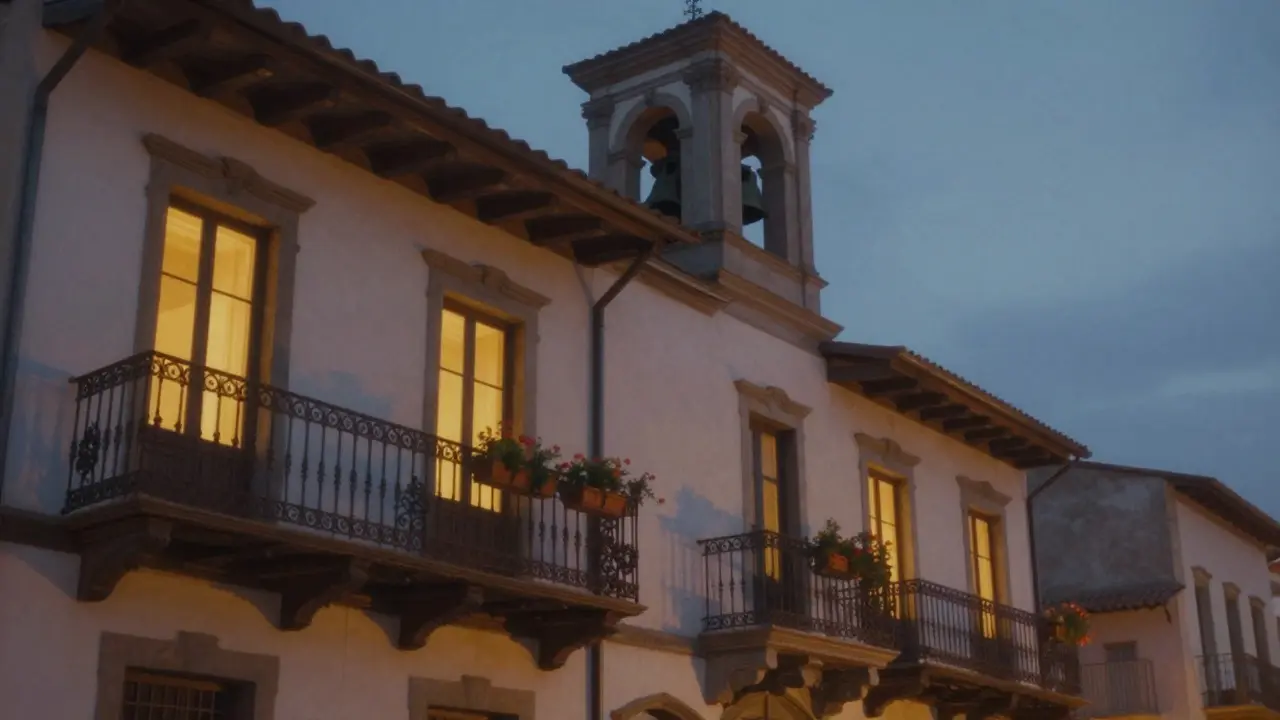
- Bell towers or cupolas, sometimes with arched openings
- Balconies and porches supported by slender columns
- Brick, stone, or wood clapboard exteriors
These weren’t just aesthetic choices. Each element served a purpose in urban life.
Why Cities Loved Italianate Design
In the mid-1800s, cities were growing fast. Railroads, steam engines, and industrialization pulled people from farms into towns. There was a desperate need for housing, and developers needed something that looked grand but could be built quickly and cheaply. Italianate architecture delivered.
Its vertical emphasis made it ideal for narrow city lots. Where Georgian row houses were boxy and flat, Italianate homes stretched upward, giving the illusion of space and status on tight plots. The tall windows let in more light-critical in crowded streets with little sunlight. The deep overhangs protected pedestrians from rain and snow, turning porches into semi-public spaces that encouraged neighborly interaction.
Developers didn’t just build houses. They built entire streetscapes. In cities like Cincinnati, Baltimore, and San Francisco, entire blocks were lined with Italianate terraces. These weren’t random clusters-they were planned neighborhoods designed to feel cohesive, elegant, and modern. That’s the first time urban design in the West moved beyond just lining up houses. It started to think about rhythm, proportion, and visual harmony from block to block.
The Rise of the Urban Tower
One of the most radical contributions of Italianate architecture was the bell tower or cupola. In rural Italy, these were part of villas or churches. In American and Australian cities, they became status symbols on private homes.
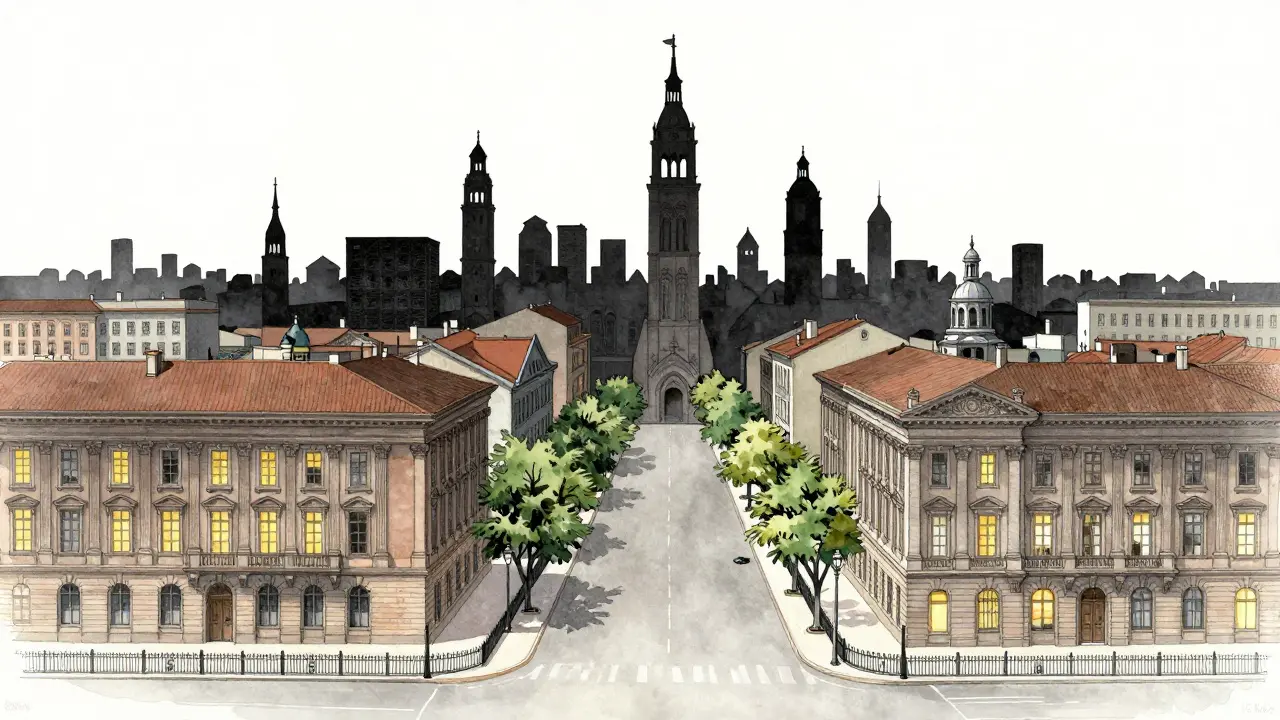
Why did they catch on? Because they changed how buildings related to the skyline. Before Italianate, most urban homes were low and flat. The cupola broke the horizon. It gave each house a unique silhouette, making streets feel more dynamic and less monotonous. City planners noticed. By the 1870s, municipal buildings, fire stations, and even early department stores began adopting the tower form-not as decoration, but as a way to mark public space.
That idea-that architecture could define a city’s visual identity-was new. It paved the way for later movements like Beaux-Arts and even Art Deco, where landmarks weren’t just buildings but anchors in the urban fabric.
How Italianate Influenced Street Layouts
It’s easy to think of architecture as just buildings. But Italianate didn’t just change the look of houses-it changed how streets were laid out.
Before Italianate, many towns followed grid patterns with little variation. Italianate neighborhoods introduced curves, setbacks, and landscaped medians. Developers realized that if you gave each house a small front yard with ornamental iron fences and a few trees, the whole street felt more like a park. That was the birth of the suburban-style boulevard, even in dense urban cores.
In Boston’s Back Bay, built between 1850 and 1890, Italianate row houses were arranged along wide, tree-lined avenues with consistent setbacks and uniform cornice lines. That consistency wasn’t accidental. It was urban design theory in action: repetition creates order, variation creates interest. The same principle shows up today in places like Portland’s Pearl District or Auckland’s Ponsonby, where historic preservation efforts focus on maintaining these visual rhythms.
The Legacy in Modern Cities
Italianate architecture faded by the 1890s, replaced by Queen Anne and then Colonial Revival styles. But its DNA never disappeared.
Modern townhouses with bracketed eaves? That’s Italianate. Apartment buildings with arched windows and prominent cornices? Still Italianate. Even the trend of adding rooftop terraces to urban condos? That’s the cupola’s great-great-grandchild.
Today’s urban designers still use Italianate principles when they want to create walkable, human-scaled neighborhoods. The emphasis on verticality, the use of decorative elements to break up long facades, the integration of porches and balconies as social spaces-all of these come from Italianate roots.
Look at the renovation of old warehouses into lofts in Chicago or Toronto. The original brick facades, tall windows, and exposed beams? Italianate didn’t invent those, but it normalized them as desirable urban features. That’s why you’ll find Italianate-inspired details in new developments from Brooklyn to Brisbane. It’s not nostalgia. It’s proven design.
Why It Still Matters
Modern cities face the same problems the 19th century did: overcrowding, lack of light, poor walkability, and soulless development. Italianate architecture offers solutions that don’t require high-tech gadgets or massive budgets.
It proves that beauty doesn’t have to be expensive. It shows that small details-like a row of brackets or a single cupola-can give a street character and identity. It reminds us that cities aren’t just collections of buildings; they’re collections of experiences.
When you walk down a street lined with Italianate homes, you don’t just see architecture. You feel a sense of place. That’s what every urban designer today is trying to recreate. And they’re still borrowing from the 1850s.
What’s Left of It Today
Thousands of Italianate buildings still stand across North America, Australia, and parts of Europe. In the U.S., cities like Louisville, Kentucky, and Salem, Oregon, have entire historic districts preserved as Italianate enclaves. In Australia, Melbourne’s Carlton and East Melbourne boast some of the finest surviving examples outside the U.S.
But many have been lost. In the 1960s and 70s, urban renewal programs tore down entire blocks labeled “outdated.” Today, preservationists fight to save what’s left. In Wellington, where I live, the Italianate houses on the slopes of Mount Victoria are some of the few remaining examples in New Zealand. They’re not just old homes-they’re rare records of how a global style adapted to a colonial city.
Restoration is expensive, but the cost of losing them is higher. Once you erase the rhythm of a street, you can’t just rebuild it. The character, the scale, the human connection-all gone.
| Feature | Architectural Purpose | Urban Design Impact |
|---|---|---|
| Decorative brackets under eaves | Emphasize roofline; add visual weight | Creates rhythm along streetscapes; unifies building lines |
| Tall, narrow windows | Maximize natural light in dense lots | Reduces need for artificial lighting; improves indoor air quality |
| Bell towers and cupolas | Add vertical emphasis; signal importance | Breaks monotony of rooftops; defines neighborhood landmarks |
| Overhanging eaves | Protect walls and entrances from weather | Creates covered sidewalks; encourages pedestrian use |
| Asymmetrical facades | Breaks formality; feels more organic | Prevents visual fatigue; adds human scale to dense blocks |
Frequently Asked Questions
Is Italianate architecture the same as Victorian?
No. Victorian is a broad term that covers many styles from the 1830s to 1900, including Gothic Revival, Queen Anne, and Italianate. Italianate is one specific style within the Victorian era. Think of it like this: all Italianate buildings are Victorian, but not all Victorian buildings are Italianate.
Why did Italianate architecture become popular in the U.S.?
It became popular because it was affordable, adaptable, and stylish. New manufacturing techniques made decorative wood trim cheap to produce. Its tall, narrow form fit perfectly on small city lots. And it gave middle-class families the feeling of living in a grand European villa without the cost of stone or custom masonry.
Are Italianate buildings still being built today?
Not as new construction, but their design principles are widely used. Modern townhouses, mixed-use developments, and even some luxury apartments borrow elements like bracketed eaves, tall windows, and cupolas. The style’s focus on human scale and visual rhythm continues to influence urban design, even if the exact details have changed.
What’s the difference between Italianate and Second Empire architecture?
Second Empire style, popular in the 1860s-80s, is known for its mansard roofs-steep, double-sloped roofs with dormer windows. Italianate has low-pitched or flat roofs with wide eaves and brackets. Both use towers and ornate details, but the roof shape is the easiest way to tell them apart.
Can Italianate architecture be sustainable?
Absolutely. Italianate buildings were designed for passive climate control: tall windows for cross-ventilation, deep eaves to shade summer sun, thick walls for insulation. Restoring and reusing these buildings is one of the most sustainable practices in urban development today. It’s reuse, not demolition.
What to Look for Next
If you want to see Italianate architecture in action, start walking. Look up. Notice how the brackets line the roofline. Check if windows have rounded tops or crowns. See if there’s a small tower peeking above the roof. These aren’t just decorations-they’re clues to how our cities were shaped by a style that believed beauty should be part of everyday life.
And if you live in a city with old neighborhoods, ask yourself: what would this street feel like without those details? That’s the real impact of Italianate architecture-not in museums, but in the quiet rhythm of your morning walk.