How Georgian Architecture Evolved Through Centuries
 Dec, 8 2025
Georgian Window Style Calculator
Georgian architecture is defined by precise window proportions. Enter the pane configuration to see if it matches historical patterns.
Window Pattern Analysis
Historical Context: This pane configuration was typical of . As glass production improved, smaller panes became more affordable, leading to changes in window design over time.
Architectural Significance: The pane arrangement reflects Georgian principles of proportion and mathematical harmony. These windows were designed for optimal natural light while minimizing glass waste.
Georgian architecture didn’t just appear one day. It grew out of a quiet revolution in how people lived, thought, and built. Between 1714 and 1830, across Britain and its colonies, a new kind of home emerged-balanced, orderly, and calm. It wasn’t about flashy details or wild curves. It was about proportion, symmetry, and restraint. And it changed everything.
The Birth of Order in a Chaotic World
When George I took the British throne in 1714, the country was still recovering from civil war, religious conflict, and political instability. The ruling class wanted to project stability. Architecture became a tool for that. Georgian homes weren’t just shelters-they were statements. They said, We have control. We have reason. We have taste.
Before Georgian style, buildings were messy. Baroque architecture loved drama: twisting columns, heavy ornament, wild shapes. Georgian architects threw that out. They looked back to ancient Rome and Greece-not to copy them, but to learn from their rules. The golden ratio. The rule of thirds. Even spacing. These weren’t just pretty ideas. They were mathematical systems that made buildings feel right, even if you couldn’t explain why.
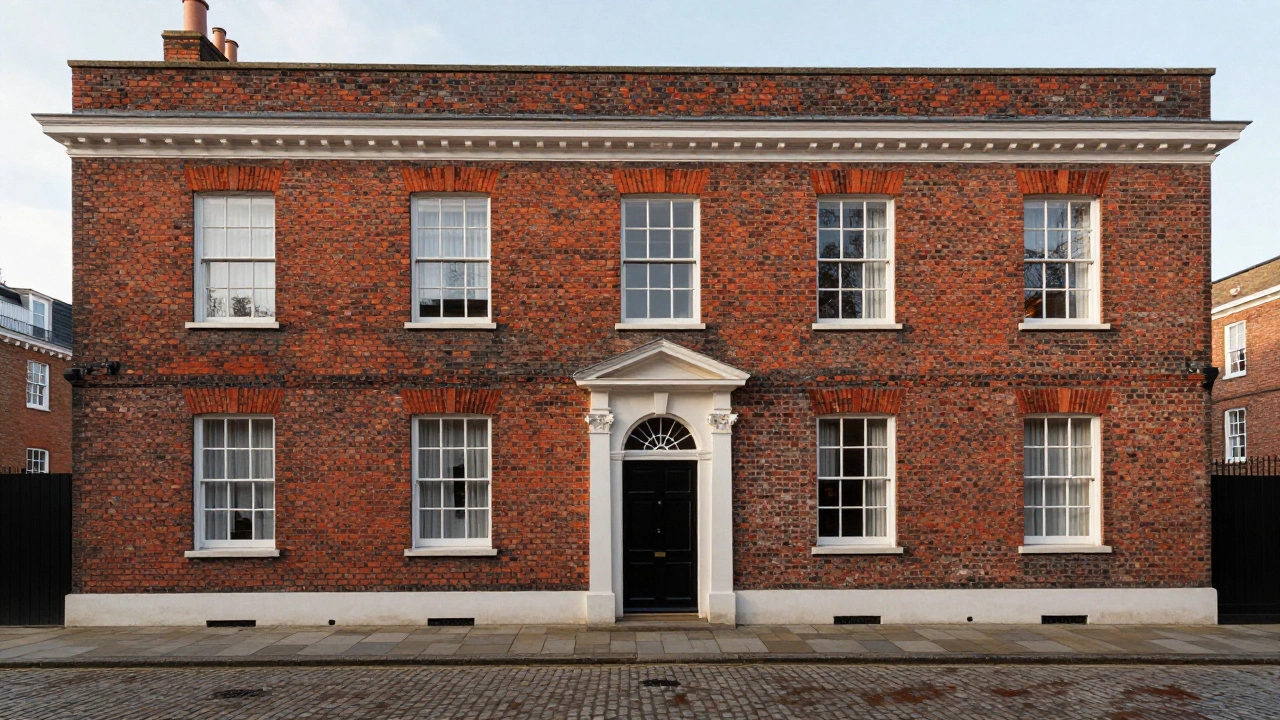
Think of a typical Georgian townhouse. Five windows across the front. A centered door. A pediment above it. The windows are the same size, evenly spaced. The roofline is flat, hidden behind a parapet. No gables. No towers. No excess. That’s not boring. That’s discipline.
Materials and Craftsmanship
Georgian buildings were made to last. Brick was the star. In London and other cities, red brick became the default. It was cheap, fireproof, and easy to shape into clean lines. In rural areas, stone or timber frames with plaster were common. The quality of the brickwork mattered. You could tell a wealthy homeowner by the precision of the bond-Flemish bond, with alternating headers and stretchers, was the gold standard.
Windows were another signature. Double-hung sashes, usually with six panes on top and six below. Why six? Glass was expensive. Smaller panes meant less waste and lower cost. Over time, as glassmaking improved, the number of panes dropped. By the late 1700s, you’d see nine-over-nine, then eventually one-over-one. That shift tells you something: wealth was spreading, and technology was catching up.
Doors were heavy, solid wood, often with a fanlight above. Not just for light-fanlights were a clever way to bring in air and visibility without sacrificing privacy. The door handles? Brass. Simple, polished, never gilded. That’s the Georgian way: quality without showiness.
From Cities to Colonies
Georgian style didn’t stay in Britain. It traveled. In America, it became the dominant style for homes, churches, and public buildings. Think of Independence Hall in Philadelphia or the Governor’s Palace in Williamsburg. The same rules applied: symmetry, proportion, brick or wood construction. Even in the American South, where the climate was hotter, builders kept the form but added wide porches and tall ceilings to cope with the heat.
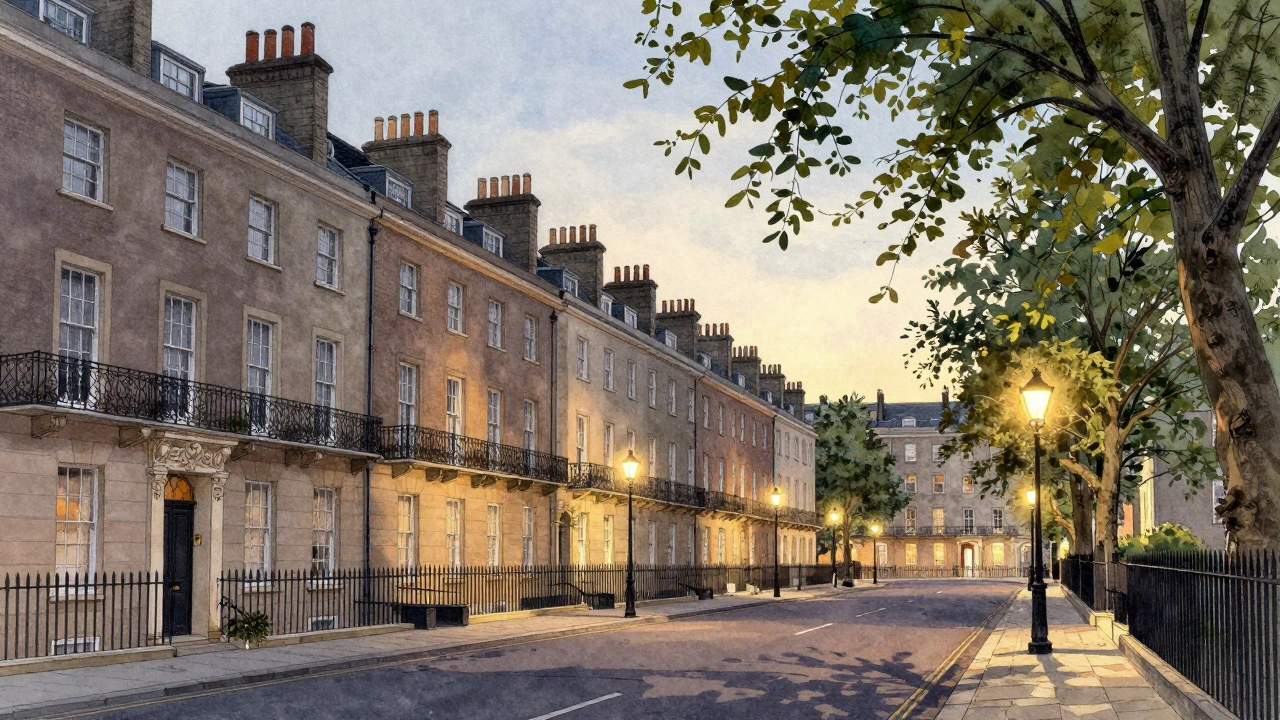
In Ireland, Georgian Dublin became one of the most elegant cities in Europe. Henrietta Street and Merrion Square are lined with terraced houses that look like they were drawn with a ruler. The facades are uniform, but each house had its own character-delicate iron railings, carved stone doorcases, wrought-iron balconies. These weren’t mass-produced. They were handcrafted by skilled artisans who took pride in their work.
Even in places like India and the Caribbean, British colonists built Georgian-style homes. In Calcutta, you’ll find white-painted villas with high ceilings and deep verandas. In Barbados, Georgian mansions still stand, their brickwork weathered by salt air, their windows still facing the sea. The style adapted, but the core principles didn’t change.
The Decline and Rediscovery
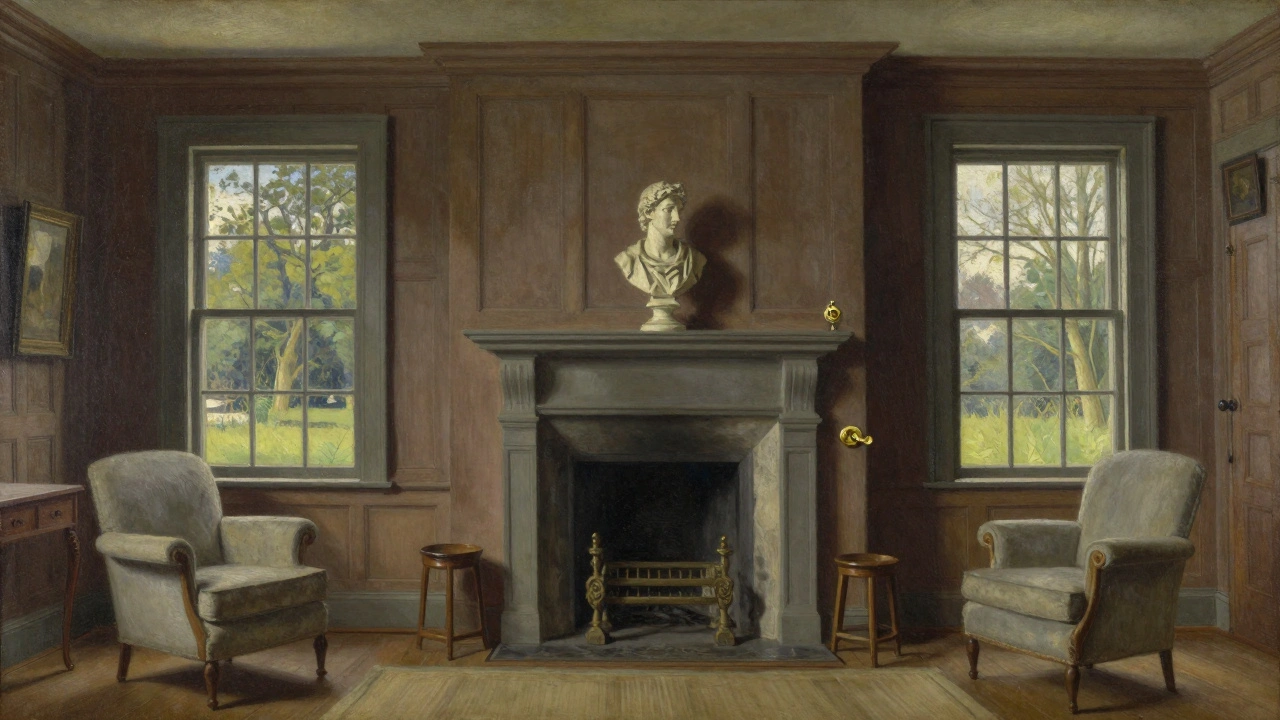
By the 1830s, Georgian architecture began to fade. The Industrial Revolution changed everything. Factories rose. Cities grew fast. People wanted speed, not symmetry. The Victorians came in with their ornate woodwork, stained glass, and cluttered interiors. Georgian buildings were seen as cold, outdated, even boring.
But then, in the 1960s, something unexpected happened. Preservationists started looking again. They noticed how well these buildings held up. How the natural ventilation worked. How the thick walls kept homes cool in summer and warm in winter. They realized: Georgian design wasn’t outdated. It was smart.
Today, Georgian homes are some of the most sought-after in London, Boston, and Charleston. Why? Because they’re durable. Because they’re timeless. Because they don’t need constant updates. A well-built Georgian house from 1780 still functions beautifully in 2025. No renovation needed-just a fresh coat of paint and new windows that match the original size and shape.
Why It Still Matters
Modern architecture often chases novelty. Glass towers. Open-plan chaos. Minimalist emptiness. But Georgian architecture asks a different question: What makes a space feel good, day after day, year after year?
It’s not about trends. It’s about human scale. A room that’s not too big, not too small. A window that lets in light without glare. A door that opens smoothly because the hinges are balanced. A staircase that feels natural to climb, not like a ladder.
Look at a Georgian floor plan. The rooms are arranged logically: parlor, dining room, study, bedrooms upstairs. No wasted space. No hallway that goes nowhere. Every square foot had a purpose. That’s the opposite of today’s open-plan homes, where you can’t tell where one room ends and another begins.
And the materials? They were chosen for longevity. Brick doesn’t rot. Timber, properly treated, lasts centuries. Glass, even old glass, can be repaired. Modern homes, by contrast, are often built with cheap composites that degrade in 20 years.
What to Look For in a Georgian Building
If you’re walking through an old neighborhood and wonder if a house is Georgian, here’s what to check:
- Symmetry: Is the front facade balanced? Even number of windows? Door centered?
- Windows: Double-hung sashes, usually six-over-six or nine-over-nine. Thin muntins, not thick frames.
- Doors: Solid wood, often with a rectangular fanlight above. Decorative crown or pediment.
- Brickwork: Red or brown brick, laid in Flemish or English bond. No stucco or vinyl siding.
- Roof: Low-pitched, hidden behind a parapet. No visible gables.
- Chimneys: Tall, grouped in pairs or fours. Made of brick, not stone.
Watch out for fakes. Many 1980s homes copy Georgian style but get it wrong. They use vinyl windows, asymmetrical facades, or oversized doors. True Georgian architecture is subtle. It doesn’t shout. It whispers-and lasts.
The Legacy in Modern Design
Today’s architects are borrowing from Georgian principles without copying them. Look at new homes in Portland or Edinburgh. They don’t have six-over-six windows. But they do have clean lines, natural materials, and balanced proportions. They don’t use brick, but they use wood and stone in ways that feel grounded, not trendy.
The big lesson? Good design doesn’t need to be new. It needs to be thoughtful. Georgian builders didn’t have computers, energy codes, or smart thermostats. But they understood light, airflow, and human comfort better than most builders today.
That’s why, even in 2025, people still choose Georgian-style homes. Not because they’re old. But because they’re right.
What defines Georgian architecture?
Georgian architecture is defined by symmetry, proportion, and restraint. Key features include evenly spaced double-hung sash windows, centered front doors with fanlights, brick or stone construction, low-pitched roofs hidden behind parapets, and minimal ornamentation. The style draws from classical Roman and Greek design principles, emphasizing balance over decoration.
When was Georgian architecture popular?
Georgian architecture was dominant from 1714 to 1830, covering the reigns of the first four King Georges of Britain. It spread to British colonies in North America, the Caribbean, and India during this period. The style began fading in the 1830s as Victorian tastes for ornamentation took over.
How is Georgian architecture different from Victorian?
Georgian architecture is calm and orderly, with clean lines and minimal decoration. Victorian architecture is the opposite: ornate, busy, and colorful. Victorian homes feature turrets, stained glass, carved woodwork, and asymmetrical layouts. Georgian homes prioritize balance and proportion; Victorian homes prioritize expression and detail.
Why are Georgian homes still desirable today?
Georgian homes are desirable because they’re built to last. Thick brick walls, solid timber frames, and well-proportioned rooms create comfortable, energy-efficient spaces. Their timeless design doesn’t go out of style, and their layout supports modern living without major renovations. Many have been preserved with original features intact, adding historical value and charm.
Can you modernize a Georgian house without losing its character?
Yes, but carefully. Replace windows with modern double-glazed units that match the original size and grid pattern. Use period-appropriate paint colors and hardware. Keep the floor plan intact-don’t knock down load-bearing walls. Add hidden insulation in walls and roofs. Avoid synthetic materials like vinyl siding. The goal is to improve comfort without altering the architectural language.