High-Tech Architecture: Where Creativity Meets Technology
 Feb, 28 2026
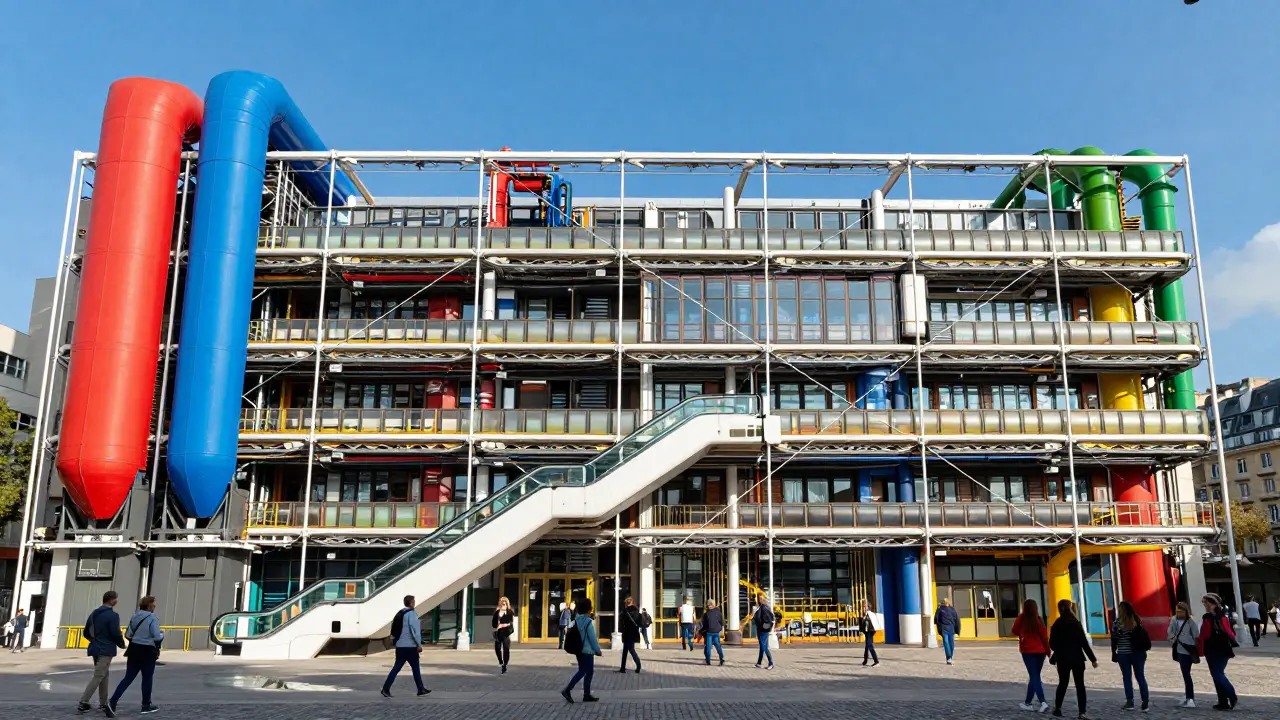
When you walk past a building that looks like it was built by a spaceship engineer, you’re not seeing science fiction-you’re seeing high-tech architecture. This style doesn’t hide its guts. It puts them on display. Exposed steel beams, visible ductwork, glass facades with moving panels, and external elevators aren’t accidents. They’re intentional. High-tech architecture takes the inner workings of a building-its plumbing, wiring, HVAC systems-and turns them into the face of the building itself. It’s architecture that doesn’t whisper. It shouts.
What Makes a Building High-Tech?
High-tech architecture isn’t just about using fancy gadgets. It’s about expressing technology. You can tell a high-tech building from a mile away. Look for these traits:
- Exposed structural elements-steel trusses, beams, and braces aren’t covered up. They’re painted bold colors and left visible.
- Modular construction-parts of the building are prefabricated and assembled like Lego pieces.
- Flexible interior spaces-walls aren’t load-bearing. They can be moved, removed, or reconfigured.
- Transparent surfaces-glass dominates, letting you see inside and outside at the same time.
- Active systems on display-air vents, pipes, and elevators aren’t tucked away. They’re part of the aesthetic.
Think of it like a watch where you can see the gears ticking. The beauty isn’t in hiding the mechanics-it’s in celebrating them.
The Birth of High-Tech Architecture
The movement started in the late 1960s and exploded in the 1970s and 1980s. It didn’t come from a single person, but from a group of architects who were tired of concrete boxes. They looked at bridges, airplanes, and offshore oil rigs-and realized those structures worked because they were honest about how they functioned.
Richard Rogers and Norman Foster became the faces of the movement. Rogers’ Centre Pompidou in Paris (1977) was a shock to the world. Color-coded pipes ran up the outside. Elevators crawled along the facade. Air ducts glowed red, blue, and green. Critics called it a factory. Supporters called it revolutionary. Today, it’s one of the most visited museums in France.
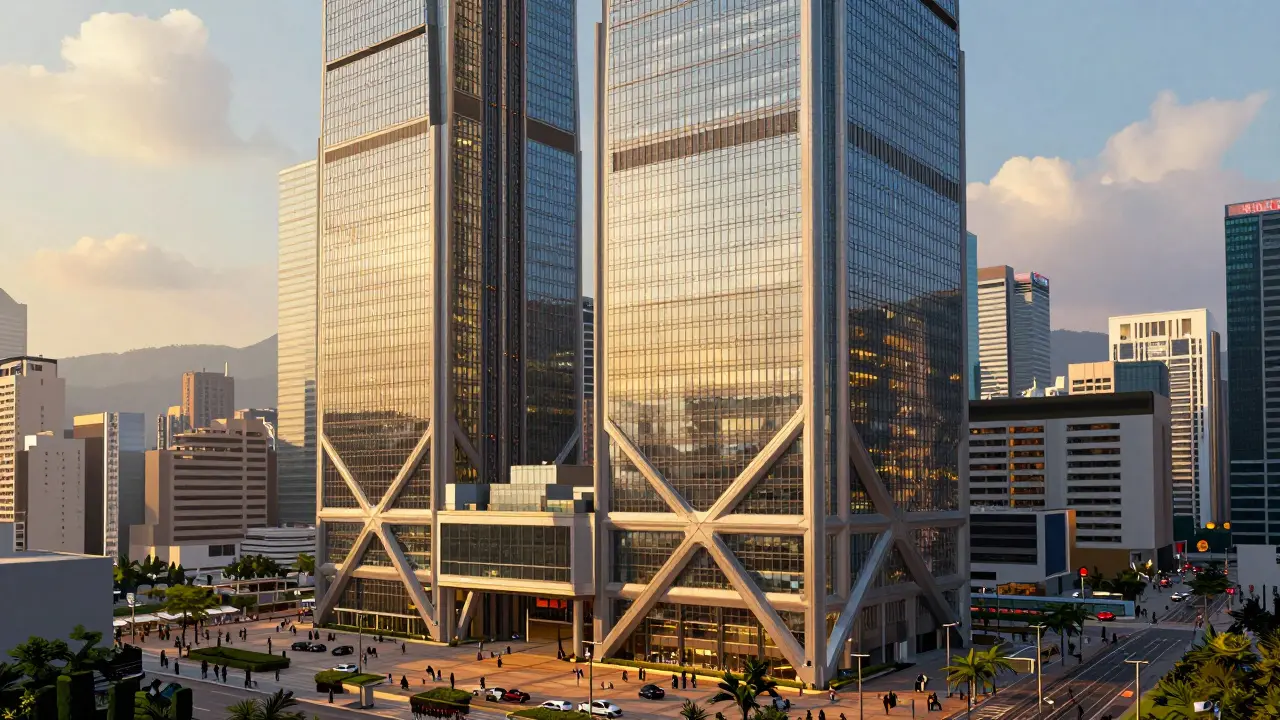
Meanwhile, Foster’s HSBC Building in Hong Kong (1985) looked like a giant mechanical skeleton. The entire structure was lifted off the ground on giant columns, creating a public plaza underneath. The building’s mechanical systems were placed on the outside so the interior could stay open and flexible. It cost $1 billion-more than any building in Asia at the time. But it worked. And it changed how skyscrapers could be built.
Key Examples That Define the Style
Here are three buildings that still shape how we think about high-tech architecture today:
| Building | Location | Year Completed | Key Technological Feature |
|---|---|---|---|
| Centre Pompidou | Paris, France | 1977 | Color-coded external services (HVAC, plumbing, elevators) |
| HSBC Headquarters | Hong Kong | 1985 | Modular steel frame, external elevators, open floor plan |
| Lloyd’s Building | London, UK | 1986 | External staircases, ducts, and service towers |
| Willis Tower (Sears Tower) | Chicago, USA | 1973 | Tube structure, bundled steel frame for wind resistance |
| Beijing National Stadium (Bird’s Nest) | Beijing, China | 2008 | Interwoven steel lattice mimicking bird’s nest |
The Lloyd’s Building in London is another classic. Every service-water pipes, electrical cables, elevators-is outside. You can walk around the building and trace the path of the air conditioning. It’s not ugly-it’s thrilling. The building doesn’t pretend to be something it’s not. It says: This is how we keep the air flowing, the lights on, and the people safe.
Even the Beijing National Stadium, built for the 2008 Olympics, fits here. It looks like a woven nest, but it’s made of 42,000 tons of steel arranged in a precise, mathematically calculated pattern. It’s not just art. It’s engineering.
Why High-Tech Architecture Matters Today
People think high-tech architecture is outdated. That it’s all about chrome and steel from the 80s. But it’s not. It’s evolved.
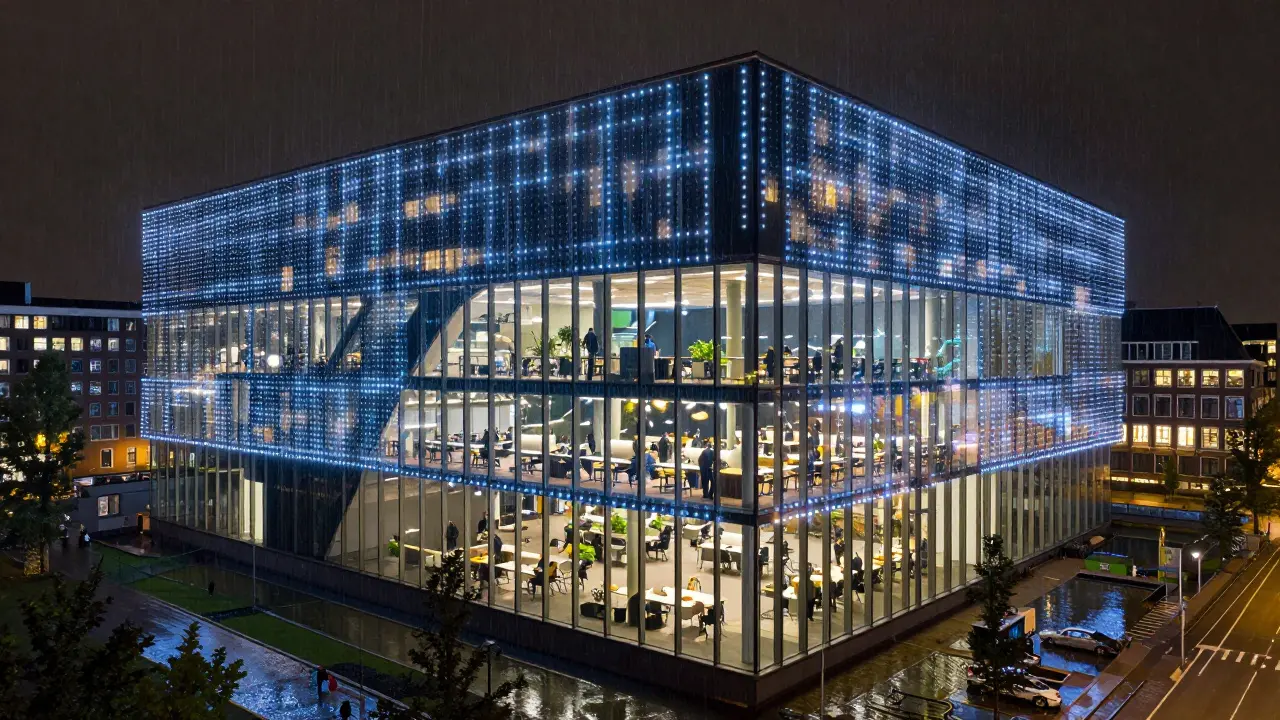
Modern high-tech buildings now integrate real-time data. Sensors monitor energy use, adjust lighting based on sunlight, and control airflow depending on occupancy. The Edge in Amsterdam-often called the smartest office building in the world-uses 28,000 sensors to track everything from desk usage to bathroom occupancy. Employees use an app to find open desks, reserve meeting rooms, and even get personalized lighting settings. That’s not sci-fi. That’s high-tech architecture in 2026.
And it’s not just about offices. The Apple Park in Cupertino, built in 2017, uses a 17-mile loop of solar panels and natural ventilation to keep energy use low. Its glass walls are curved to reduce heat gain. The building doesn’t have air conditioning in most areas. It just breathes.
High-tech architecture isn’t about flashy gadgets. It’s about solving real problems: energy waste, inflexible spaces, inefficient systems. It asks: What if the building could adapt?
The Criticism and the Counterargument
Not everyone loves it. Critics say high-tech buildings are cold. Too mechanical. Too industrial. They say it lacks soul. And sometimes, they’re right. Some buildings from the 80s feel like warehouses with windows.
But here’s the thing: the style was never meant to be cozy. It was meant to be honest. It’s architecture for a world that runs on data, electricity, and networks. It doesn’t try to look like stone or wood. It says: I’m made of steel, glass, and code.
And in an age of climate crisis and rapid tech change, that honesty matters. We don’t need buildings that pretend to be natural. We need buildings that are smart, efficient, and open to change.
What’s Next for High-Tech Architecture?
The next wave isn’t about bigger steel frames. It’s about integration.
- Buildings that generate their own power through kinetic floors and solar glass.
- Materials that change opacity based on temperature or light.
- Structures that repair themselves using embedded nanotech.
- AI-driven facades that shift shape to reduce wind load or maximize solar gain.
Projects like the Hybrid Tower in Seoul (under construction) use real-time weather data to adjust shading panels every 15 seconds. It reduces cooling costs by 40%. That’s not a gimmick. It’s the future.
High-tech architecture is no longer a style. It’s a philosophy. One that says: Let the building do its job-and show the world how it does it.
Is high-tech architecture the same as futuristic architecture?
No. Futuristic architecture is often speculative-it imagines what buildings might look like in 50 years. High-tech architecture is real. It’s built today using existing materials and technology. It doesn’t rely on sci-fi concepts. It uses real engineering: steel, glass, sensors, and modular systems. A building with a flying car ramp might be futuristic. A building with exposed ducts and smart climate controls? That’s high-tech.
Why do high-tech buildings often look industrial?
Because they’re designed to reveal how they work. Industrial buildings-factories, power plants, bridges-don’t hide their systems. They prioritize function. High-tech architecture borrows that honesty. Exposed pipes, visible beams, and external elevators aren’t a design flaw-they’re the point. The goal isn’t to look pretty. It’s to be clear, efficient, and adaptable.
Can high-tech architecture be sustainable?
Yes-and it often leads the way. Because high-tech buildings expose their systems, they’re easier to monitor and optimize. Sensors track energy use, lighting, and airflow in real time. That means less waste. The Edge in Amsterdam uses 70% less energy than a typical office building. Apple Park runs on 100% renewable energy. High-tech doesn’t mean high consumption. It means smart consumption.
Are there residential examples of high-tech architecture?
Not many, but they exist. The Foster + Partners-designed Casa da Música in Porto isn’t residential, but the Casa do Espelho in Brazil uses exposed steel frames, automated shading, and smart glass to create a high-tech home. Most high-tech homes are custom builds-expensive and rare. But the principles are spreading: modular walls, integrated tech, and energy feedback systems are showing up in modern luxury homes.
What’s the biggest misconception about high-tech architecture?
That it’s cold or impersonal. The truth? High-tech architecture can be deeply human. The Centre Pompidou draws over 10 million visitors a year. The Edge has a 98% employee satisfaction rate. When systems are transparent, people understand them. When spaces adapt to how people move and work, they feel more alive. Technology doesn’t remove humanity-it can enhance it.
High-tech architecture isn’t about looking like a robot. It’s about building smarter, cleaner, and more responsive spaces. It’s not going away. It’s just getting better.