High-Tech Architecture: The Blueprint for Sustainable Buildings
 Sep, 5 2026
You walk into a building, and instead of feeling enclosed by thick walls, you feel like you're standing inside a machine that breathes. Glass panels adjust their tint based on the sun's angle. Steel beams are exposed not just for aesthetics, but because they support the entire weight of the structure without hiding behind drywall. This isn't science fiction; it's High-Tech Architecture, a movement that treats buildings as complex systems rather than static boxes.
For decades, architects struggled with a contradiction: how to build structures that look modern and industrial while actually being good for the planet. Traditional sustainability often meant hiding solar panels or burying insulation under layers of plaster. High-tech architecture flips this script. It puts the engineering on display, arguing that if we can see how a building works, we can optimize it better. But does exposing pipes and ducts really help the environment, or is it just an aesthetic choice? Let's break down how this style became a leader in sustainable building.
The Origins: When Engineering Became Art
To understand where high-tech architecture is going, you have to look at where it started. In the 1970s, a group of architects got tired of the heavy, ornamental styles that dominated cities. They looked at airplanes, factories, and bridges-things built for function-and decided those were beautiful enough on their own. Led by figures like Richard Rogers and Norman Foster, this movement rejected the idea that a building needed a facade to hide its guts.
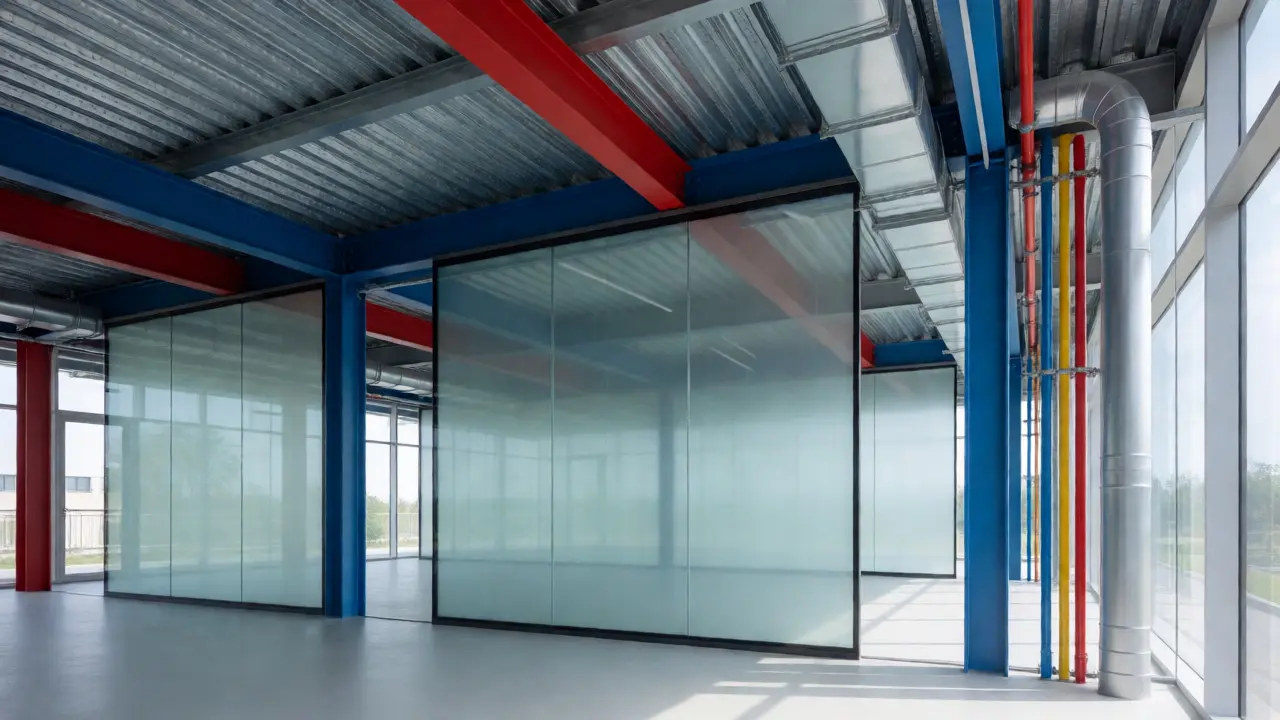
The core philosophy was simple: show the structure. If a beam holds up the roof, paint it bright red and leave it visible. If a pipe carries water, run it on the outside so it’s easy to repair. This wasn't just about looking cool; it was about honesty. By making the mechanical systems accessible, these early pioneers argued that buildings could be maintained more efficiently and adapted over time without massive demolition. This adaptability is the first pillar of sustainability in this style.
Why Exposed Systems Save Energy
Critics often say that high-tech buildings are glass ovens that waste energy. And sure, the early ones had issues. But modern high-tech architecture has evolved into a precision instrument for energy management. Because the structural elements are externalized, the interior space remains flexible. You aren't locked into a layout defined by load-bearing walls. This means you can reconfigure offices or apartments without tearing down concrete, which saves tons of material waste.
Moreover, the transparency inherent in this style allows for maximum natural light. Large glass facades reduce the need for artificial lighting during the day. But here’s the trick: modern high-tech designs use smart glazing. These aren't your grandfather's single-pane windows. They are multi-layered units with low-emissivity coatings that reflect heat back inside during winter and block it out in summer. According to data from the World Green Building Council, daylighting strategies can reduce lighting energy costs by up to 40% in commercial spaces. High-tech architecture leverages this naturally because the whole point is to connect the inside with the outside.
Key Features That Drive Sustainability
If you want to spot a truly sustainable high-tech building, don't just look for steel and glass. Look for specific features that prove the building is working hard. Here is what separates a generic glass tower from a genuine eco-friendly high-tech structure:
- External Structural Supports: Moving columns and trusses to the exterior frees up internal floor plates. This reduces the amount of concrete needed internally and allows for open-plan layouts that require less partitioning material.
- Visible Mechanical Services: When ducts and pipes are visible, leaks and inefficiencies are spotted instantly. In traditional buildings, a leaking pipe might rot away inside a wall for months before anyone notices. In a high-tech building, you see the drip immediately.
- Modular Construction Elements: Many high-tech projects use prefabricated components. Factories produce these parts with higher precision than on-site construction, reducing material waste by up to 30%. Plus, if a component fails, you swap it out like a car part rather than rebuilding a section of the house.
- Dynamic Facades: Some buildings feature movable louvers or screens that change position throughout the day. These act as sunglasses for the building, blocking harsh midday sun while letting in soft morning light, significantly lowering cooling loads.
Case Study: The Eden Project vs. The Shard
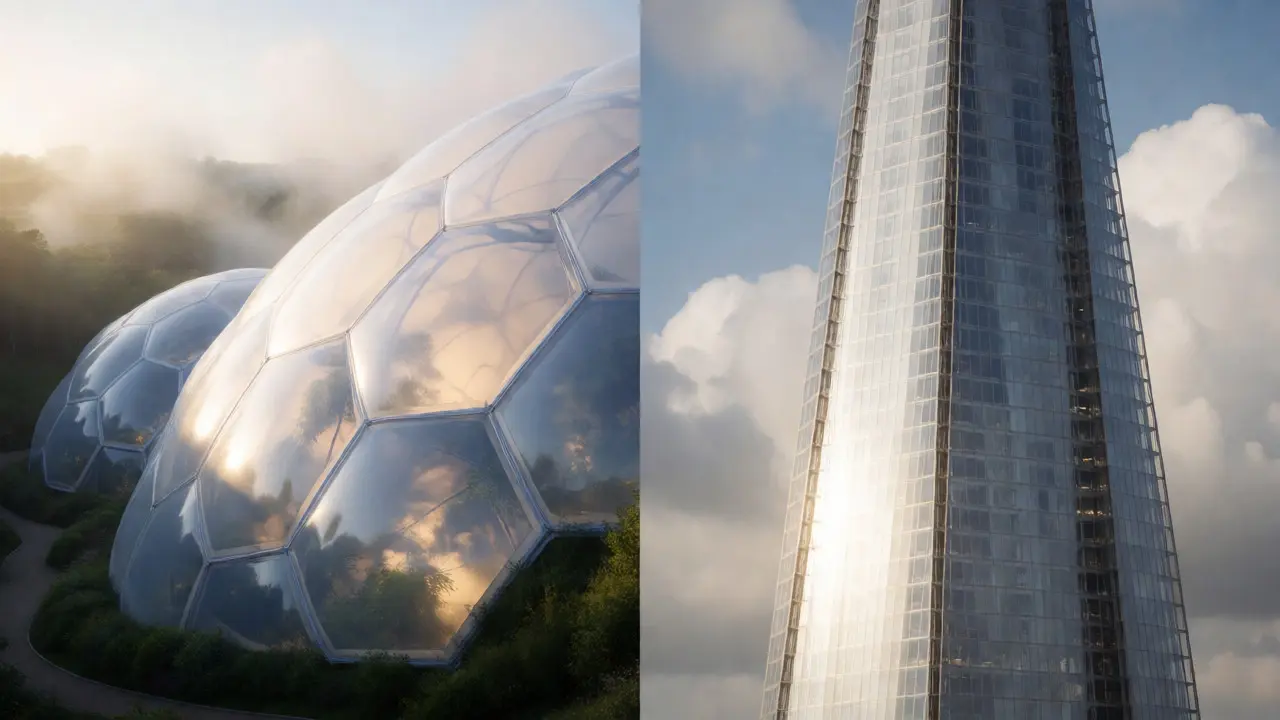
It helps to compare two iconic UK examples to see the range of this approach. On one end, you have the Eden Project in Cornwall, which uses hexagonal ETFE cushions instead of glass. These plastic pillows are lighter, provide better insulation, and let in more UV light for plant growth. They are a perfect example of high-tech materials serving a biological purpose.
On the other end is The Shard in London. While primarily a skyscraper, its tapered shape reduces wind load and thus requires less steel reinforcement. Its glass facade is designed to minimize thermal bridging. Both projects demonstrate that high-tech architecture isn't a single formula; it's a mindset of using advanced materials to solve environmental problems.
| Feature | Traditional Building | High-Tech Architecture |
|---|---|---|
| Structure Visibility | Hidden behind finishes | Exposed and celebrated |
| Maintenance Access | Difficult (requires demolition) | Easy (systems are accessible) |
| Material Efficiency | Higher waste on-site | Prefabricated modules reduce waste |
| Adaptability | Low (fixed walls) | High (open spans, modular) |
| Daylight Integration | Limited by window size | Maximized via large glazed areas |
The Role of Digital Twins in Modern Design
You can't talk about high-tech architecture today without mentioning software. Before a single brick is laid, engineers create a "digital twin"-a virtual replica of the building. This model simulates everything from wind patterns to sunlight angles across different seasons. This level of simulation allows architects to tweak the design for maximum energy efficiency before construction begins.
For instance, if the digital twin shows that a specific facade orientation causes overheating in July, the designers can adjust the shading devices virtually. This iterative process ensures that the physical building performs exactly as predicted. It removes the guesswork that plagued older construction methods. Tools like Revit and BIM (Building Information Modeling) are standard now, enabling precise control over every joint and sealant line.
Challenges and Criticisms
Is high-tech architecture perfect? No. The biggest criticism is cost. Using specialized glass, steel, and custom fabrication is expensive upfront. Critics argue that this makes sustainable living exclusive to wealthy corporations or governments. However, when you factor in long-term operational savings, the math changes. A building that uses 50% less energy for heating and cooling pays for its premium materials over a 10-15 year period.
Another issue is maintenance. Exposed steel needs protection from corrosion. Glass gets dirty. If a high-tech building isn't maintained properly, it can look shabby quickly. But this is also a benefit: you know when it needs cleaning. In contrast, a hidden facade might develop mold or cracks unnoticed until they become structural failures.
The Future: Biophilic High-Tech
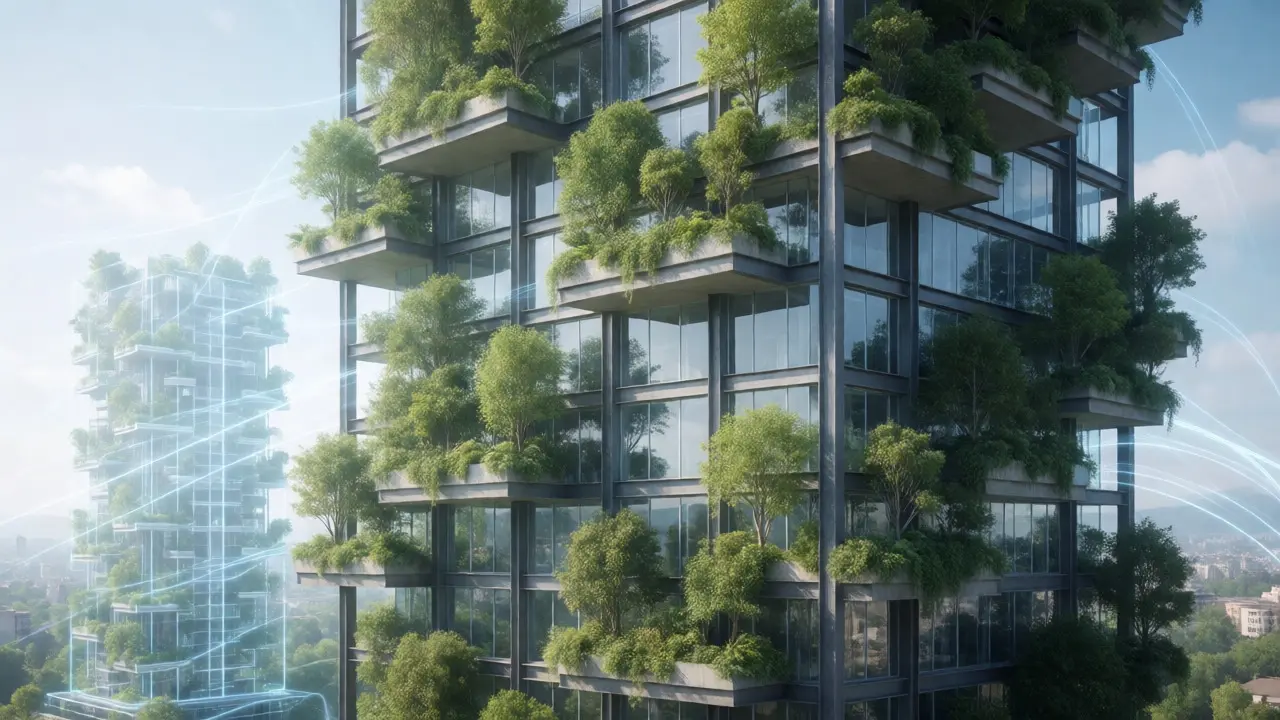
The next evolution of this style is blending technology with nature. We are seeing more "vertical forests" integrated into high-tech frames. Think of the Bosco Verticale in Milan, where balconies are essentially soil beds for trees, supported by high-strength concrete and steel. The tech supports the biology. This hybrid approach addresses urban heat islands and improves air quality, proving that machines and plants can coexist beautifully.
In Wellington, New Zealand, we see this emerging too. As seismic activity dictates strict structural requirements, local architects are finding ways to make resilient, transparent buildings that respect the wind and light. The future isn't about choosing between nature and technology; it's about using high-tech tools to enhance our connection to both.
What defines high-tech architecture?
High-tech architecture is a style that emphasizes transparency, flexibility, and the visibility of structural and mechanical systems. It emerged in the 1970s and uses materials like steel, glass, and aluminum to create lightweight, adaptable buildings that celebrate engineering as art.
Are high-tech buildings energy efficient?
Yes, when designed correctly. Modern high-tech buildings use smart glazing, dynamic shading, and optimized structural forms to maximize natural light and reduce heating and cooling loads. Their modular nature also reduces construction waste.
Why are pipes and ducts exposed in high-tech architecture?
Exposing services allows for easier maintenance and repairs. It also frees up internal space by moving infrastructure to the exterior or visible ceilings, promoting flexible interior layouts and reducing the need for false ceilings.
What is a digital twin in architecture?
A digital twin is a virtual simulation of a building used during the design phase. It models environmental factors like sun path, wind, and temperature to predict energy performance and optimize the design before physical construction begins.
Is high-tech architecture more expensive to build?
Initial construction costs are often higher due to specialized materials and precision fabrication. However, long-term operational costs are typically lower due to energy efficiency and easier maintenance, offering a better return on investment over the building's lifespan.