High-Tech Architecture: How Smart Buildings Are Redefining Modern Design
 May, 11 2026
Have you ever walked past a building that looked less like a structure and more like a living organism? Maybe its skin shifted color with the sun, or its windows opened automatically when the air got stale. That’s not science fiction anymore. It’s high-tech architecture, a design movement where engineering isn’t just hidden behind walls-it’s the star of the show.
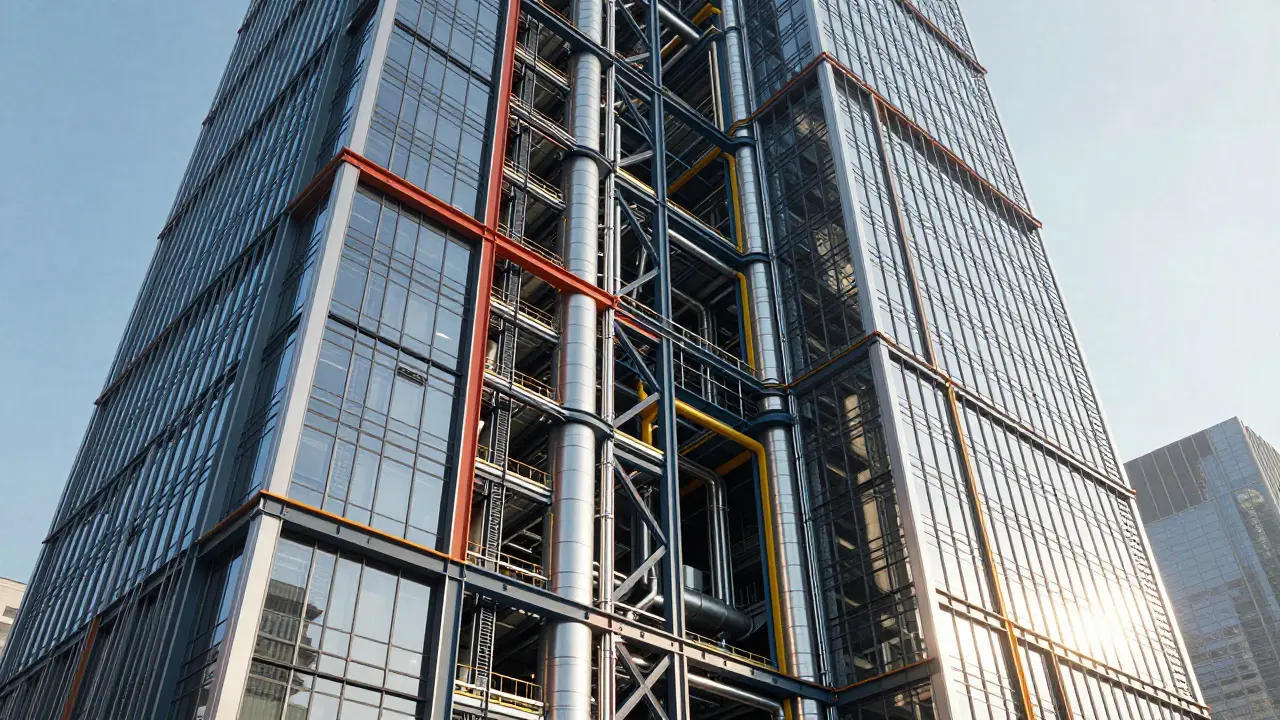
Gone are the days when steel beams were covered up to make a building look 'pretty.' Today, architects are exposing the mechanics, celebrating the joints, and letting technology dictate form. From the soaring curves of Zaha Hadid’s designs to the self-shading skins of new eco-towers in Singapore, high-tech architecture is changing how we live, work, and interact with our cities. But it’s not just about looking futuristic. It’s about making buildings smarter, greener, and more responsive to human needs.
The DNA of High-Tech Architecture
To understand why this style feels so different, you have to look at its roots. High-tech architecture emerged in the 1970s as a reaction against the heavy, concrete brutalism of the mid-20th century. Architects like Norman Foster and Richard Rogers wanted to show off the 'guts' of a building-its pipes, ducts, and structural frames-rather than hide them. Think of the Pompidou Center in Paris. Its colorful external tubes aren’t mistakes; they’re the building’s circulatory system, proudly on display.
But today’s version of high-tech architecture has evolved. It’s no longer just about industrial aesthetics. It’s about integration. Modern high-tech buildings use parametric design software to create shapes that were previously impossible to build. Algorithms generate forms based on wind patterns, sunlight angles, and material strengths. The result? Structures that look organic but are mathematically precise.
- Exposed Structure: Steel, glass, and aluminum are left visible, often painted in bold colors.
- Modular Construction: Buildings are assembled from prefabricated components, like Lego bricks for skyscrapers.
- Technological Integration: Sensors, robotics, and AI are embedded into the fabric of the building.
Smart Skins: The Building’s Nervous System
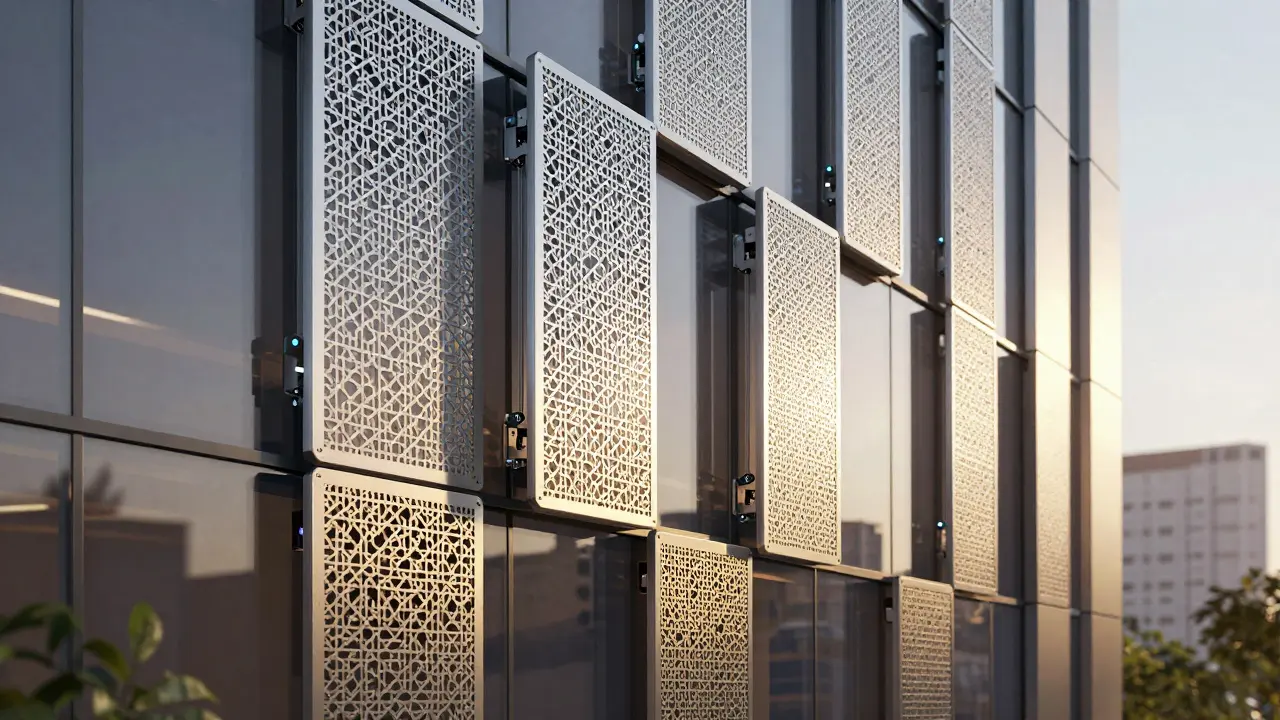
One of the most exciting developments in high-tech architecture is the concept of 'smart skins.' Traditional buildings have static envelopes-they don’t change unless someone manually opens a window or adjusts blinds. Smart skins, however, react to their environment in real-time.
Take the Al Bahar Towers in Abu Dhabi. Their facade features traditional Islamic mashrabiya screens made of aluminum. These screens open and close automatically based on the position of the sun. When the sun is high, they expand to block heat and glare. When it drops, they retract to let light in. This isn’t just cool visually; it reduces energy consumption by up to 50% compared to conventional curtain walls.
These systems rely on IoT sensors (Internet of Things) embedded in the facade. They monitor temperature, humidity, wind speed, and even occupancy levels. The data feeds into a central building management system, which makes micro-adjustments thousands of times a day. You don’t see the code running, but you feel the comfort it creates.
Parametric Design: Math Meets Art
If smart skins are the nervous system, parametric design is the brain. This approach uses algorithms to define relationships between design parameters. Instead of drawing a wall, an architect sets rules: 'The wall must curve to deflect wind,' or 'The roof must slope to collect rainwater.'
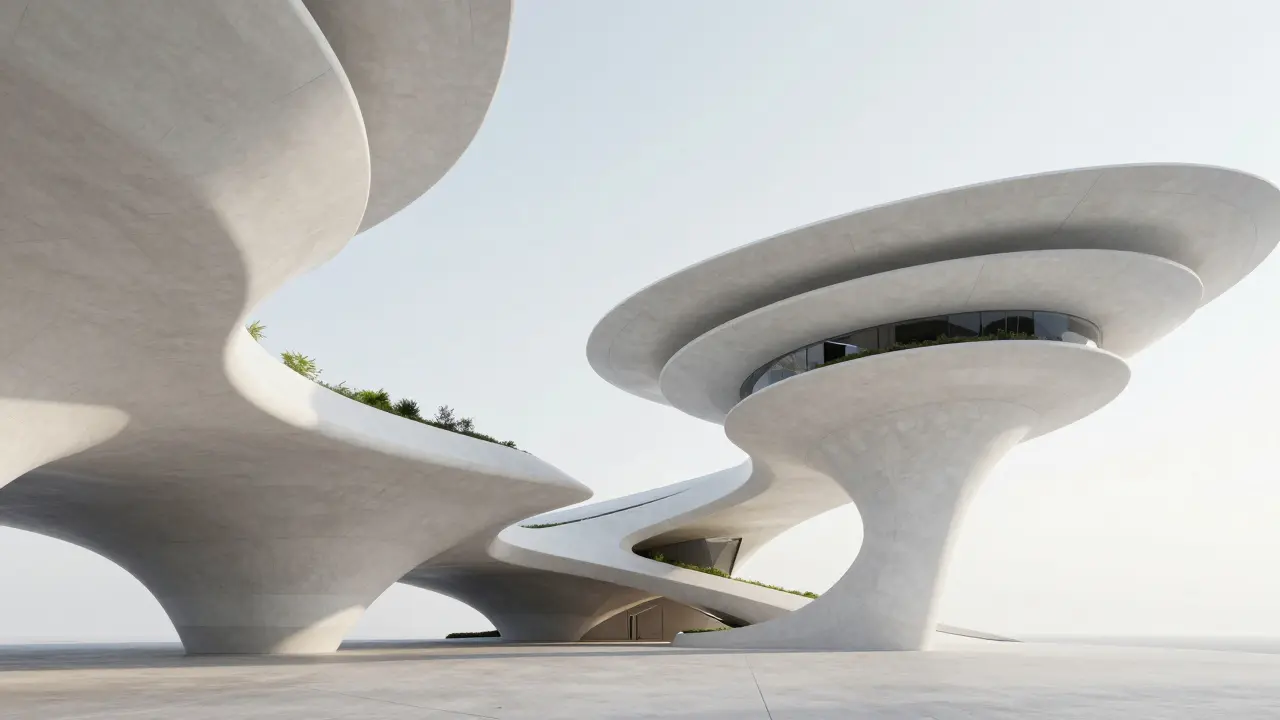
Zaha Hadid Architects pioneered this method. Their projects, like the Heydar Aliyev Center in Baku, feature flowing, seamless surfaces that seem to defy gravity. These forms weren’t drawn by hand; they were generated by software that optimized for structural integrity and aesthetic flow. The same technology now allows us to print complex building components using 3D printers, reducing waste and construction time.
This shift means architects can solve problems that were previously too complex for manual calculation. Want to know exactly how stress distributes across a twisted column? Parametric models simulate it instantly. This precision leads to safer, more efficient structures that use less material because every gram serves a purpose.
| Feature | Traditional Architecture | High-Tech Architecture |
|---|---|---|
| Structure Visibility | Hidden within walls | Exposed and celebrated |
| Faade Function | Static enclosure | Dynamic, responsive skin |
| Design Process | Manual drafting | Algorithmic generation |
| Energy Efficiency | Passive measures only | Active, sensor-driven optimization |
| Construction Method | On-site assembly | Prefabricated modular units |
Sustainability Through Technology
You might think high-tech means high energy use. Surprisingly, the opposite is often true. Because these buildings are so tightly controlled, they waste far less energy than older structures. A standard office building loses significant heat through drafts and inefficient HVAC cycling. A high-tech tower monitors airflow room-by-room, adjusting ventilation only where people are present.
Materials matter too. Many high-tech projects use cross-laminated timber (CLT) instead of steel or concrete. CLT is strong, lightweight, and carbon-negative-it stores CO2 rather than emitting it during production. Combined with photovoltaic glass that generates electricity while providing transparency, these buildings can achieve net-zero energy status.
In Brisbane, where I live, we’re seeing more green roofs integrated into high-tech designs. These aren’t just decorative gardens; they’re engineered systems that manage stormwater, reduce urban heat island effects, and provide insulation. The technology tracks soil moisture and automates irrigation, ensuring plants thrive without wasting water.
The Human Element: Comfort Over Coolness
Critics sometimes argue that high-tech architecture feels cold or impersonal. After all, how many humans do you want to see inside your ceiling? But the best examples prioritize human comfort above all else. Biophilic design principles are woven into tech-heavy spaces. Natural light is maximized using dynamic glazing that prevents glare while maintaining views. Air quality sensors ensure fresh oxygen levels, boosting productivity and well-being.
Consider the workplace. Open-plan offices often fail because noise and temperature vary wildly. High-tech solutions offer personalized zones. Employees can adjust their immediate environment via apps, while the building handles the macro-climate. This balance of control and automation creates spaces that adapt to us, not the other way around.
Even residential high-tech homes are becoming common. Imagine a house that learns your schedule. It pre-heats your bathroom before your morning shower, dims lights as you relax in the evening, and locks doors automatically when you leave. It’s not magic; it’s machine learning applied to daily life.
Challenges and Future Directions
Of course, there are hurdles. High-tech buildings cost more upfront due to specialized materials and complex engineering. Maintenance requires skilled technicians who understand both carpentry and coding. There’s also the risk of over-reliance on technology-if the power goes out, does the building become unusable?
Designers are addressing this with redundancy systems. Critical functions like fire suppression and emergency lighting remain mechanical backups. Additionally, as 3D printing and robotic construction become cheaper, costs are dropping. What was once exclusive to corporate headquarters is now trickling down to public libraries and community centers.
The future points toward 'living buildings'-structures that grow, repair themselves, and harvest energy from multiple sources. Imagine concrete that heals its own cracks using bacteria, or facades that photosynthesize like leaves. We’re already testing prototypes. The next decade will likely blur the line between architecture and biology entirely.
Is high-tech architecture expensive to maintain?
Yes, initially. The sophisticated sensors, motors, and software require regular updates and specialized technicians. However, long-term operational costs are often lower due to extreme energy efficiency and reduced wear-and-tear from automated climate control.
Can high-tech architecture be used for residential homes?
Absolutely. While large-scale skyscrapers get the attention, smaller 'smart homes' use similar principles. Automated shading, efficient HVAC systems, and structural monitoring are increasingly available for private residences, offering comfort and security.
What is the difference between high-tech and brutalist architecture?
Brutalism emphasizes raw concrete and monolithic forms, often hiding services. High-tech architecture celebrates steel, glass, and exposed mechanical systems, focusing on flexibility, modularity, and technological integration.
How does parametric design improve building safety?
Parametric tools allow engineers to simulate extreme conditions-like earthquakes or high winds-on digital models before construction begins. This ensures every component is optimized for strength, reducing the risk of structural failure.
Are smart facades reliable in extreme weather?
Yes, they are designed with redundancy. If sensors detect a storm, facades lock into a secure, closed position. Mechanical backups ensure that even if electronic controls fail, the building remains protected and functional.