Gothic Architecture: How Stone Cathedrals Shaped European History
 Jun, 29 2026
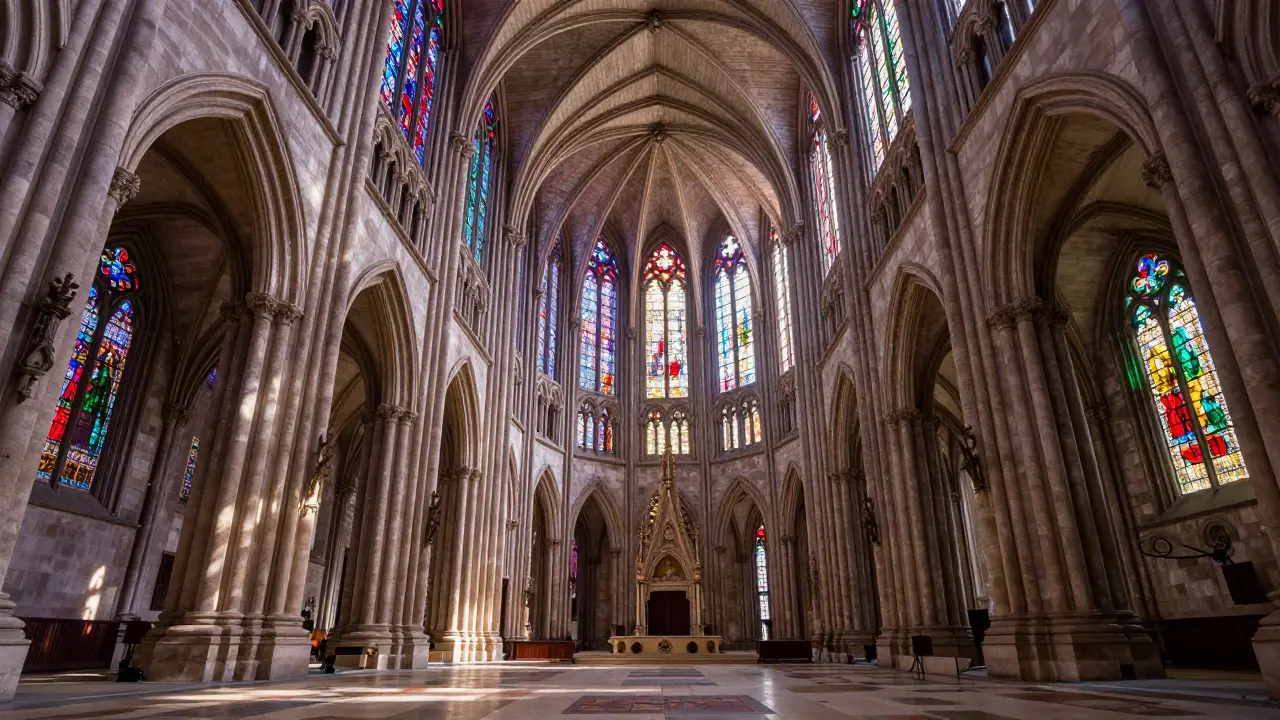
Imagine standing in the nave of Notre-Dame de Paris. The light filters through stained glass, casting colors on the stone floor. It feels spiritual, yes, but look up. Look at the ribs in the ceiling. Look at the walls that seem to disappear into windows. This isn't just decoration. This is engineering that changed how people lived, worked, and thought for centuries.
Gothic architecture didn't just build churches; it built the modern world's foundation for urban life, scientific inquiry, and national identity. When we talk about this style, we aren't just talking about pointy arches. We are talking about a radical shift from heavy, dark Romanesque structures to light-filled spaces that defied gravity. This shift required new tools, new mathematics, and a new way of organizing society.
The Birth of a New Style
It started in the 12th century, specifically around 1140, when Abbot Suger began rebuilding the choir of the Basilica of Saint-Denis, just north of Paris. Suger wanted more light. He believed light was divine. To get it, he needed thinner walls. But thin walls collapse under the weight of a stone roof. So, builders had to invent solutions.
This era marked the transition from the Romanesque architecture, which relied on thick walls and small windows, to something entirely different. The key wasn't magic; it was physics. Builders realized they could redirect the weight of the roof outward rather than downward. This led to the creation of three critical components:
- The pointed arch: Unlike the round Roman arch, the pointed shape directs weight more vertically, allowing for taller structures.
- The ribbed vault: A skeleton of stone ribs supports the ceiling panels, distributing weight efficiently.
- The flying buttress: External supports that catch the outward thrust of the roof, freeing the interior walls from holding up the building.
These innovations allowed cathedrals to soar higher than ever before. Chartres Cathedral, completed in the late 12th century, became a model for this new aesthetic. Its height and light inspired competition among cities across Europe. Building a cathedral wasn't just a religious act; it was a statement of civic pride and economic power.
Engineering as Science
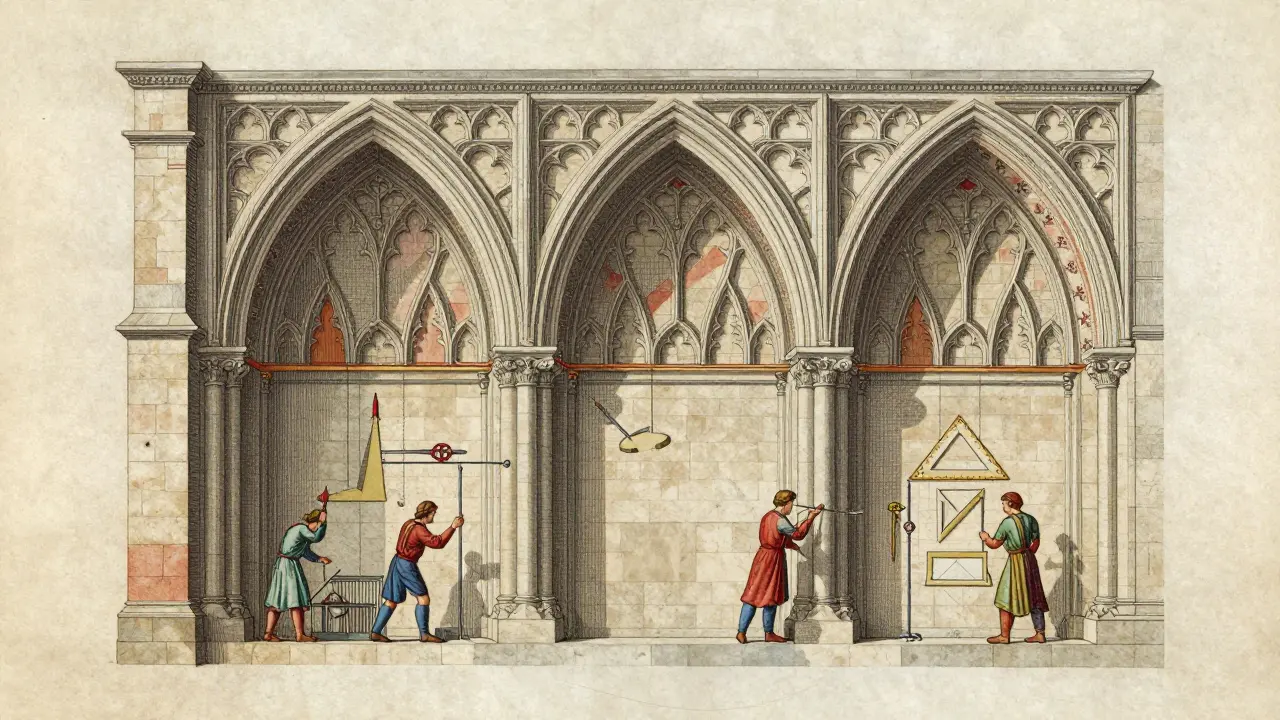
You might think medieval builders were guessing. They weren't. Constructing a Gothic cathedral required precise calculations. Masons used geometry to design vaults. They understood leverage, tension, and compression long before these terms were formally defined in textbooks.
The construction process itself drove technological progress. Cranes became more sophisticated. Pulley systems improved. Quarrying techniques advanced to extract massive blocks of limestone or sandstone with precision. This demand for skilled labor created a class of master masons who traveled across Europe, sharing knowledge and techniques.
Consider the case of Lincoln Cathedral in England. In the 13th century, its central spire reached 525 feet, making it the tallest structure in the world for nearly 250 years. Achieving this height required constant monitoring and adjustment. If one side settled faster than the other, the entire structure could fail. This level of complexity forced builders to develop early forms of project management and quality control.
Moreover, the need for large quantities of materials stimulated local economies. Quarries provided jobs. Transport networks expanded. Guilds formed to regulate craftsmanship. The cathedral became an engine of economic activity, drawing resources from surrounding regions and creating a hub of trade and innovation.
Social and Political Impact
Cathedrals were not isolated projects. They involved entire communities. Funding came from bishops, kings, merchants, and even peasants. Donations were recorded in ledger books, showing how wealth flowed through society. A merchant might pay for a window; a noble family might fund a chapel. These contributions were public displays of piety and status.
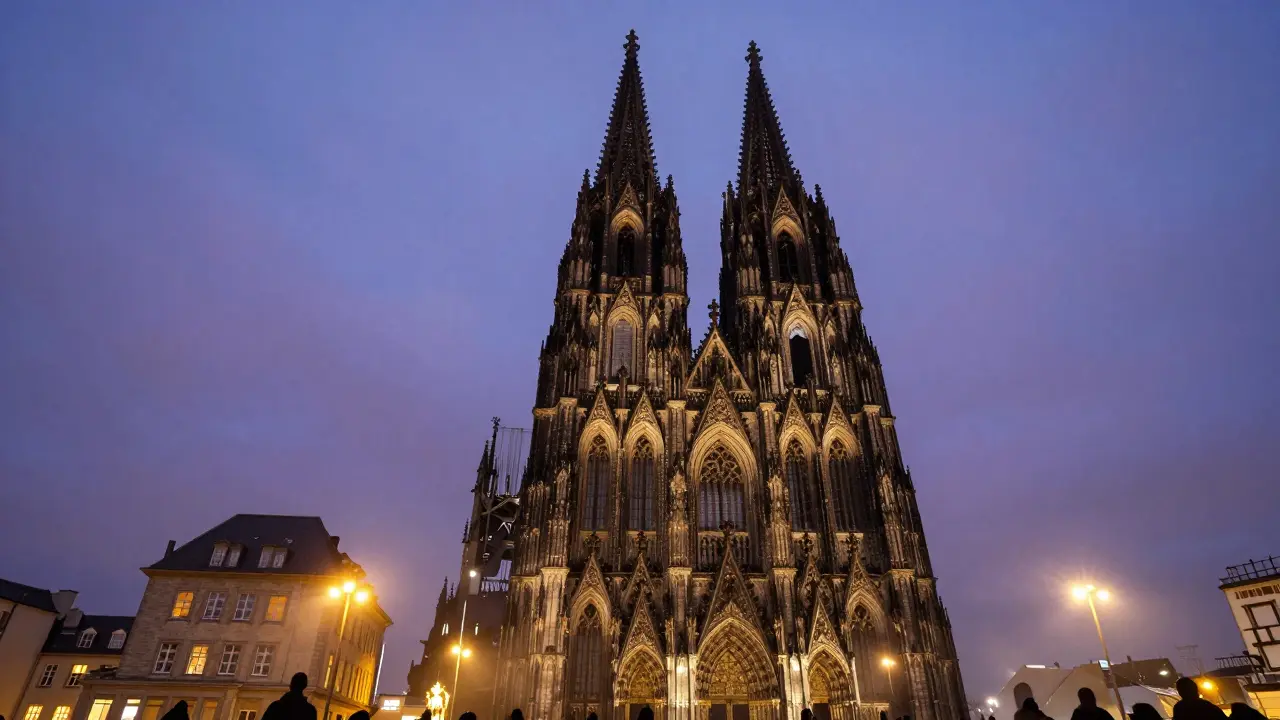
This collective effort fostered a sense of shared identity. Cities competed to build the tallest, most beautiful cathedral. Cologne Cathedral, started in 1248, remained unfinished for centuries due to political instability and funding shortages. Its completion in the 19th century became a symbol of German nationalism, showing how architecture can reflect and shape political movements.
The rise of Gothic architecture also coincided with the growth of universities. Scholars studied theology, philosophy, and natural sciences within the shadow of these towering structures. The visual language of the cathedrals-order, harmony, light-mirrored the intellectual pursuit of truth and understanding. Thomas Aquinas, writing in the 13th century, argued that beauty leads to God. For many, the cathedral was a physical manifestation of this idea.
Spread Across Europe
From France, Gothic architecture spread rapidly. Each region adapted the style to local tastes and materials. In England, it evolved into distinct phases: Early English, Decorated, and Perpendicular. The Perpendicular Gothic style, seen in Westminster Abbey, emphasized vertical lines and large windows, creating a sense of upward movement.
In Germany, Gothic architecture took on a more ornate character. The Strasbourg Cathedral features intricate carvings and a soaring spire that dominates the skyline. In Italy, however, Gothic elements were often blended with classical traditions. Florence Cathedral, designed by Filippo Brunelleschi, combines Gothic structure with Renaissance aesthetics, showing the flexibility of the style.
This diversity highlights how Gothic architecture was not a rigid formula but a adaptable framework. Local craftsmen interpreted the principles of height and light in ways that reflected their cultural context. Whether in the brick Gothic of Northern Europe or the marble facades of Southern Italy, the core ideas remained consistent.
Decline and Revival
By the 16th century, Gothic architecture fell out of favor. The Renaissance brought a renewed interest in classical antiquity. Architects like Andrea Palladio looked back to Rome and Greece, rejecting what they saw as the chaotic complexity of Gothic design. Critics called it "barbarous," associating it with the Middle Ages' perceived darkness.
Yet, the style never truly disappeared. During the 18th and 19th centuries, a Gothic Revival emerged. Figures like Augustus Pugin and John Ruskin championed Gothic architecture as morally superior to classical styles. They argued that its honesty in construction and connection to nature made it ideal for modern society. This revival influenced buildings like the Houses of Parliament in London, designed by Charles Barry and Pugin.
The revival was not just aesthetic; it was ideological. It represented a rejection of industrialization's harshness and a longing for community and craftsmanship. Gothic architecture became a symbol of tradition and stability in a rapidly changing world.
Legacy in Modern Times
Today, Gothic architecture continues to influence design. Its emphasis on light and space resonates with contemporary architects. Modern skyscrapers use similar principles of load distribution, albeit with steel and glass instead of stone. The concept of the "flying buttress" lives on in external support structures that allow for open interior spaces.
Preservation efforts have saved many Gothic monuments from decay. Notre-Dame's restoration after the 2019 fire highlighted global appreciation for this heritage. Technological advances, such as 3D scanning and digital modeling, aid in conservation, ensuring these structures survive for future generations.
Moreover, Gothic architecture remains a powerful cultural symbol. It appears in literature, film, and art, often representing mystery, grandeur, or the sublime. From Bram Stoker's Dracula to Harry Potter, the Gothic aesthetic evokes emotions that transcend time.
What makes Gothic architecture different from Romanesque?
Gothic architecture uses pointed arches, ribbed vaults, and flying buttresses to create taller, lighter structures with large windows. Romanesque architecture relies on thick walls, round arches, and small windows, resulting in darker, heavier interiors.
Why did Gothic architecture decline?
The Renaissance revived classical ideals, leading architects to reject Gothic styles as overly complex. However, the style experienced a major revival in the 19th century due to romanticism and nationalist movements.
How did Gothic architecture impact society?
It stimulated economic growth through construction jobs, fostered civic pride, and encouraged advancements in engineering and mathematics. Cathedrals served as centers of community life and education.
Which cathedral is considered the first Gothic building?
The Basilica of Saint-Denis, rebuilt by Abbot Suger starting in 1140, is widely regarded as the first example of Gothic architecture due to its innovative use of light and structural elements.
Is Gothic architecture still relevant today?
Yes, its principles of light and structural efficiency influence modern design. Additionally, preserved Gothic buildings remain important cultural landmarks and sources of inspiration for artists and architects.