Functionalism: Understanding How Society Holds Itself Together
 Feb, 9 2026
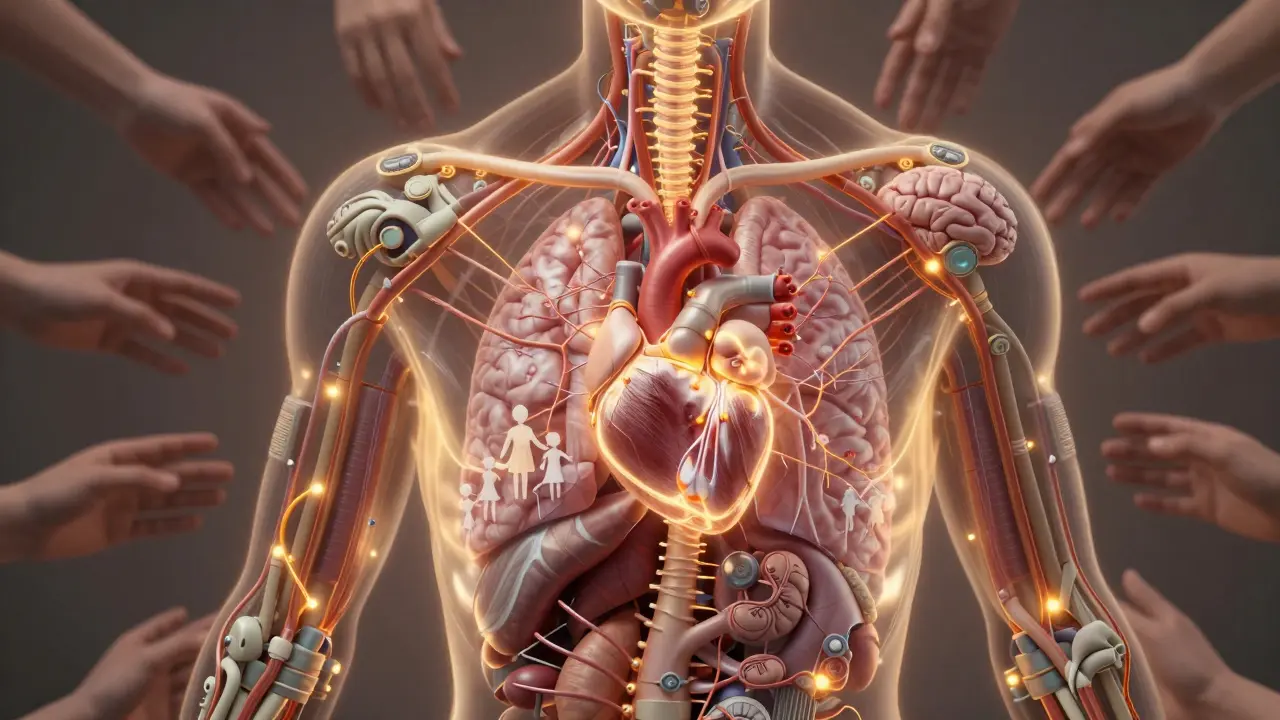
Think about what keeps society from falling apart. Why do people follow rules? Why do schools exist? Why do we have families, religions, or governments? Functionalism says it’s not because people are scared of punishment or tricked into obedience. It’s because these things work. They serve a purpose. Like the organs in your body, each part of society has a job to do-and when they all do their job, the whole system stays healthy.
What Functionalism Really Means
Functionalism isn’t about blaming people or praising leaders. It’s about seeing society as a living system. This idea started in the 1800s, mostly through the work of French sociologist Emile Durkheim. He watched how industrialization changed communities and asked: What holds people together when old traditions break down?
Durkheim noticed that even in modern cities, people still followed rituals-like funerals, holidays, or even workplace routines. He realized these weren’t just habits. They were social glue. They reminded people they belonged to something bigger. That’s the core of functionalism: every social structure exists because it helps society function.
Think of it like a car. If the engine fails, the car stops. If the tires go flat, you can’t move. Society works the same way. Remove education, and you lose skilled workers. Remove the legal system, and chaos follows. Functionalism doesn’t ask if these things are fair. It asks: What happens if they disappear?
Key Social Institutions and What They Do
Functionalism breaks society into major parts, called institutions. Each one has a clear role:
- Family: Teaches values, raises children, provides emotional support. Without families, society wouldn’t reproduce itself-literally or culturally.
- Education: Prepares people for work, passes on shared knowledge, and sorts people into roles based on skill. It’s not just about math and reading-it’s about learning how to fit into a larger system.
- Religion: Gives meaning to life, creates moral codes, and unites people through shared rituals. Even in secular societies, religion’s function lives on in national holidays, memorials, or shared symbols like flags.
- Government and Law: Maintains order, enforces rules, and manages resources. Without it, cooperation becomes impossible. Functionalists don’t care if laws are perfect-they care that they exist.
- Economy: Produces and distributes goods and services. It’s not just about money. It’s about ensuring people have food, shelter, and work. If the economy breaks, society stumbles.
These institutions aren’t perfect. They can be unfair. But functionalism says: even flawed systems keep things from collapsing. A school that favors rich kids still teaches reading. A legal system that’s slow still stops violence. They’re not ideal-but they’re necessary.

How Functionalism Explains Deviance
One of the most surprising ideas from functionalism is that crime and rebellion aren’t always bad. Durkheim argued that a little deviance is healthy. Why? Because it shows where society’s rules are too rigid or outdated.
Think about civil rights movements. In the 1960s, protesters broke laws. They were called troublemakers. But functionalism sees it differently: their actions exposed deep flaws in the system. The protests forced change. Society didn’t break-it evolved. Deviance, in this view, is a signal. It says: "Something here isn’t working. Fix it."
Even gossip, rumors, or social shaming have a function. They reinforce norms. When someone breaks a rule-say, by cutting in line-the group reacts. That reaction reminds everyone: "This is how we behave." It’s not about punishment. It’s about keeping the system aligned.
Functionalism vs. Other Views
Not everyone agrees with functionalism. Conflict theorists say society isn’t a harmonious machine-it’s a battlefield. They argue that institutions like education or religion mostly serve the powerful. Schools don’t just teach skills-they sort kids into classes based on wealth. Religion doesn’t unite-it controls.
Symbolic interactionists focus on small, everyday moments. They ask: How do people create meaning in a conversation? What does a handshake really mean? Functionalism ignores these tiny interactions. It zooms out to the big picture.
But functionalism still matters because it asks the right question: How do we survive as a group? If you only focus on conflict or individual meaning, you miss the quiet, invisible structures that keep billions of people from tearing each other apart every day.

Functionalism in the Modern World
Today, functionalism still explains a lot. Look at social media. Why do people post about their vacations, diets, or workouts? Functionalism says: it’s not just vanity. It’s about belonging. Sharing updates reinforces social bonds. Liking someone’s photo isn’t just a click-it’s a tiny act of social approval.
Even pandemic lockdowns made sense through a functionalist lens. When governments shut down businesses, they weren’t just trying to stop a virus. They were protecting a larger system: healthcare, supply chains, public trust. People stayed home not because they were forced, but because they understood: this keeps everyone alive.
And what about mental health? Functionalism doesn’t say depression is a personal failure. It asks: Is society creating conditions that make people feel isolated? If jobs are unstable, families are scattered, and communities are online-only-then the system isn’t doing its job. The problem isn’t the person. It’s the structure.
Why Functionalism Still Matters
Functionalism doesn’t tell you how to fix society. It tells you how it stays together. That’s powerful. In a world full of noise, outrage, and division, functionalism reminds us: we’re all part of a machine. And machines only work when every part does its job.
It’s easy to hate institutions. Schools are boring. Government is slow. Religion feels outdated. But functionalism says: don’t tear them down yet. Ask: What happens if they vanish? Would we be better off? Or would we just be lost?
Maybe the answer isn’t to destroy the system. Maybe it’s to fix the parts that are broken-so the whole thing keeps running.
What is functionalism in sociology?
Functionalism is a sociological theory that views society as a complex system made up of interconnected parts, each serving a specific purpose to maintain social stability. It focuses on how institutions like family, education, religion, and government contribute to the overall functioning of society, similar to how organs work together in a living body.
Who created functionalism?
Functionalism in sociology was primarily developed by Emile Durkheim in the late 19th century. He built on ideas from earlier thinkers like Auguste Comte, but Durkheim was the first to apply functionalist thinking systematically to social institutions, using studies on suicide, religion, and education to show how social structures serve essential purposes.
Does functionalism justify inequality?
Functionalism doesn’t actively justify inequality, but it does accept it as a necessary part of society. For example, it argues that not everyone can be a doctor or a teacher-some roles are more critical, so they require more training and pay more. Critics say this ignores how power and wealth distort these roles. Functionalists respond that without some level of differentiation, society couldn’t function efficiently.
How does functionalism explain crime?
Functionalism sees crime as inevitable-and even useful. Emile Durkheim argued that crime helps define moral boundaries. When society reacts to crime, it reinforces shared values. Crime also pushes society to adapt. For example, new laws often emerge after high-profile crimes, showing that deviance can lead to social improvement.
Is functionalism still relevant today?
Yes. While it’s often criticized for being too conservative, functionalism helps explain why societies hold together despite conflict. It’s especially useful for understanding institutions like public health systems, education, or social media-where collective behavior maintains stability. Even in times of crisis, like pandemics or economic collapse, functionalism helps us see how society adapts to survive.
Functionalism doesn’t give you easy answers. But it gives you a better question: What holds us together-and what happens if we break it?