Art Nouveau Architecture: Why These Organic Designs Still Captivate Us
 Apr, 18 2026
Key Takeaways
- Focuses on organic shapes, asymmetric lines, and natural motifs.
- Blends fine arts and applied arts to create a "total work of art."
- Heavily influenced by the Japanese arts and the desire to escape industrial rigidity.
- Left a lasting legacy through masters like Antoni Gaudí and Victor Horta.
The Philosophy of the Organic Curve
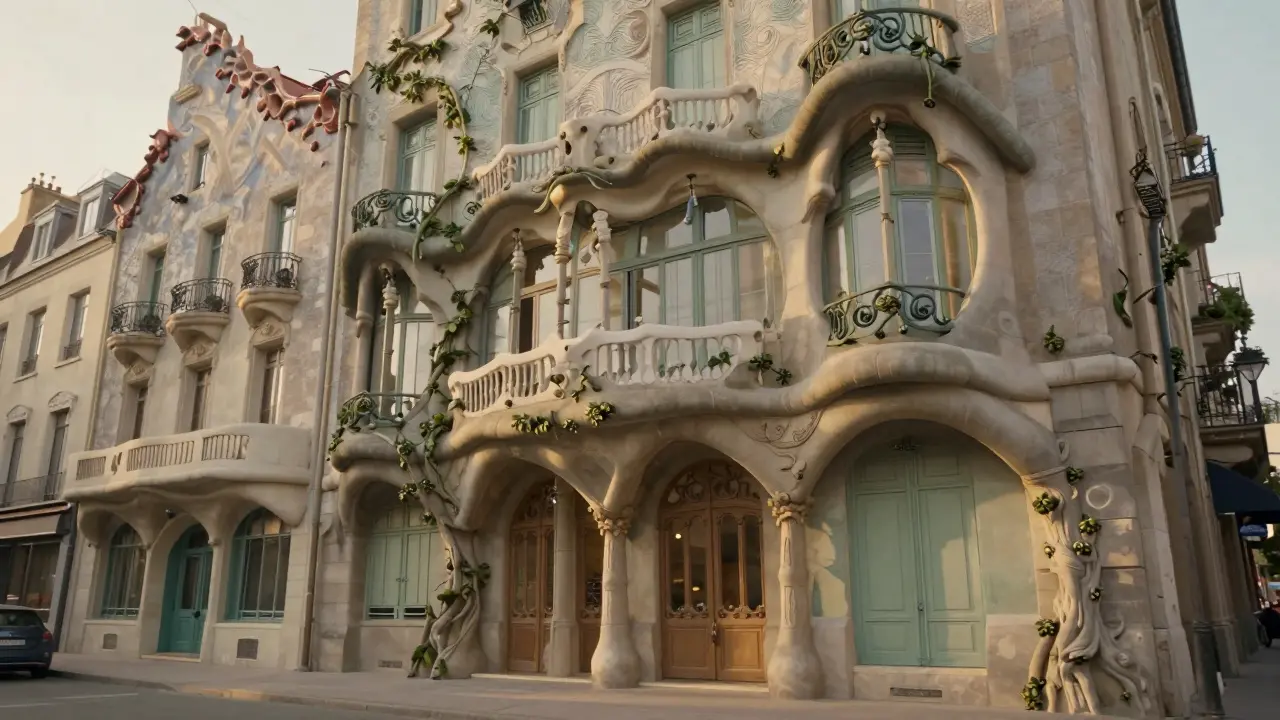
Why go through the trouble of carving a stone pillar to look like a tree trunk? For the architects of this era, the curve wasn't just a decoration-it was a philosophy. They believed that humans feel more at home in environments that mimic the natural world. This led to the development of the "whiplash curve," a dynamic, undulating line that looks like a snap of a whip. If you look at the entryways of the Hôtel Tassel in Brussels, you'll see how the ironwork flows seamlessly from the floors into the walls, making the entire building feel like a single, living organism.
This style didn't just happen in a vacuum. It was a reaction to the 19th century's obsession with copying the past. Instead of mimicking Greek columns or Gothic arches for the thousandth time, designers looked at botany. They studied how stems bend and how wings unfold. This shifted the focus of architecture from symmetry to asymmetry. In nature, things are rarely perfectly mirrored, and Art Nouveau embraced that imperfection to create a sense of movement and energy.
The Mastery of Materials: Iron, Glass, and Ceramic
One of the coolest things about this movement was how it used new industrial materials to create anti-industrial looks. They took Cast Iron, which was usually used for ugly factories and train stations, and twisted it into elegant flower stalks. By combining iron with large panes of glass, they created airy, light-filled spaces that felt more like greenhouses than traditional homes.
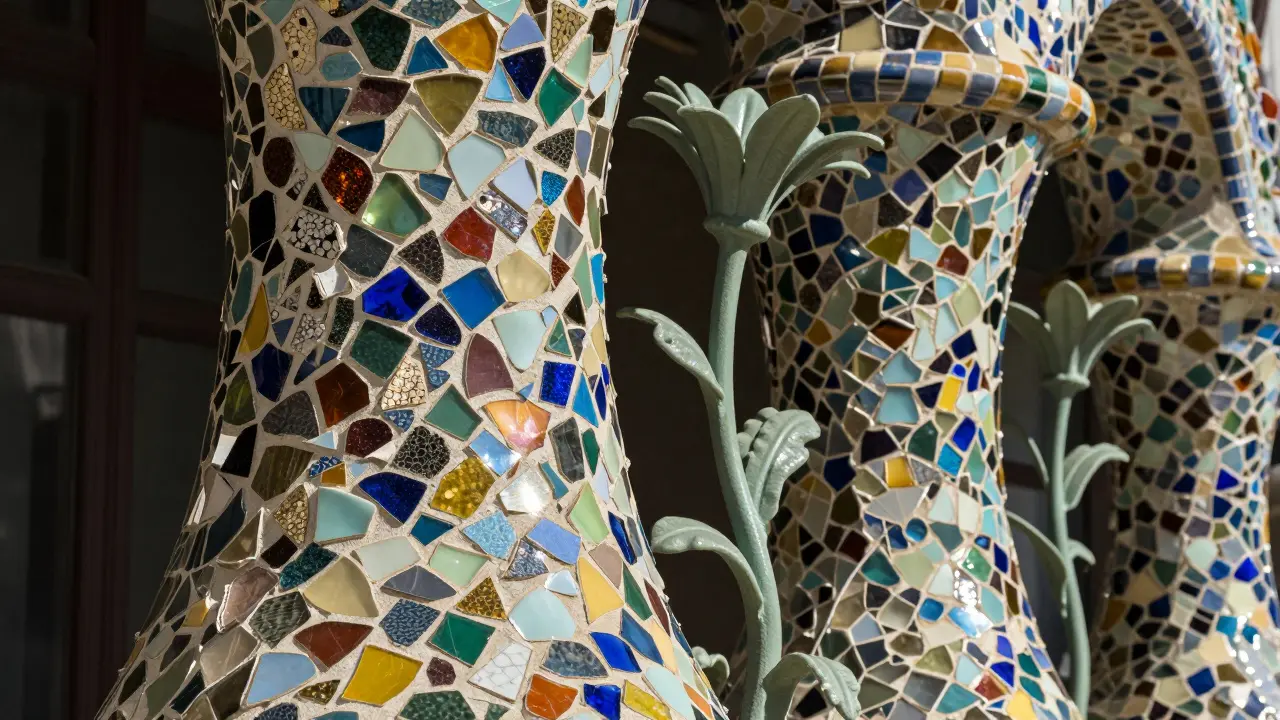
Then there are the ceramics. Think of the colorful, shimmering mosaics on the balconies of Antoni Gaudí's works in Barcelona. He didn't just use tiles for color; he used "trencadís," a technique of using broken ceramic shards to cover curved surfaces. This allowed him to wrap complex, rounded shapes in vibrant colors that changed depending on how the sun hit them. It turned a building into a giant piece of jewelry for the city.
| Region/Style | Key Characteristics | Primary Material Focus | Notable Example |
|---|---|---|---|
| Modernisme (Catalonia) | Highly colorful, surreal, nature-driven | Ceramics, Stone, Wrought Iron | Sagrada Família |
| Jugendstil (Germany/Austria) | More geometric, leaning toward abstraction | Plaster, Wood, Glass | Secession Building |
| Style 1900 (France/Belgium) | Flowing whiplash curves, floral elegance | Iron, Glass, Glass mosaics | Casa Batlló |
The Concept of the Gesamtkunstwerk
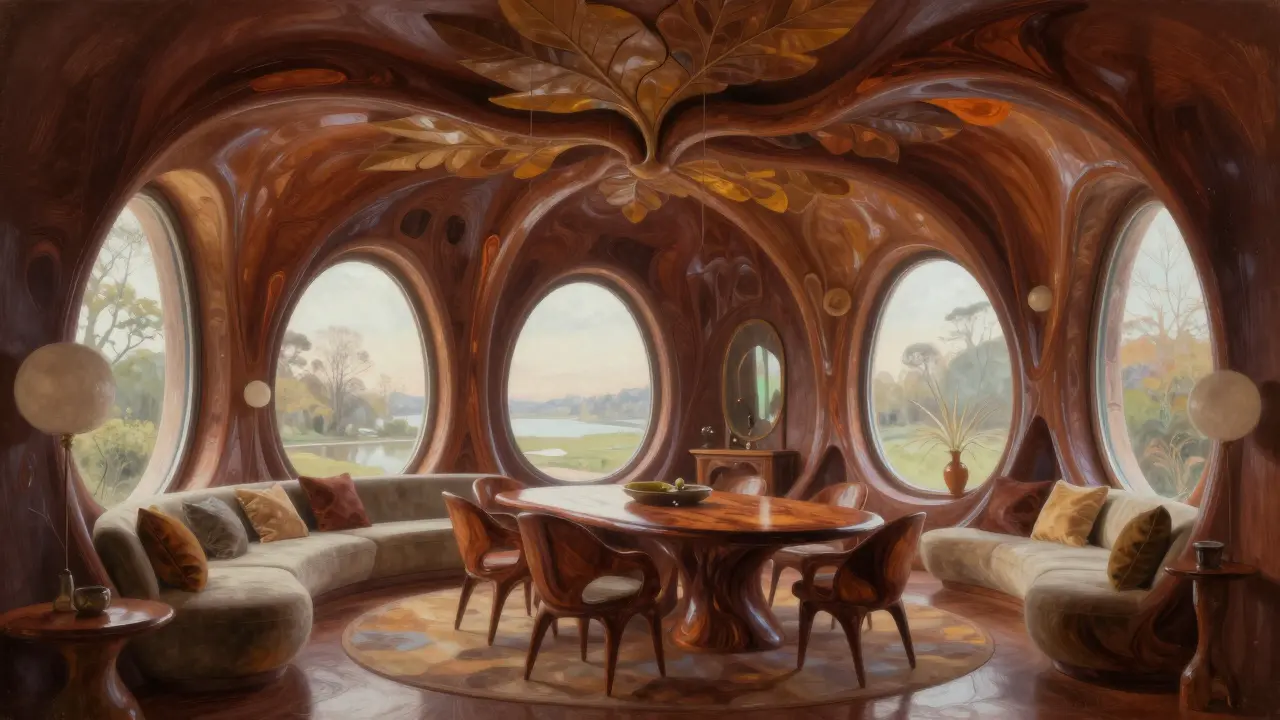
If you've ever walked into a room and felt that the furniture, the wallpaper, the door handles, and the ceiling all belonged to the same family, you've experienced a Gesamtkunstwerk. This is a German term meaning a "total work of art." Art Nouveau architects weren't interested in just designing the shell of a building; they wanted to control every single detail inside it.
They believed that a house should be a curated experience. If the exterior had a curved window, the dining table inside should have similar curves, and the cutlery should follow the same flow. This is why many of these buildings are so preserved today-they are essentially giant sculptures you can live in. When you visit a place like the Casa Batlló, you aren't just looking at a house; you're inside a cohesive artistic vision where the walls resemble bones and the roof looks like a dragon's back.
Global Influence and the Transition to Modernism
While we often associate the style with Paris or Barcelona, its ripples reached far across the globe. In the United States, the influence can be seen in the organic shapes of Louis Sullivan's designs, which paved the way for the skyscraper movement. He argued that "form follows function," but his version of function included the beauty of nature. Even in smaller towns, you can find old pharmacies or bookstores with those signature curved wooden frames and stained glass windows.
But why did it end? By the time World War I hit, the world had changed. The elaborate, hand-crafted curves of Art Nouveau were too expensive and slow to produce for a society that suddenly needed mass housing and efficiency. The style evolved into Art Deco, which kept the glamour but swapped the organic curves for sharp angles, zig-zags, and industrial symmetry. The fluid lines of a flower were replaced by the streamlined look of a locomotive.
Practical Ways to Spot Art Nouveau Today
You don't need a degree in art history to find this style in the wild. Just look for these tell-tale signs:
- Asymmetry: If one side of the entrance looks different from the other but still feels balanced, it's a candidate.
- Floral Motifs: Look for lilies, poppies, iris, or vines carved into stone or wrought into iron.
- Curved Glass: Windows that bow outward or follow a sweeping arc rather than a straight line.
- Integration: Where a railing seems to grow out of the floor or a lamp looks like a sprouting plant.
Many of these buildings are now UNESCO World Heritage sites because they represent a rare moment in history when humanity tried to merge the industrial age with the natural world. They remind us that architecture doesn't always have to be about efficiency; sometimes, it's about evoking a feeling of wonder and connection to the earth.
Is Art Nouveau the same as Art Deco?
No, they are very different. Art Nouveau (roughly 1890-1910) is all about organic, flowing lines and nature. Art Deco (roughly 1920-1940) is about geometric shapes, symmetry, and the machine age. If it looks like a plant, it's probably Nouveau; if it looks like a skyscraper from the 1920s, it's likely Deco.
Who is the most famous Art Nouveau architect?
Antoni Gaudí is arguably the most famous, known for his mind-bending work in Barcelona, such as the Sagrada Família. However, Victor Horta in Belgium is often credited with creating the first true Art Nouveau building, the Hôtel Tassel.
Where can I see the best examples of this architecture?
Barcelona, Spain, is the epicenter due to the Modernisme movement. Brussels, Belgium, and Paris, France, also have incredible concentrations of Art Nouveau buildings, including the famous Metro entrances designed by Hector Guimard.
Why was it called "Nouveau"?
"Art Nouveau" is French for "New Art." The name was chosen because the movement wanted to break away from the traditional academic styles of the past and create something entirely fresh and relevant to the modern era.
Did Art Nouveau influence modern design?
Absolutely. Its focus on integrating art into daily life and its interest in organic forms heavily influenced the Bauhaus movement and later the organic architecture of Frank Lloyd Wright.