Art Nouveau Architecture: Timeless Beauty and Organic Design
 Apr, 25 2026
Key Takeaways
- Nature-driven: Focuses on whiplash curves, floral motifs, and organic asymmetry.
- Material Innovation: Blends traditional stone with industrial iron and glass.
- Total Work of Art: Everything from the door handle to the roof was designed as one cohesive unit.
- Global Reach: Known as Modernisme in Spain, Jugendstil in Germany, and Sezessionstil in Austria.
Breaking the Mold of the 19th Century
Before Art Nouveau hit the scene, architecture was mostly about looking backward. Architects were basically copying Greeks, Romans, and Goths. It was stiff, predictable, and felt more like a museum than a home. Around 1890, a group of designers decided that the industrial revolution-with all its steel and glass-shouldn't just be used for factories. They wanted to use these materials to create something that felt alive.
The goal wasn't just to make a building look pretty; it was to create a "Gesamtkunstwerk," or a total work of art. If you walked into an Art Nouveau house, the architect didn't just design the walls. They designed the wallpaper, the chairs, the silverware, and even the light fixtures. Everything worked together to wrap the resident in a seamless, flowing environment. Have you ever noticed how some modern luxury hotels try to do this? They're basically chasing the Art Nouveau dream of a fully curated experience.
The Magic of the Whiplash Curve
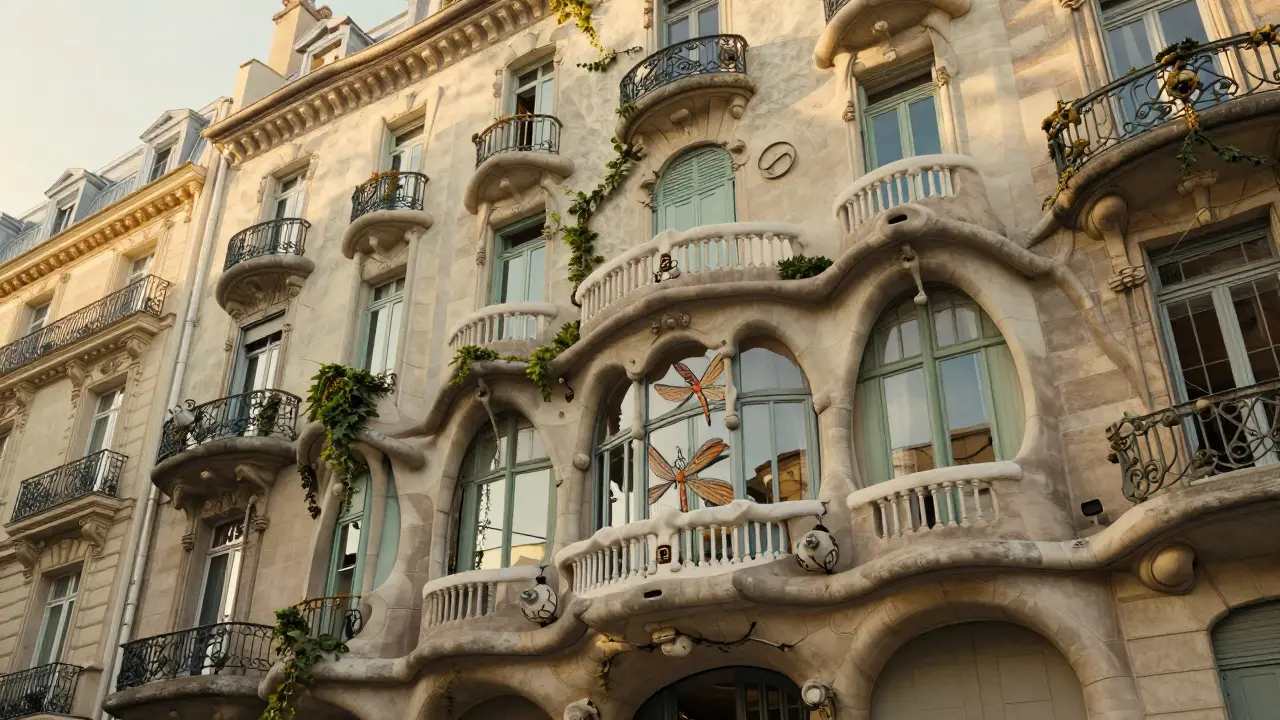
If you want to spot an Art Nouveau building from a mile away, look for the "whiplash curve." This isn't just a gentle arc; it's a dynamic, snapping line that looks like a flick of a whip or a curling vine. This curve is the DNA of the style. It represents energy and movement, moving away from the straight lines that define most of our urban landscapes.
Architects shifted their focus to asymmetry. Why should the left side of a building be a mirror image of the right when nature isn't symmetrical? They looked at the way a lily pad floats on water or how an orchid grows in the wild. By bringing these biological shapes into stone and iron, they turned cities into urban forests. It was a way of reconnecting people with the natural world at a time when cities were becoming smoky, grey, and industrial.
The Titans of Organic Design
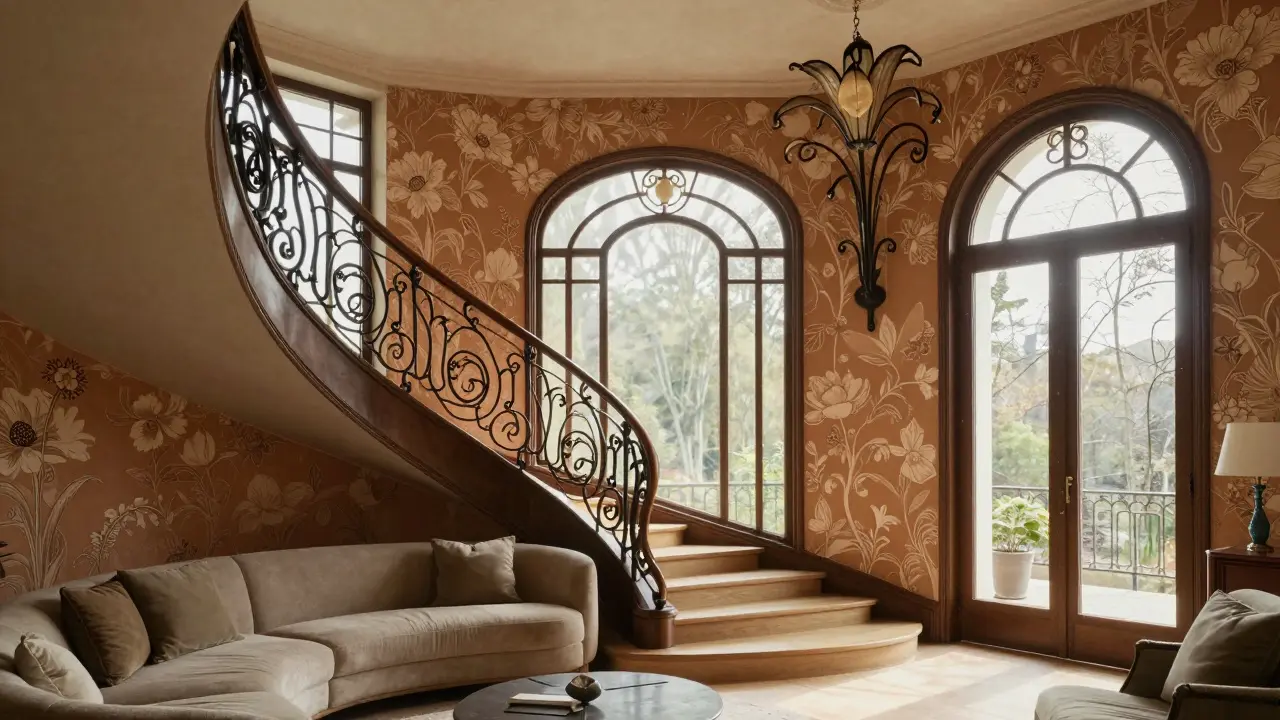
You can't talk about this movement without mentioning Victor Horta. Based in Brussels, Horta is often credited with launching the style. His Hôtel Tassel is a masterpiece of light and iron. Instead of hiding the metal beams, he exposed them and twisted them into elegant, floral shapes. He turned the hallway into a sun-drenched garden of iron, proving that industrial materials could be delicate and poetic.
Then there is Antoni Gaudí in Barcelona. While Horta was elegant, Gaudí was psychedelic. He took the organic concept to the absolute limit. His work, often called Modernisme, looks like it was grown from the earth rather than built. Take the Sagrada Família-the columns aren't just supports; they are designed like giant trees with branching canopies. Gaudí didn't use blueprints in the traditional sense; he used hanging chains and 3D models to figure out how weight naturally flows, which is why his buildings feel so structurally honest.
| Architect | Region/Style | Defining Characteristic | Famous Example |
|---|---|---|---|
| Victor Horta | Belgium / Art Nouveau | Exposed iron, fluid interior spaces | Hôtel Tassel |
| Antoni Gaudí | Spain / Modernisme | Hyper-organic, colorful mosaics | Casa Batlló |
| Hector Guimard | France / Art Nouveau | Sinuous cast iron, botanical shapes | Paris Métro Entrances |
| Otto Wagner | Austria / Secession | Geometric clarity mixed with ornament | Majolica House |
Materials that Changed the Game
One of the biggest reasons Art Nouveau actually worked was the clever use of Cast Iron. Before this, iron was for bridges and railway stations. Art Nouveau architects realized that if you cast iron in a mold, you could create any shape you wanted-a leaf, a wave, or a woman's hair. They paired this with large sheets of glass to flood interiors with natural light, which emphasized the organic feel of the spaces.
They also loved Trencadís, a type of mosaic where broken ceramic tiles are used to create colorful, shimmering surfaces. Gaudí used this extensively on the Park Güell benches. It wasn't just about beauty; it was a way to recycle waste materials, making it an early form of sustainable design. By combining the grit of the industrial age with the delicacy of fine art, they created a hybrid that felt futuristic for its time.
The Global Ripple Effect
While it started in Europe, Art Nouveau didn't stay put. In Germany, it became Jugendstil (Youth Style), which was a bit more streamlined and focused on function. In Austria, the Vienna Secession movement pushed the style toward more geometric shapes, paving the way for the Art Deco movement that would follow in the 1920s.
You can see the influence in the early 20th-century skyscrapers of New York or the ornate cafes of Prague. The style provided a bridge between the old world of craftsmanship and the new world of mass production. It taught us that we don't have to choose between a building being functional and it being a piece of art. A subway entrance, for example, could be as breathtaking as a cathedral entrance, as seen in Hector Guimard's iconic Paris Métro designs.
Why it Still Matters Today
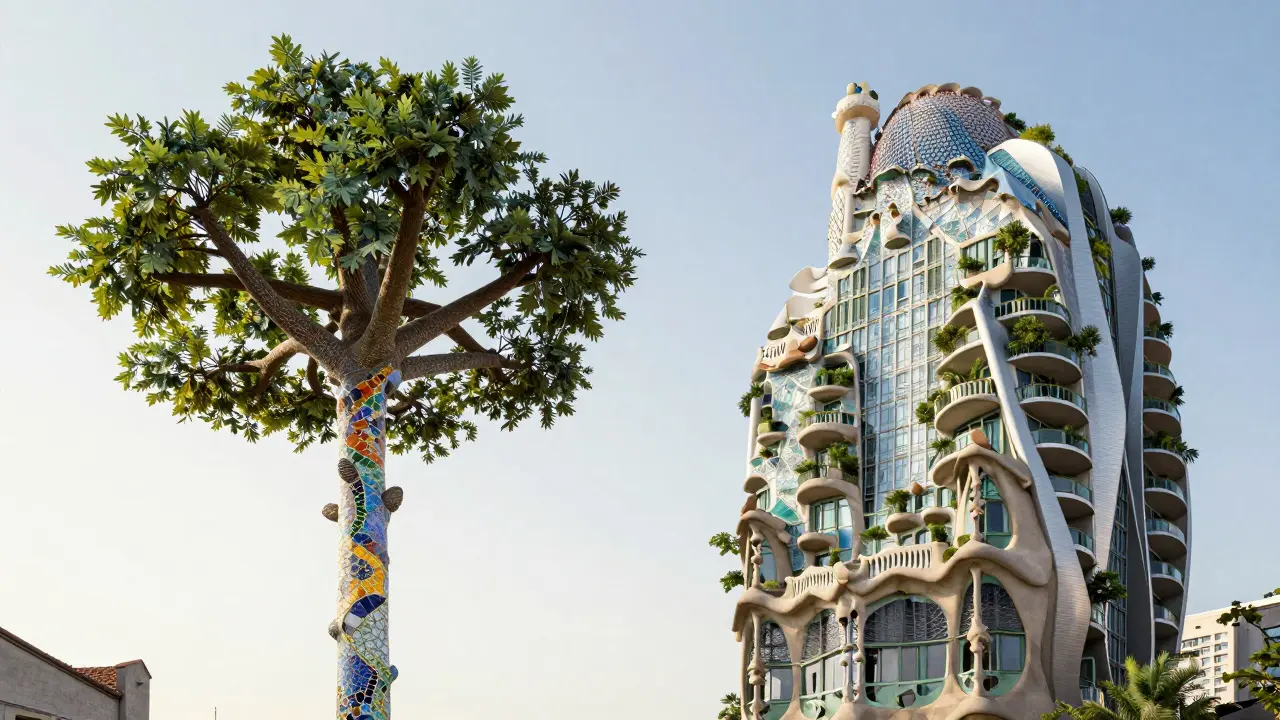
You might wonder why we're still talking about a style from 120 years ago. The answer lies in our current obsession with Biophilic Design. Today, architects are trying to integrate plants and natural light into high-rise buildings to reduce stress and improve mental health. Art Nouveau was doing this over a century ago. It recognized that humans have an innate need to be connected to nature, even when they are inside a concrete jungle.
When you see a modern building with undulating walls or a 3D-printed house that looks like a shell, you're seeing the ghost of Art Nouveau. The movement proved that architecture can be emotional. It shifted the conversation from "How do we make this stand up?" to "How does this make the person inside feel?" That's a legacy that never really goes out of style.
What is the difference between Art Nouveau and Art Deco?
The easiest way to tell them apart is by the lines. Art Nouveau is all about flowing, organic, and asymmetrical curves-think of a vine growing up a wall. Art Deco, which came later, is about symmetry, bold geometric shapes, and streamlined looks-think of the Empire State Building. Art Nouveau looks like nature; Art Deco looks like a machine.
Why did Art Nouveau eventually disappear?
It was simply too expensive and time-consuming to produce. Because everything was custom-made and highly detailed, it required master craftsmen. After World War I, the world moved toward Modernism and the "International Style," which favored efficiency, mass production, and the "less is more" philosophy. The intricate curves of Art Nouveau were seen as too fussy for a new, faster world.
Where are the best places to see Art Nouveau architecture?
Barcelona is the gold mine, thanks to Gaudí's work like Casa Batlló and Park Güell. Brussels is another hub, especially for the works of Victor Horta. Paris is famous for its Métro entrances and the various "Maisons" built during the Belle Époque. Prague and Vienna also have stunning examples of the Secession and Jugendstil styles.
Was Art Nouveau only for the wealthy?
Mostly, yes. Because it relied on high-end craftsmanship and unique designs, it was primarily used for private mansions, luxury hotels, and high-end shops. However, the movement also tried to enter the public sphere through advertising posters and public transportation architecture, making the aesthetic accessible to everyone who walked the streets of Paris or Brussels.
Can I incorporate Art Nouveau elements into a modern home?
Absolutely. You don't need to build a winding staircase to get the vibe. Look for "organic modernism" in furniture-curved sofas, botanical-patterned wallpapers, or wrought iron light fixtures with leaf motifs. The key is to balance the ornate curves with some clean, neutral spaces so the organic elements can really pop without making the room feel cluttered.
Next Steps for Architecture Lovers
If you've fallen in love with these swirling lines, start by exploring the works of the Vienna Secession to see how the style transitioned into something more modern. If you're a fan of the weird and wonderful, dive deeper into the life of Antoni Gaudí to understand how he used mathematics to mimic nature. For those interested in the future, look into current Biophilic Design trends to see how the 19th-century dream of a "living building" is finally becoming a reality through technology and sustainable urban planning.