Ancient Roman Architecture: The Engineering Secrets Behind the Empire's Masterpieces
 Jun, 20 2026
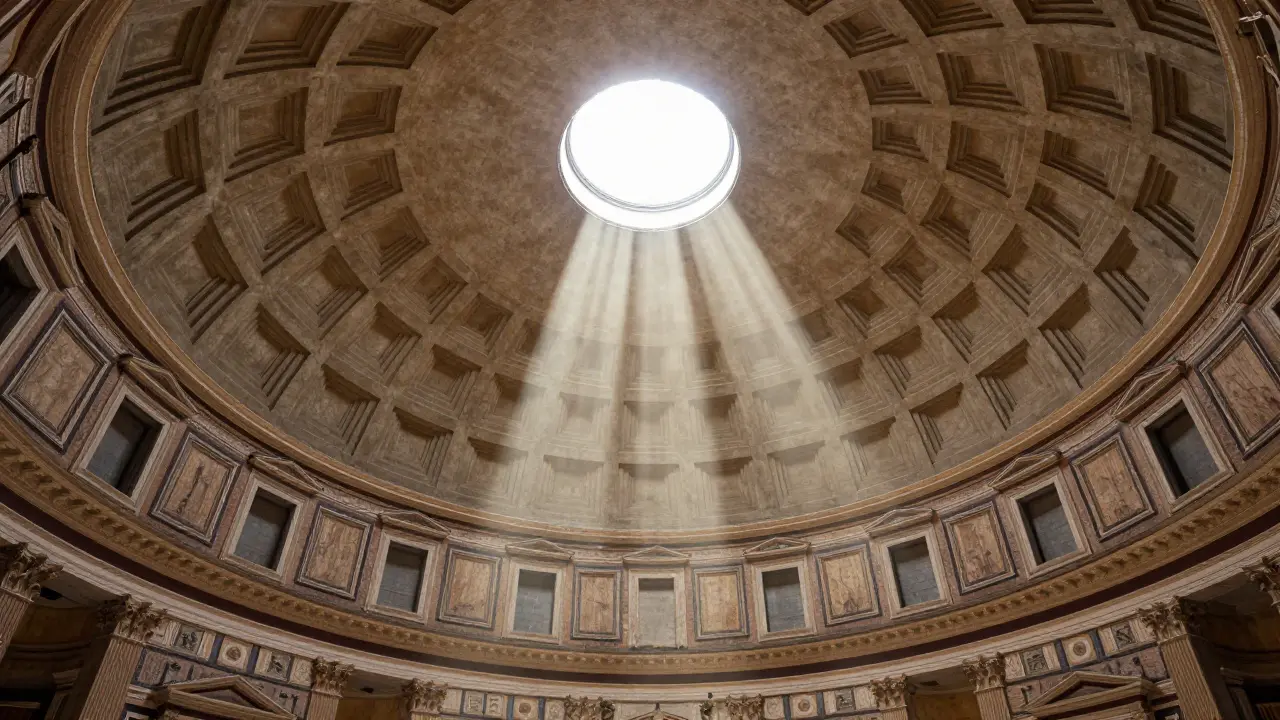
Walk through the ruins of Pompeii or stand beneath the massive dome of the Pantheon, and you might feel a strange sense of timelessness. These structures have survived earthquakes, wars, and nearly two millennia of weathering. How? It wasn't just artistic flair. It was a brutal, brilliant marriage of art and science that changed how humans build forever.
Roman architects didn't just copy their Greek predecessors. They took the aesthetic beauty of Greece and injected it with raw engineering power. They invented new materials, perfected structural forms like the arch, and built infrastructure that connected an empire spanning three continents. If you want to understand modern construction, you have to look back at Rome.
The Secret Ingredient: Roman Concrete
You can talk about columns and temples all day, but the real game-changer for Roman architecture was a material called opus caementicium, or Roman concrete. Unlike modern Portland cement, which crumbles after a few decades if exposed to seawater, Roman concrete gets stronger over time. Why? Because of volcanic ash.
Romans mixed lime, water, and pozzolana-a volcanic soil found near Pozzuoli in Italy. This mixture created a chemical reaction that formed rare minerals called tobermorite crystals. These crystals bind the aggregate together, making the structure denser and more resistant to cracking. When seawater penetrates the concrete, it triggers further reactions that heal micro-cracks. That’s why harbors built by the Romans are still standing today, while many modern ports need constant repair.
This material allowed builders to move away from the rigid post-and-lintel systems used by the Greeks. Instead of stacking heavy blocks on top of each other, they could pour fluid shapes. They could create domes, vaults, and complex curves that were previously impossible. The freedom this material provided is what gave Roman buildings their distinctive spatial quality.
The Power of the Arch and Vault
If concrete was the muscle, the arch was the skeleton. The Egyptians and Greeks knew about arches, but they used them sparingly, mostly for decorative gates. The Romans turned the arch into a structural powerhouse. By channeling weight down and out into supports (abutments), arches could span much wider distances than flat beams without collapsing under their own weight.
From the simple arch, Romans developed several variations:
- Barrel Vaults: Essentially an extended arch forming a tunnel shape. Great for long corridors and underground spaces.
- Groin Vaults: Created by intersecting two barrel vaults at right angles. This concentrated weight at four corners, allowing for thinner walls and larger windows.
- Cloister Vaults: A shallow version of the groin vault, useful for covering wide rooms with less height.
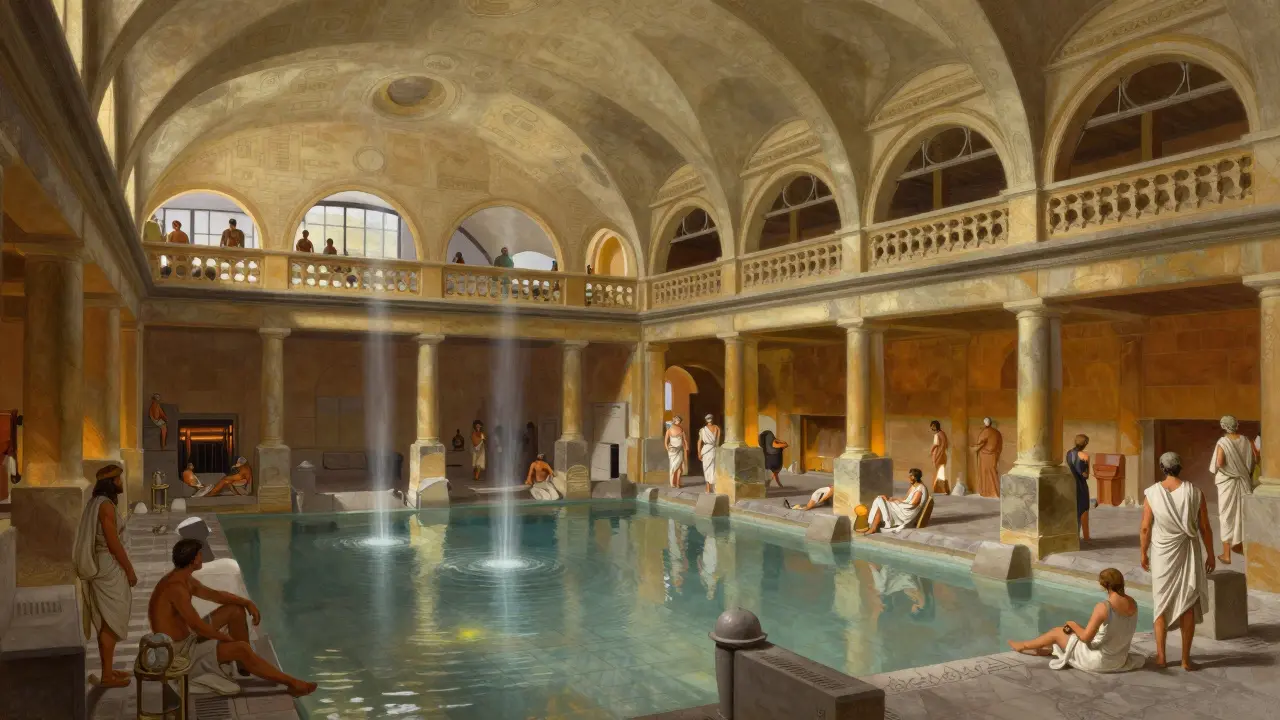
These techniques allowed for the creation of vast interior spaces. Think about the Baths of Caracalla. You couldn’t build a massive indoor swimming pool with a high ceiling using only wooden beams and stone lintels. The wood would rot, and the stone would crack. But with brick-faced concrete and groin vaults, the space became open, airy, and monumental.
Engineering the Empire: Aqueducts and Roads
We often focus on monuments, but the true genius of Roman engineering lay in infrastructure. An empire needs to move troops, goods, and water efficiently. Romans solved this with two key innovations: the road network and aqueducts.
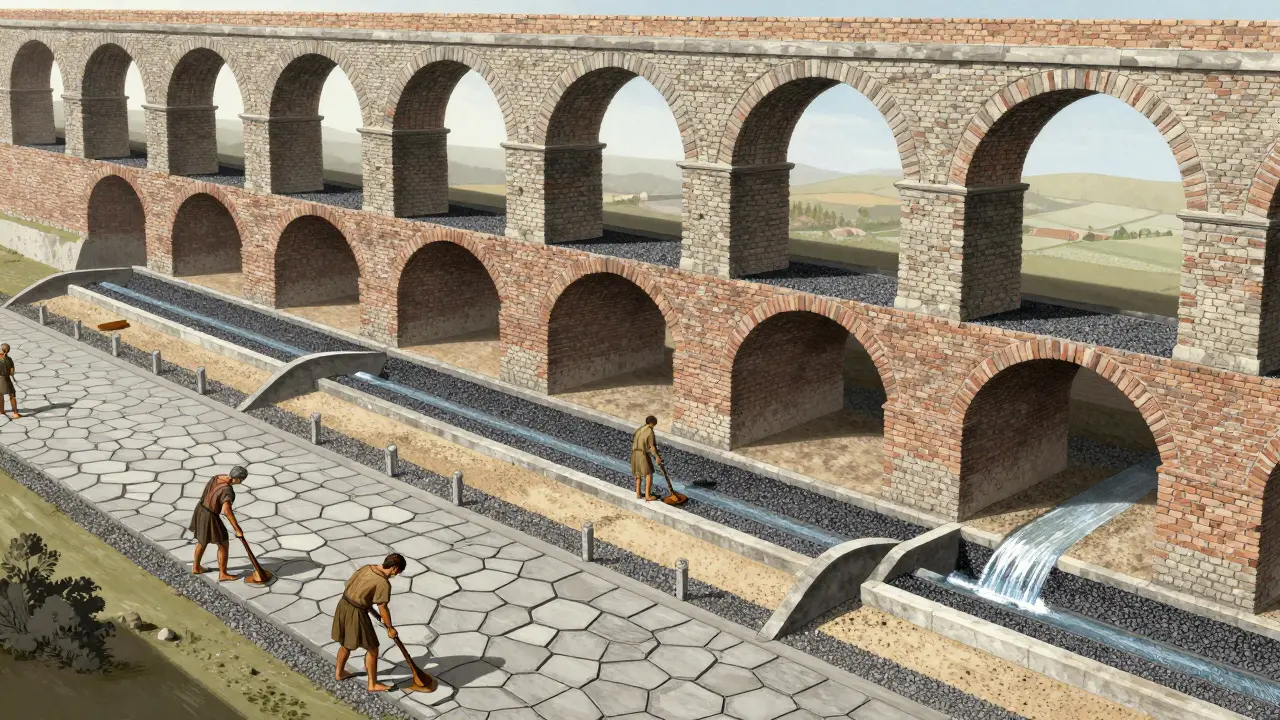
Roman roads weren't just dirt paths. They were layered constructions designed to last. The bottom layer consisted of large stones for stability. Above that came gravel and sand for drainage. The top surface was paved with tightly fitted polygonal stones. This multi-layered approach prevented water from pooling and freezing, which would otherwise break the surface. Many modern highways still follow routes laid down by Roman surveyors.
Aqueducts took gravity to its logical extreme. Engineers calculated precise gradients-often as slight as one foot per mile-to keep water flowing steadily from mountain springs to city centers. The iconic arched bridges we associate with aqueducts, like the Pont du Gard in France, were actually the least common part of the system. Most of the water traveled through underground tunnels or covered channels. The arches were only needed when crossing valleys or rivers.
| Feature | Greek Approach | Roman Approach |
|---|---|---|
| Primary Material | Marble and Limestone | Concrete, Brick, and Stone |
| Structural System | Post and Lintel | Arch, Vault, and Dome |
| Interior Space | Exterior-focused; small interiors | Interior-focused; vast open spaces |
| Column Usage | Structural support | Often decorative or attached to walls |
| Typical Building Type | Temples | Baths, Basilicas, Amphitheaters |
Public Life: Baths, Forums, and Arenas
Roman architecture was deeply social. While Greeks built temples for gods, Romans built spaces for people. The forum was the heart of civic life, surrounded by basilicas (law courts and business centers), curiae (meeting houses), and markets. It was a place for debate, commerce, and politics.
Then there were the baths. Public bathing was a daily ritual for Romans of all classes. The bath complexes were architectural marvels featuring hypocaust systems-underfloor heating that circulated hot air from furnaces. This required sophisticated knowledge of thermodynamics and ventilation. The warm room (tepidarium), hot room (caldarium), and cold plunge (frigidarium) created a sequence of experiences that influenced spa design for centuries.
The Colosseum represents another peak of public architecture. It could hold 50,000 spectators and featured a complex system of ramps and exits to prevent crushes during emergencies. The roof, supported by masts around the arena, shaded viewers from the sun. It was a machine for entertainment, designed for efficiency and spectacle.
Legacy: What We Still Use Today
You don’t have to travel to Italy to see Roman influence. Look at your local courthouse, library, or bank. Chances are, it features columns, pediments, and symmetrical facades. This style, known as Neoclassicism, emerged during the Renaissance and Enlightenment as a way to evoke the authority and stability of the Roman Republic.
But beyond aesthetics, the engineering principles remain relevant. Modern skyscrapers use reinforced concrete, a direct descendant of Roman opus caementicium. Bridges still rely on arch and truss designs first perfected in Rome. Even our urban planning concepts-grid layouts, zoning, and public utilities-are rooted in Roman municipal design.
The loss of Roman concrete technology after the fall of the Empire meant Europe went centuries without durable hydraulic cement. When it was rediscovered in the 18th century, it sparked the Industrial Revolution’s building boom. Today, scientists are studying ancient Roman samples to improve sustainability in modern construction, hoping to reduce the carbon footprint of cement production.
Why It Matters Now
Understanding ancient Roman architecture isn't just about appreciating old stones. It’s about recognizing how innovation solves human problems. Romans faced challenges similar to ours: population growth, resource management, and the need for durable infrastructure. Their solutions were pragmatic, scalable, and surprisingly sustainable.
Next time you walk past a bridge or enter a large public building, take a moment to notice the arches, the concrete, and the flow of space. You’re walking through a legacy that began two thousand years ago. The Romans didn’t just build for eternity; they built for life. And in doing so, they taught us how to build better ourselves.
What made Roman concrete different from modern concrete?
Roman concrete used volcanic ash (pozzolana) mixed with lime and water, creating a self-healing chemical reaction that strengthens over time, especially in seawater. Modern concrete relies on Portland cement, which lacks these self-repairing properties and degrades faster when exposed to saltwater.
How did Romans heat their public baths?
They used a system called the hypocaust. Hot air from a furnace was channeled under the raised floors and through hollow tiles in the walls, circulating heat throughout the room before escaping through chimneys. This early form of central heating allowed for comfortable indoor temperatures year-round.
Why are Roman arches so important?
Arches distribute weight downward and outward into supports, allowing for wider spans and taller structures without massive solid walls. This enabled the creation of large interior spaces like basilicas and amphitheaters, which were impossible with the post-and-lintel systems used by earlier cultures.
Did Romans invent the arch?
No, the arch was used by earlier civilizations like the Mesopotamians and Egyptians. However, Romans perfected its structural application, combining it with concrete to create vast vaults and domes, making it a fundamental element of their architectural language rather than just a decorative feature.
What is the most famous example of Roman architecture?
The Pantheon in Rome is widely considered the best-preserved and most influential Roman building. Its unreinforced concrete dome, with a central oculus, remains the largest of its kind in the world and has inspired countless domed structures, including the U.S. Capitol Building.