10 Most Iconic Examples of Expressionist Architecture: A Visual Guide
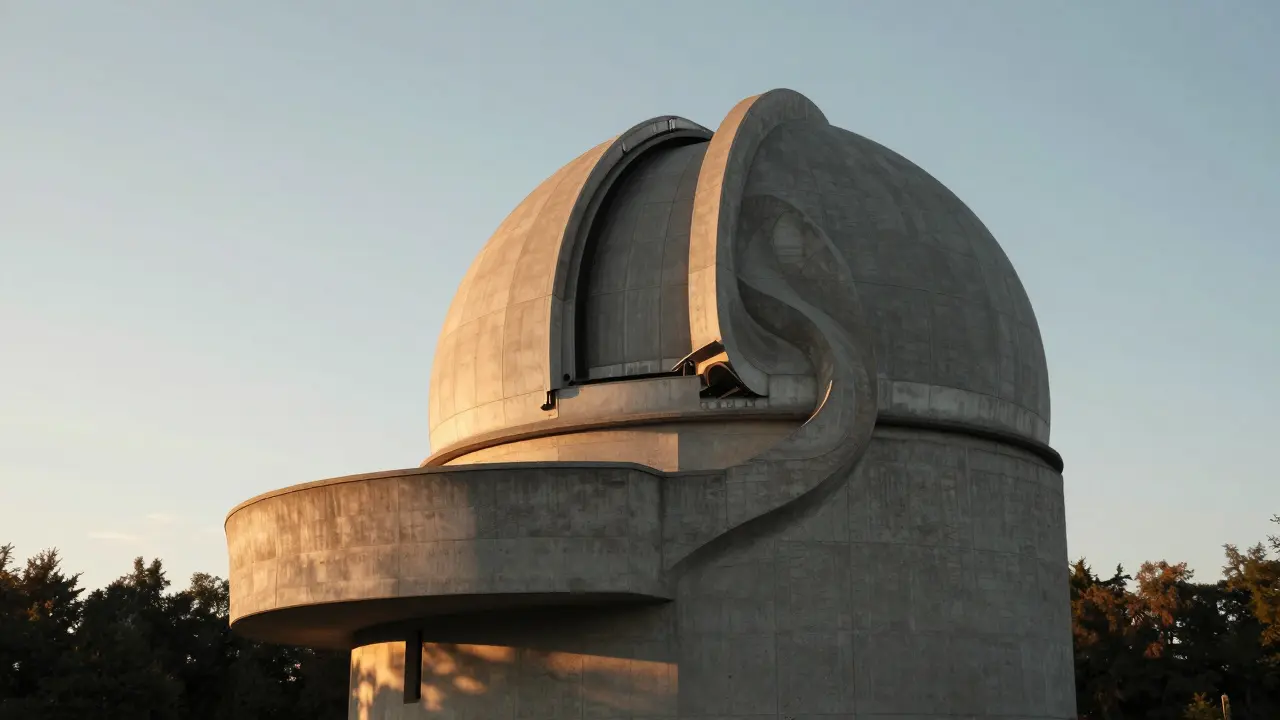 May, 9 2026
Imagine a building that looks like it’s melting, or a tower that twists toward the sky like a frozen flame. That’s Expressionist architecture, an early 20th-century style that prioritizes emotional experience and dynamic forms over strict symmetry and classical rules. Unlike the rigid lines of Beaux-Arts or the later minimalism of International Style, this movement dared to look weird, dramatic, and deeply human. It emerged mostly in Germany and Austria between 1910 and 1933, fueled by a desire to break free from tradition and express inner feelings through form.
You won’t find these buildings on every street corner today. Many were destroyed during World War II, others fell out of favor when modernism took over with its "form follows function" mantra. But the ones that survived are nothing short of spectacular. They challenge how we think about space, light, and material. If you’ve ever felt a chill walking past a structure that seems to defy gravity, you’ve likely encountered the legacy of Expressionism.
The Spark: Why Did Expressionist Architecture Emerge?
To understand why these buildings look so intense, you have to look at the time. The early 1900s were a period of massive social upheaval. Industrialization was changing cities rapidly, and artists felt disconnected from nature and traditional values. In art, Expressionism began as a reaction against Impressionism. While Impressionists captured light and surface, Expressionists wanted to capture emotion and truth, often distorting reality to do so.
Architects applied this same logic to buildings. Instead of copying Greek temples or Gothic cathedrals, they looked to organic shapes, medieval craftsmanship, and even futuristic fantasies. Key figures like Ernst Neufert and Hans Poelzig argued that architecture should stir the soul, not just shelter the body. This philosophical shift led to structures that used brick, concrete, and glass in ways that had never been seen before.
1. Einstein Tower (Berlin, Germany)
| Architect | Year Built | Material | Significance |
|---|---|---|---|
| Erich Mendelsohn | 1920-1921 | Concrete | Pure sculptural form |
If there is one building that defines Expressionist architecture, it’s the Einstein Tower in Potsdam, near Berlin. Designed by Erich Mendelsohn for astronomical research, it doesn’t look like a lab. It looks like a giant, smooth rock emerging from the earth. The entire structure is made of reinforced concrete, shaped without right angles. The observatory dome flows seamlessly into the main block, creating a sense of continuous motion.
Mendelsohn didn’t use drawings in the traditional sense; he sketched quickly, focusing on the feeling of the form. The result is a building that feels alive. Even though it served a scientific purpose, its aesthetic is purely emotional. Today, it remains one of the most photographed examples of the style, proving that science and art can coexist in stone.
2. Chilehaus (Hamburg, Germany)
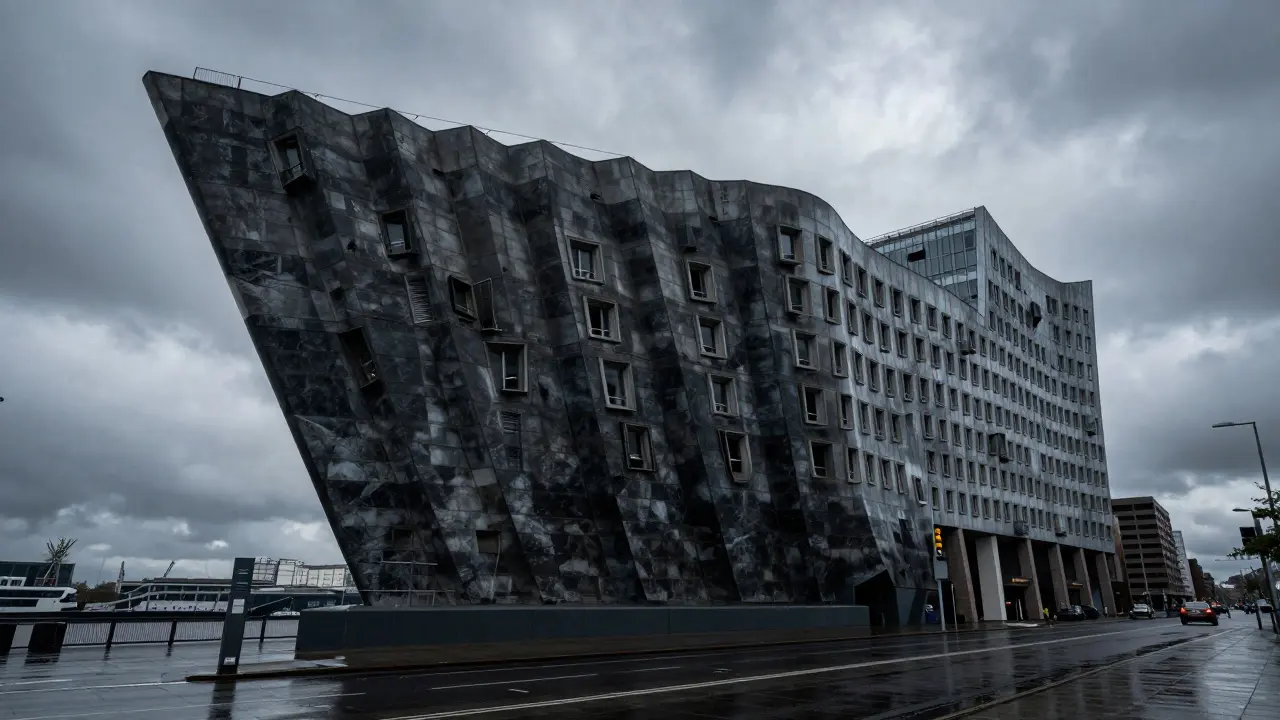
Walk down Speicherstraße in Hamburg, and you’ll see a building that looks like the prow of a ship cutting through water. The Chilehaus, designed by Fritz Höger, was built between 1922 and 1924. It was originally an office building for a shipping company, and its name reflects that connection. The facade is covered in dark granite blocks, arranged in horizontal bands that mimic the ribs of a whale or the planks of a ship.
What makes Chilehaus unique is its sheer scale and texture. It’s not delicate; it’s heavy and imposing. Yet, the curves soften its mass, giving it a dynamic energy. Inside, the layout is surprisingly functional, but the exterior is pure drama. It stands as a testament to how Expressionism could be applied to commercial projects, blending utility with bold artistic statement.
3. Bergwaldkirche (Silesia, Poland)
This church might be the most mysterious example on the list. The Bergwaldkirche, also known as the Forest Church, was designed by Hans Scharoun and completed in 1935. Located in what was then German Silesia (now Poland), it sits deep in a forest, surrounded by tall pines. The building is small, but its form is extraordinary. It resembles a cluster of overlapping cones, mimicking the shape of the trees around it.
Scharoun wanted the church to feel integrated with nature, not imposed upon it. The interior is equally striking, with light filtering through narrow slits, creating a spiritual atmosphere. Because of its remote location and historical shifts in borders, it wasn’t widely known until recently. Now, it’s recognized as a masterpiece of organic Expressionism, showing how architecture can respond directly to its environment.
4. Krupp Gatehouse (Essen, Germany)
Not all Expressionist buildings are curvy. The Krupp Gatehouse, designed by Henry Bernard Tessenow, is a perfect example of Brick Expressionism. Built in 1910 for the Krupp steel works, it looks like a miniature castle. The red brickwork is intricate, with pointed arches and steep gables that evoke medieval fortresses.
Tessenow used traditional materials but arranged them in a way that felt new. The gatehouse isn’t just a entrance; it’s a symbol of industrial power wrapped in historic charm. It shows how Expressionism wasn’t always about futurism; sometimes, it was about reimagining the past with a more emotional intensity. Today, it serves as a reminder of Germany’s industrial heritage.
5. New Town Hall (Hannover, Germany)
When you think of town halls, you probably imagine ornate, symmetrical buildings. The New Town Hall in Hannover, designed by Ludwig Hoffmann, breaks that mold. Completed in 1902, it predates the peak of Expressionism but heavily influenced it. The tower is asymmetrical, leaning slightly, and topped with a statue of Germania. The facade mixes different colors of sandstone, creating a textured, almost painterly effect.
Hoffmann’s design was controversial at the time because it rejected classical proportions. Critics called it chaotic, but supporters saw it as a fresh take on civic architecture. It paved the way for later Expressionists to experiment with form and color. If you visit Hannover, the Town Hall dominates the skyline, a bold statement of municipal pride.
6. Haus Schminke (Düsseldorf, Germany)
For a glimpse into residential Expressionism, look no further than Haus Schminke. Designed by Peter Behrens in 1901, this house was built for a textile merchant. It combines elements of Art Nouveau with early Expressionist tendencies. The facade features decorative tiles and curved windows, while the interior uses rich woods and stained glass.
Behrens was known for his work in industry, but Haus Schminke shows his ability to create intimate, expressive spaces. The house doesn’t shout; it whispers. It’s a subtle example of how Expressionism could be adapted for private homes, focusing on comfort and beauty rather than grand statements. Today, it’s a protected monument, offering insight into early 20th-century domestic life.
7. Münchner Kammerspiele (Munich, Germany)
Theater architecture demands drama, and the Münchner Kammerspiele delivers. Originally built in the 1950s, it draws heavily from Expressionist principles, even if it came after the main movement. The interior is the star here, with sweeping curves and warm lighting that create an intimate atmosphere for audiences. The stage area feels like a cave, enveloping performers and viewers alike.
While not a pure Expressionist building from the 1920s, it carries the torch. It shows how the style’s emphasis on emotional impact continued to influence designers decades later. If you’re interested in performance spaces, this theater is a must-see. It proves that Expressionism isn’t just about exteriors; it’s about how a space makes you feel inside.

8. Deutsches Theater (Berlin, Germany)
Another theatrical gem, the Deutsches Theater in Berlin, was redesigned by Ernst von Sternberg in the 1910s. The facade is relatively modest, but the interior is where the Expressionist magic happens. The auditorium features undulating walls and ceilings, creating a sense of movement even when static. The use of light and shadow enhances the dramatic effect.
Von Sternberg believed that the theater should be a total work of art, influencing everything from seating to acoustics. His designs were ahead of their time, anticipating modern concerns about audience engagement. The Deutsches Theater remains active today, hosting plays that benefit from its unique architectural character.
9. Falkenhagener Chaussee Houses (Berlin, Germany)
In the suburbs of Berlin, you’ll find a row of houses that look like they stepped out of a fairy tale. The Falkenhagener Chaussee Houses, designed by Bruno Taut, were built in the 1920s. Taut was a key figure in the Glass Chain movement, advocating for transparency and light. These houses feature colorful facades, steep roofs, and playful details that contrast with the seriousness of urban life.
Taut’s vision was to bring joy and creativity into everyday living. He used bright colors and unconventional shapes to make housing more humane. These homes are a reminder that Expressionism wasn’t just for museums or monuments; it could also improve daily life. Today, they stand as charming examples of how architecture can reflect personality.
10. Rotes Rathaus (Berlin, Germany) - Early Influence
While the Rotes Rathaus (Red City Hall) in Berlin is technically Neo-Renaissance, its use of red brick and vertical emphasis influenced later Expressionists. Built in the late 19th century, it became a symbol of Berlin’s identity. Expressionist architects studied its massing and texture, incorporating similar elements into their own designs.
It’s important to acknowledge these precursors. Expressionism didn’t appear out of nowhere; it evolved from earlier styles that played with form and material. The Rotes Rathaus shows how historical buildings can inspire new movements, bridging the gap between tradition and innovation.
Why Expressionist Architecture Matters Today
You might wonder why we still care about a style that lasted only two decades. The answer lies in its impact. Expressionist architecture challenged the idea that buildings must be rational and symmetrical. It opened the door for later movements like Postmodernism and Deconstructivism, which also prioritize form and emotion.
Today, architects continue to draw inspiration from Expressionism. Think of Frank Gehry’s Guggenheim Museum in Bilbao or Zaha Hadid’s fluid designs. These contemporary works owe a debt to the pioneers who dared to bend concrete and brick into unexpected shapes. By studying these iconic examples, we gain a deeper appreciation for the creative possibilities of architecture.
Next time you walk through a city, look up. You might spot a curve, a twist, or a splash of color that hints at this rebellious past. Expressionist architecture reminds us that buildings can be more than shelters; they can be stories, emotions, and dreams made real.
What defines Expressionist architecture?
Expressionist architecture is defined by its emphasis on emotional expression through dynamic forms, non-symmetrical layouts, and innovative use of materials like brick and concrete. It rejects classical rules in favor of shapes that evoke feelings, often appearing sculptural or organic.
Where can I see the best examples of Expressionist architecture?
Germany has the highest concentration of surviving Expressionist buildings, particularly in Berlin, Hamburg, and Munich. Key sites include the Einstein Tower in Potsdam, Chilehaus in Hamburg, and various theaters and churches across major cities.
Who were the most important architects in this movement?
Key figures include Erich Mendelsohn, Hans Poelzig, Fritz Höger, and Bruno Taut. Each contributed unique approaches, from Mendelsohn’s fluid concrete forms to Taut’s colorful residential designs.
Did Expressionist architecture survive World War II?
Many Expressionist buildings were damaged or destroyed during WWII due to Allied bombing campaigns. However, significant structures like the Einstein Tower and Chilehaus survived and have been preserved as cultural landmarks.
How does Expressionism differ from Modernism?
Modernism emphasizes functionality, simplicity, and lack of ornamentation, following the principle "form follows function." Expressionism, in contrast, prioritizes emotional impact and artistic freedom, often using complex shapes and decorative elements to convey meaning.