Roman Domes: Engineering Marvels That Shaped Architecture
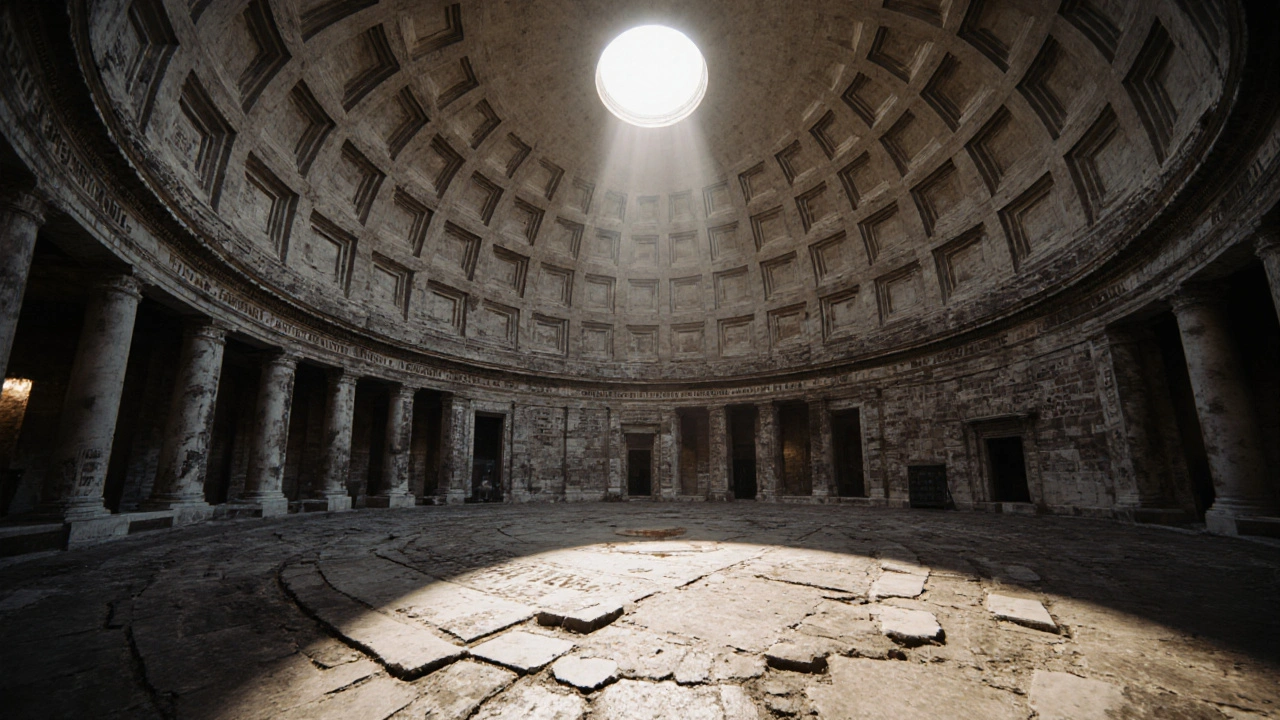
When you think of Roman domes, massive, curved ceilings built by ancient Romans using advanced concrete techniques. Also known as hemispherical vaults, they weren’t just decorative—they were revolutionary structural solutions that let Romans build spaces larger than any before them. The most famous example, the Pantheon, a 2,000-year-old temple in Rome with the world’s largest unreinforced concrete dome, still stands today with its open oculus letting in sunlight. No modern building had matched its span until the 19th century. Roman domes didn’t just cover buildings—they redefined what was possible.
These domes worked because of three things: concrete engineering, a lightweight, durable mix of volcanic ash, lime, and aggregate that hardened over time, precise Roman construction, methods using wooden centering and layered materials to distribute weight evenly, and a deep understanding of geometry. Unlike earlier arches that needed thick walls for support, Roman domes used thinner walls and internal ribs to carry the load. This meant they could cover huge open areas—like temples, baths, and later, churches—without needing columns in the middle. The result? Spaces that felt open, light, and sacred.
It wasn’t just about size. Roman domes were designed to last. The Pantheon’s dome gets thinner toward the top, using lighter materials like pumice as it rises. The oculus wasn’t just an opening—it was a structural element that reduced weight and allowed air to circulate. These weren’t lucky accidents. They were calculated, tested, and refined over decades. You can see their influence everywhere: in Renaissance churches, in the U.S. Capitol, even in modern sports arenas. When architects talk about combining beauty with function, they’re often talking about Roman domes.
What you’ll find in the posts below isn’t just history—it’s a look at how these ancient ideas still shape how we build today. From how concrete evolved to why modern architects still copy the Pantheon’s proportions, these articles connect the dots between Roman ingenuity and the spaces we live in now.
Ancient Roman Architecture: How Rome Built an Empire with Stone and Concrete
Ancient Roman architecture revolutionized construction with concrete, arches, and aqueducts. Its innovations in engineering and urban design still shape buildings and cities today.
Read more