Roman Concrete: The Ancient Tech That Built an Empire and Still Inspires Today
When you think of ancient Rome, you picture colosseums, aqueducts, and domes that still stand today—none of it would be possible without Roman concrete, a revolutionary building material developed over 2,000 years ago that outlasted modern cement in durability and resilience. Also known as opus caementicium, it wasn’t just strong—it was smarter, using volcanic ash from Mount Vesuvius to heal cracks over time. This wasn’t luck. Roman engineers mixed lime, volcanic rock, and seawater in precise ratios, creating a material that actually got stronger when exposed to water. Modern scientists are now studying it to fix our own crumbling infrastructure.
That same material powered the Ancient Roman architecture, a system of building that combined massive scale with precise engineering to serve public life—from baths to harbors to temples. Also known as Roman construction, it relied on arches, vaults, and domes made possible only by concrete’s flexibility and strength. The Pantheon’s dome? Still the world’s largest unreinforced concrete dome. The aqueducts that carried water across valleys? Built with concrete that resisted erosion for centuries. Even today, cities like Rome and Pompeii show how Roman concrete handled earthquakes, saltwater, and weather better than most modern mixes.
Behind the scenes, Roman engineering, a practical, problem-solving approach that prioritized function, longevity, and scalability. Also known as Roman construction methods, it didn’t just build structures—it built systems. They didn’t have steel rebar or CAD software, but they had observation, experimentation, and repetition. They tested materials in real conditions. They reused templates. They trained laborers in standardized techniques. Their concrete wasn’t just a product—it was a process.
What you’ll find in the posts below isn’t just history. It’s a blueprint. You’ll see how Roman concrete connects to modern sustainable design, how its principles echo in today’s green buildings, and why architects are going back to ancient recipes to solve today’s climate problems. There’s no fluff here—just real examples, clear explanations, and the kind of insight you can actually use.
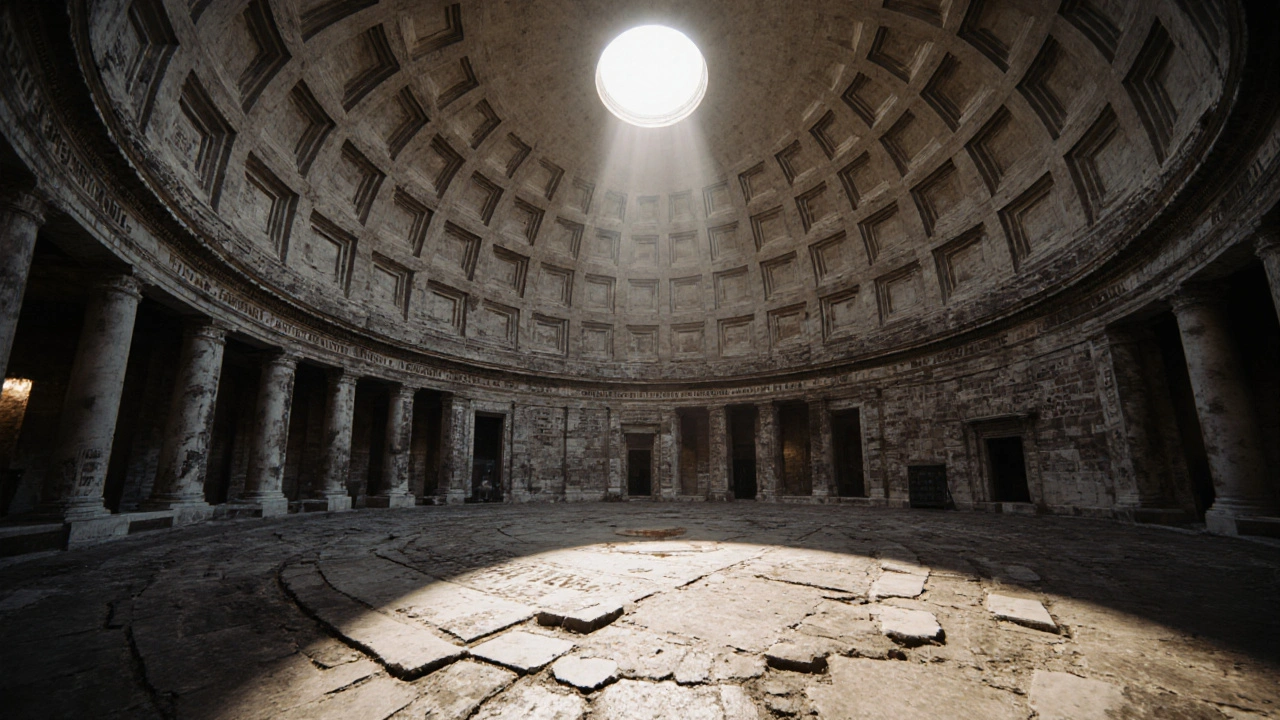
Ancient Roman Architecture: How Rome Built an Empire with Stone and Concrete
Ancient Roman architecture revolutionized construction with concrete, arches, and aqueducts. Its innovations in engineering and urban design still shape buildings and cities today.
Read more