Colosseum: The Iconic Roman Amphitheater That Shaped Architecture
When you think of Colosseum, the massive amphitheater in Rome built between 70-80 AD that could hold over 50,000 spectators. Also known as the Flavian Amphitheatre, it wasn’t just a venue for gladiator fights—it was a political statement, a feat of engineering, and the blueprint for every large-scale public arena that came after. This wasn’t some random stone pile. It was a machine designed for crowd control, spectacle, and imperial power, built with a level of precision that even today’s architects study.
The Ancient Roman architecture, a system of building techniques developed by the Romans that prioritized durability, scale, and public function behind the Colosseum relied on three game-changing ideas: arches, concrete, and tiered seating. Arches let them span huge distances without needing thick walls. Roman concrete, a volcanic ash-based mixture that hardened underwater and lasted over 2,000 years made the whole structure possible—no other civilization had anything close. And the seating? It wasn’t just rows of benches. It was a social ladder. Senators sat front and center. Soldiers got the middle. Commoners and women sat at the top. Everyone had a place—and everyone knew it.
The Roman engineering, the practical application of science and math to solve real-world problems like water supply, roads, and mass entertainment venues of the Colosseum didn’t stop at structure. It had underground tunnels for animals and fighters, a retractable awning to shield crowds from the sun, and a complex system of ramps and doors to move thousands of people in and out in minutes. This wasn’t just architecture—it was urban logistics on a grand scale. Modern stadiums like the Mercedes-Benz Stadium or the new Wembley don’t just borrow from it—they’re direct descendants.
You’ll find posts here that dig into how Roman design principles show up in today’s buildings, how concrete changed the way we build, and why the Colosseum’s layout still echoes in sports arenas and concert halls. There’s no fluff—just clear connections between what the Romans built and what we live with now. Whether you’re into history, design, or just curious about how old buildings still shape our cities, you’ll find something here that clicks.
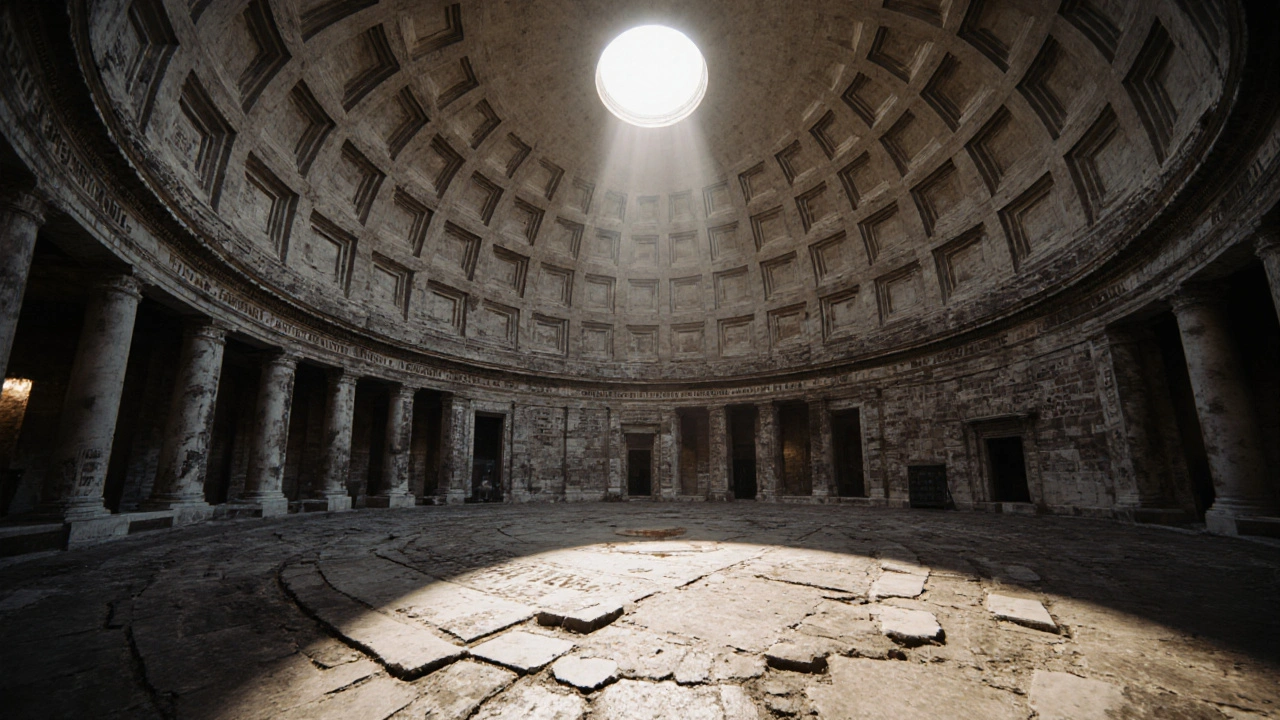
Ancient Roman Architecture: How Rome Built an Empire with Stone and Concrete
Ancient Roman architecture revolutionized construction with concrete, arches, and aqueducts. Its innovations in engineering and urban design still shape buildings and cities today.
Read more